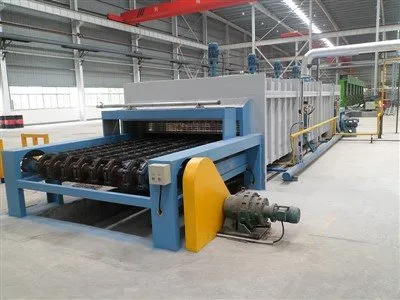
Hey there! As a supplier of Roller Type Heating Furnace, I often get asked about the roller speed adjustment method in these furnaces. So, I thought I'd share some insights on this topic in today's blog post.
First off, let's understand why roller speed adjustment is so important in a roller type heating furnace. The speed of the rollers directly affects the heating process of the materials inside the furnace. If the rollers move too fast, the materials may not have enough time to reach the desired temperature, leading to uneven heating and potential quality issues. On the other hand, if the rollers move too slowly, it can result in over - heating, which can also damage the materials and waste energy.
There are several methods for adjusting the roller speed in a roller type heating furnace, and I'll break them down for you.
Manual Adjustment
One of the simplest ways to adjust the roller speed is through manual means. This usually involves using a mechanical device, like a hand - operated gearbox or a variable speed pulley. With a hand - operated gearbox, you can change the gear ratio to increase or decrease the roller speed. It's a straightforward method, but it has its limitations. For example, it requires an operator to be present at all times to make the adjustments. Also, the accuracy of the speed adjustment may not be very high, as it depends on the operator's judgment.
Another form of manual adjustment is using a variable speed pulley. You can change the position of the pulley to alter the effective diameter, which in turn changes the roller speed. However, like the hand - operated gearbox, it's a bit old - fashioned and may not be suitable for modern, high - precision heating processes.


Electrical Adjustment
Most modern roller type heating furnaces use electrical methods for roller speed adjustment. One common approach is the use of a variable frequency drive (VFD). A VFD works by changing the frequency of the electrical power supplied to the motor that drives the rollers. By adjusting the frequency, you can control the speed of the motor, and thus the speed of the rollers.
The advantage of using a VFD is its high precision. You can set the roller speed to a very specific value, which is crucial for ensuring uniform heating of the materials. It also allows for smooth speed changes, reducing wear and tear on the rollers and the motor. Additionally, VFDs are energy - efficient, as they can adjust the power consumption based on the required speed.
Another electrical method is the use of a DC motor with a speed controller. DC motors are known for their excellent speed control capabilities. The speed controller can adjust the voltage supplied to the motor, which directly affects the motor's speed. This method is also quite accurate and is often used in applications where precise speed control is necessary.
Programmable Logic Controller (PLC)
For more complex and automated heating processes, a Programmable Logic Controller (PLC) can be used to adjust the roller speed. A PLC is a digital computer that can be programmed to control various aspects of the furnace operation, including the roller speed.
You can program the PLC to change the roller speed based on different parameters, such as the temperature inside the furnace, the type of material being heated, or the production rate. For example, if the temperature sensor in the furnace detects that the materials are not heating up fast enough, the PLC can increase the roller speed to expose the materials to the heat source for a longer time.
The use of a PLC offers a high degree of flexibility and automation. It can integrate with other systems in the production line, such as the Steel Pipe Automatic Feeding Machine. This means that the roller speed can be coordinated with the feeding speed of the materials, ensuring a seamless and efficient production process.
Sensor - Based Adjustment
In some advanced roller type heating furnaces, sensor - based adjustment methods are employed. These furnaces are equipped with sensors that can measure various parameters, such as the temperature of the materials, the position of the materials on the rollers, and the load on the rollers.
Based on the data collected by these sensors, the control system can automatically adjust the roller speed. For example, if the temperature sensor detects that a particular section of the material is over - heating, the system can slow down the rollers in that area to prevent further over - heating.
This method is highly accurate and can adapt to changing conditions in real - time. However, it requires a sophisticated control system and high - quality sensors, which can increase the cost of the furnace.
Considerations for Roller Speed Adjustment
When adjusting the roller speed in a roller type heating furnace, there are several factors that you need to consider.
Material Properties
The type of material being heated is a crucial factor. Different materials have different heat transfer characteristics and require different heating rates. For example, a thin - walled steel pipe may heat up faster than a thick - walled one. So, you need to adjust the roller speed accordingly to ensure that all materials reach the desired temperature.
Furnace Temperature
The temperature inside the furnace also plays a role in determining the roller speed. If the furnace temperature is high, you may be able to increase the roller speed slightly, as the materials will heat up more quickly. Conversely, if the furnace temperature is low, you may need to slow down the rollers to give the materials enough time to heat up.
Production Rate
The desired production rate is another important consideration. If you need to produce a large quantity of heated materials in a short time, you may need to increase the roller speed. However, you also need to make sure that the increased speed does not compromise the quality of the heating process.
Integration with Other Equipment
As a supplier, I often see the importance of integrating the roller type heating furnace with other equipment in the production line. For instance, when used in conjunction with a Seamless Steel Pipe Walking Beam Heating Furnace, the roller speed adjustment should be coordinated with the operation of the walking beam furnace.
The seamless steel pipe may need to be pre - heated in the roller type heating furnace before being transferred to the walking beam furnace for further processing. In this case, the roller speed in the roller type heating furnace should be set to ensure that the pipes are heated to the appropriate temperature for a smooth transition to the walking beam furnace.
Conclusion
In conclusion, there are several methods for adjusting the roller speed in a roller type heating furnace, each with its own advantages and disadvantages. Manual adjustment is simple but lacks precision and automation. Electrical methods, such as VFDs and DC motors with speed controllers, offer high precision and energy efficiency. PLCs and sensor - based adjustment methods provide even more flexibility and automation, making them suitable for complex and modern heating processes.
If you're in the market for a roller type heating furnace or need to upgrade your existing furnace's roller speed adjustment system, I'd be more than happy to help. We offer a wide range of furnaces with advanced roller speed adjustment capabilities. Whether you need a simple manual adjustment system or a fully automated PLC - controlled setup, we can provide a solution that meets your specific requirements. Don't hesitate to reach out to us for a consultation and let's discuss how we can optimize your heating process.
References
- "Industrial Heating Furnaces: Principles, Design, and Operation" by A. R. Cooper
- "Variable Frequency Drives: Applications and Troubleshooting" by Bimal K. Bose
- "Programmable Logic Controllers: Principles and Applications" by Timothy W. Bartee