


Auto Stabilizer Bar Equipments
Company Profile
Zibo Jimeng Environmental Protection Equipment Co., Ltd. is located in Huantai County, which is known as the hometown of architecture and the county of tons of grain. It is close to the former residence of Wang Yuyang, a historical and cultural celebrity. The company currently has 30 employees, covers an area of 8,000 square meters, has a standardized production workshop of 2,000 square meters and an office building of 1,000 square meters, and has a relatively complete quality control system and complete processing capabilities.
Why Choose Us
Our factory
The company currently has 30 employees, covers an area of 8,000 square meters, has a standardized production workshop of 2,000 square meters and an office building of 1,000 square meters, and has a relatively complete quality control system and complete processing capabilities.
Our product
The leading products are casting, automotive leaf springs, automotive coil springs, automotive stabilizers and other special production equipment for medium and low temperature heat treatment and industrial furnaces for other industries.
Our team
Equipped with a professional team with high and intermediate technical titles and an advanced mechanical drawing system, it is a technology-based enterprise integrating design, development, production and sales.
Our service
We try and respond to all concerns within 24 hours and our teams are always at your disposal in case of any emergencies.


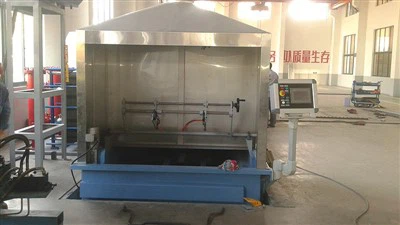


Auto Stabilizer Bar Equipments Includes
Automobile Stabilizer Bar Step Quenching Furnace
What Is Automobile Stabilizer Bar Step Quenching Furnace
A automobile stabilizer bar step quenching furnace is a type of heat treatment furnace that is commonly used in industrial production. It is used to harden or temper materials, and plays an important role in the production process. Quenching furnaces are available in a variety of sizes and configurations, and can be custom-designed to meet the specific needs of the application. Its efficient automated design and uniform heating process make it widely used in automobile manufacturing and other industrial fields. It is one of the important equipment in modern production lines.
Advantages of Automobile Stabilizer Bar Step Quenching Furnace
Stress relief
The process helps in relieving internal stresses within materials. This is crucial for subsequent manufacturing steps such as machining or welding. Stress relief is essential for maintaining the structural integrity and preventing distortion or failure under load.
Improved wear resistance
Automobile stabilizer bar step quenching furnace can introduce hardness to materials. This makes them more resistant to wear and tear. This is particularly useful in applications where parts are subject to high friction or abrasion.
Surface versus through-part treatment
Depending on the process, automobile stabilizer bar step quenching furnace can harden just the surface of a part (case hardening) or the entire part (through-hardening). This flexibility allows for tailored solutions that balance cost, durability, and functionality.
Improvement in brittleness
Some metals can become brittle under certain environmental conditions. Automobile stabilizer bar step quenching furnace helps in overcoming this by improving the metal's ability to withstand stress without breaking.
Rapid cooling for specific properties
Quench furnaces rapidly cool workpieces from high temperatures to achieve specific properties like increased hardness and strength.
Martensitic transformation
During quenching, metals undergo a martensitic transformation, forming a hard and brittle phase called martensite.
Precise temperature control
These furnaces offer precise control over temperature to prevent uneven heating and overheating.
Cooling medium options
The cooling medium can be water or oil, depending on the metal's requirements.
Vacuum furnaces
Vacuum furnaces are used when materials need to be kept free of contamination and oxidation during the heat treatment process.
Vacuum oil quenching furnaces
These furnaces are mainly used for bright quenching, annealing, or vacuum sintering of various materials.
Safety and operation
Operating a quenching furnace requires attention to safety guidelines and proper handling to avoid accidents and ensure efficient heat treatment processes.
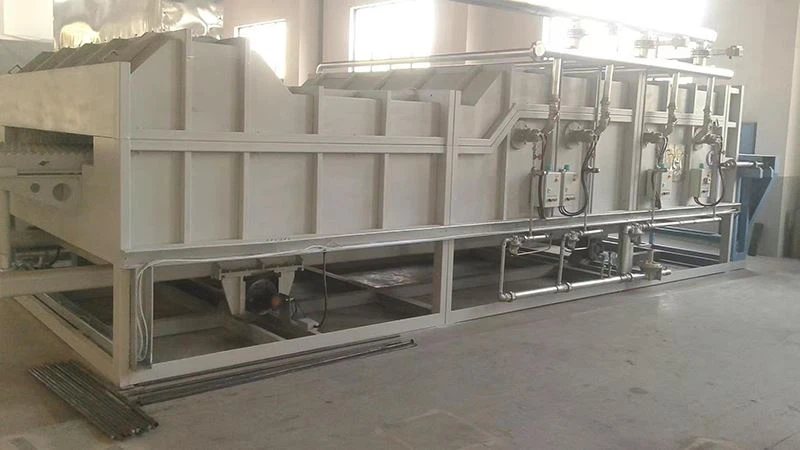
How Automobile Stabilizer Bar Step Quenching Furnace Works
The first step when quenching a metal part is the initial heat treatment. If the part is not heated to the right temperature, it will not receive the full benefits that quenching can provide. For steels, in particular, the goal is often to heat them to a point above the austenite temperature. Holding the part at this temperature for a set amount of time (depending on the type of steel and the dimensions of the part) will cause it to transition to the martensite stage. This is typically the stage quenching is used to preserve. Other stages that are less frequently desired are ferrite, pearlite, cementite, and bainite.
Once the part has achieved the desired state, it is submerged in a predetermined quenching media at a predetermined rate. The media to which the part is exposed and the rate at which it is quenched depend on the type of part, the metal it is made of, and the final properties that are desired.
The Operation of a Automobile Stabilizer Bar Step Quenching Furnace Follows a Well-Defined Sequence of Steps to Achieve Optimum Heat Treatment Results
Loading
Metal components that require heat treatment are carefully placed into the furnace's sealed chamber or retort. Constructed from durable materials like stainless steel, the retort ensures no air or other gases can enter during the process.
Heating
The furnace is gradually heated to reach the specific temperature needed for the heat treatment procedure. This temperature is typically higher than the steel's transformation point to facilitate the desired metallurgical changes.
Soaking
Once the desired temperature is attained, the metal parts are held at that precise temperature for a specified duration. This soaking period ensures uniform heating and allows for the intended transformations within the steel to take place effectively.
Following the soaking phase, the retort containing the heated metal components is swiftly transferred to a specialized quenching chamber. Within this chamber, the parts are exposed to a chosen quenching medium such as oil, polymer, or water. This rapid quenching process effectively cools the parts, resulting in the desired material properties like hardness and toughness.
Tempering
In certain instances, after the quenching process, the metal parts may undergo tempering. Tempering involves reheating the parts to a lower temperature, aimed at reducing excessive hardness while simultaneously enhancing toughness, ductility, and dimensional stability.
Automobile Stabilizer Bar Continuous Tempering Furnace
What Is Automobile Stabilizer Bar Continuous Tempering Furnace
The design of the continuous tempering furnace allows the stabilizer bars to be heated and cooled continuously through the furnace in a production line to ensure a uniform heat treatment process. It adopts natural gas for heating, realizes continuous production and improves production efficiency. It has a reasonable structure, the furnace cover and furnace body can be disassembled, and maintenance is convenient. It has obvious energy-saving effect and a high degree of automation.
Advantages of Automobile Stabilizer Bar Continuous Tempering Furnace
Higher productivity and faster processing
Automobile stabilizer bar step quenching furnaces offer a continuous flow of workpieces through the heating chamber. This allows for higher production rates and faster processing compared to batch furnaces. This is especially beneficial for high-volume production.
Consistent quenching
Automobile stabilizer bar step quenching furnaces ensure uniform heating of workpieces throughout the entire process. This results in consistent and uniform quenching, leading to improved material properties and enhanced product quality.
Economical processing for large volumes
Automobile stabilizer bar step quenching furnaces are designed for rapid thermal processing and are ideal for manufacturing medium and high-volume products. They provide efficient and economical processing for large volumes of workpieces.
Process control and monitoring
Automobile stabilizer bar step quenching furnaces typically feature multiple controlled zones, including zones for preheating, binder burnout, heating, firing, and cooling. This allows for precise process control and monitoring, ensuring optimal heat treatment conditions for the workpieces.
Working Principle of Automobile Stabilizer Bar Continuous Tempering Furnace
Loading and Heating
The stabilizer bar enters the continuous tempering furnace from the feed end and enters the first heating section through the continuous conveying system. The stabilizer bar is heated to the required tempering temperature during the heating process.
Temperature Control and Insulation
The stabilizer bar maintains the set temperature in each heating section to ensure uniform tempering. The temperature control system of each section accurately controls the temperature to meet the tempering process requirements.
Cooling
The stabilizer bar after heating treatment is gradually cooled down through the cooling system to avoid thermal stress and deformation. The cooling process can be natural air cooling or forced air cooling.
Discharging
The cooled stabilizer bar is transported to the finished product area through the discharging system for subsequent processing or inspection.
Classification and Application of Automobile Stabilizer Bar Continuous Tempering Furnace
Automobile stabilizer bar step quenching furnaces are industrial furnaces used to temper glass or metal in a continuous process. The purpose of these furnaces is to heat and cool materials gradually to improve their strength, durability, and resistance to thermal stress.
Some of the advantages of automobile stabilizer bar step quenching furnaces include increased productivity, improved product quality, reduced energy consumption, and enhanced safety features. These furnaces also offer precise control over the tempering process, resulting in consistent and uniform product quality.
Automobile stabilizer bar step quenching furnaces come in different types such as pusher type furnace, conveyor type furnace, and others. Pusher type furnaces are known for their high throughput capacity, conveyor type furnaces offer smooth and continuous production process, while others may include unique features to cater to specific industry needs. These different types of furnaces help in boosting the demand of the automobile stabilizer bar step quenching furnaces market by providing a variety of options to suit different production requirements, thus attracting a wider range of customers and industries seeking efficient tempering solutions.
Automobile stabilizer bar step quenching furnaces are widely used in various industries such as photovoltaic, automotive, architectural, and others for tempering glass to improve its strength and durability. In the photovoltaic industry, these furnaces are used to produce solar panels, while in the automotive sector, they are used for manufacturing automotive glass. In the architectural industry, these furnaces are used to create safety glass for buildings. Among these applications, the automotive industry is the fastest growing segment in terms of revenue due to increasing demand for high-quality tempered glass in vehicles for safety and aesthetic reasons.
How to Set the Temperature of Automobile Stabilizer Bar Continuous Tempering Furnace
● Material type: Different materials require different tempering temperatures. For instance, steel, aluminum, and glass each have specific temperature ranges.
● Material thickness: Thicker materials might require longer tempering times or slightly different temperatures.
● Previous treatments: Consider any prior heat treatments the material has undergone, as this can affect the tempering process.
● Mechanical properties: Define the desired hardness, toughness, and ductility. For example, higher temperatures typically reduce hardness but increase ductility.
● Industry standards: Refer to industry standards or manufacturer’s guidelines for specific tempering ranges.
● Equipment manual: Review the furnace’s manual for specific instructions on setting temperatures.
● Process specifications: Look for any existing process specifications or standard operating procedures that outline tempering parameters.
● Control panel: Access the furnace’s control panel, which typically allows you to set and adjust the temperature.
● Temperature zones: If the furnace has multiple zones, set each zone according to the required profile. Some continuous furnaces have preheat, heating, and cooling zones.
● Ramp rate: Set the ramp rate if the furnace has this capability, which controls how quickly the temperature increases to the set point.
● Initial setup: Enter the desired temperature for the tempering phase. For instance, tempering steel might require a temperature range of 400-600°c (752-1112°f).
● Soak time: Program the duration the material should be held at the tempering temperature. This can vary from minutes to hours depending on the material and desired properties.
● Cooling rate: Set the cooling rate if the furnace allows. Controlled cooling might be necessary for certain materials to achieve the desired properties.
● Thermocouples and sensors: Ensure thermocouples and other temperature sensors are properly placed and functioning to monitor the furnace temperature accurately.
● Initial run: Perform an initial run and closely monitor the temperature profile. Adjust settings as needed based on the performance and output.
● Sample testing: Test samples of the tempered material for desired properties like hardness and tensile strength.
● Adjust parameters: If the results are not as expected, fine-tune the temperature settings and soak time.
Our factory
Zibo Jimeng Environmental Protection Equipment Co., Ltd. is located in Huantai County, which is known as the hometown of architecture and the county of tons of grain. It is close to the former residence of Wang Yuyang, a historical and cultural celebrity. The company currently has 30 employees, covers an area of 8,000 square meters, has a standardized production workshop of 2,000 square meters and an office building of 1,000 square meters, and has a relatively complete quality control system and complete processing capabilities. Equipped with a professional team with high and intermediate technical titles and an advanced mechanical drawing system, it is a technology-based enterprise integrating design, development, production and sales. The leading products are casting, automotive leaf springs, automotive coil springs, automotive stabilizers and other special production equipment for medium and low temperature heat treatment and industrial furnaces for other industries.


Our Certificate


FAQ