


Spiral Round Spring Equipment
Company Profile
Zibo Jimeng Environmental Protection Equipment Co., Ltd. is located in Huantai County, which is known as the hometown of architecture and the county of tons of grain. It is close to the former residence of Wang Yuyang, a historical and cultural celebrity. The company currently has 30 employees, covers an area of 8,000 square meters, has a standardized production workshop of 2,000 square meters and an office building of 1,000 square meters, and has a relatively complete quality control system and complete processing capabilities.
Why Choose Us
Our factory
The company currently has 30 employees, covers an area of 8,000 square meters, has a standardized production workshop of 2,000 square meters and an office building of 1,000 square meters, and has a relatively complete quality control system and complete processing capabilities.
Our product
The leading products are casting, automotive leaf springs, automotive coil springs, automotive stabilizers and other special production equipment for medium and low temperature heat treatment and industrial furnaces for other industries.
Our team
Equipped with a professional team with high and intermediate technical titles and an advanced mechanical drawing system, it is a technology-based enterprise integrating design, development, production and sales.
Our service
We try and respond to all concerns within 24 hours and our teams are always at your disposal in case of any emergencies.


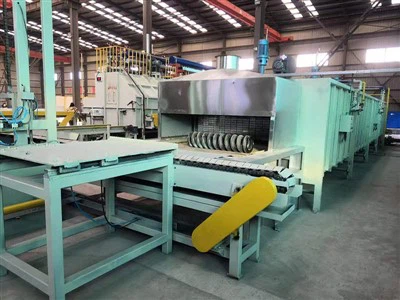
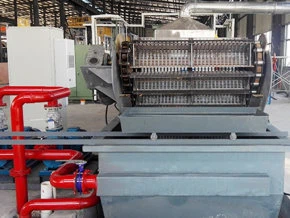

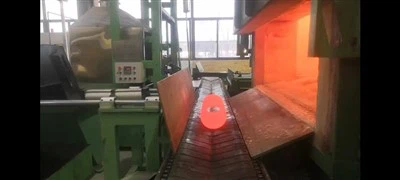
Spiral Round Spring Equipment Includes
Helical Spring Stepping Quenching Furnace
What Is Helical Spring Stepping Quenching Furnace
The walking beam heating furnace uses an automated step-by-step conveying system and precise temperature control technology to ensure that the bar is heated evenly during the heating process, thereby improving production efficiency and product quality.
Advantages of Helical Spring Stepping Quenching Furnace
Improved mechanical properties
Through the application of varied heating, cooling, and soaking methodologies, heat treatment significantly improves the mechanical properties of sealing springs.
Enhanced strength and durability
Heat treatment boosts the strength and durability of sealing springs significantly, enhancing their overall performance and lifespan.
Increased resistance to wear and fatigue
Heat treatment plays an instrumental role in enhancing the resistance of sealing springs to wear and fatigue.
Stress relief within the metal
Heat treatment enables effective stress relief within the sealing springs, offering several benefits.

Working Principle of Helical Spring Stepping Quenching Furnace
The working principle of the walking beam heating furnace for spiral spring bars is to drive the billet forward by the lifting and retreating of the walking beam. Specifically, this heating furnace relies on the lifting and retreating of the movable furnace bottom to move the spiral spring bar forward step by step.
At the starting position of the work, the movable furnace bottom is located at the lowest position below the billet, and the two ends of the billet are placed on the fixed furnace bottom in the furnace. Subsequently, the movable furnace bottom rises to lift the billet, and then descends to place the billet on the fixed furnace bottom. After completing a cycle of action, the movable furnace bottom returns to its original position.
This process makes the trajectory of the movable furnace bottom movement form a rectangle, and the movement of this rectangular trajectory is continuous, thereby realizing the continuous heating of the spiral spring bar. This heating method is not only suitable for spiral spring bars, but also widely used in other materials or workpieces that need to be heated, such as metals, etc., to the temperature required for rolling or forging.
The Specific Process Of Helical Spring Stepping Quenching Furnace Is As Follows
Quenching When quenching and heating in a salt bath furnace, the springs should be evenly bundled with iron wires, or the springs should be heated on the mandrel. When heating, ensure that the surface of the spring is oxidized and decarburized. Salt baths should be carefully deoxygenated. It can also be heated in a box-type furnace with a controlled atmosphere. The heating temperature is 850 degree C ± 10 degree C, and the temperature is kept for 1015 minutes, and the quenching oil is cooled through the furnace.
Shot blasting is required to improve the fatigue strength of the spring. The projectile diameter is 0.30.5mm. When using compressed air injection, the compressed air pressure is 0.40.5MPa; with a centrifuge shot blasting, the linear velocity of the projectile is 70m/s. The service life of the compression spring treated by shot blasting can be more than doubled.
After the recrystallization annealing compression spring is rolled and formed, it must be recrystallized and annealed to stabilize the geometric dimensions of the spring and reduce the deformation during quenching. The recrystallization annealing temperature is 550650 degree , and the temperature is kept for 11.5h and then air-cooled. A small amount can be carried out in a salt bath furnace, and a continuous resistance furnace can be used to control the atmosphere in large quantities.
Tempering can be carried out twice after tempering and quenching. Correction and tempering should be carried out first. The temperature of correction and tempering should generally be lower than the final tempering temperature by about 20 degree , and the temperature should be kept for 10-15 minutes. The final tempering is then carried out, and after the spring size is corrected, the spring is mounted on the tempering jig for final tempering. The tempering fixture should ensure that the pitch and free length of the spring meet the requirements. The tempering temperature is 420 degree ±10 degree , the temperature is kept for 3035min, and the furnace is water-cooled.
Defects and Prevention Methods Caused by Helical Spring Stepping Quenching Furnace
Spring is a basic part with large quantity and wide range. It is a very important part for power machinery, instrumentation, etc. Its function is to convert mechanical function or kinetic energy into deformation energy, or to convert deformation energy into kinetic energy or mechanical work, in order to achieve the purpose of buffering and shock absorption. Since springs are widely used, this article briefly introduces some thermal coil springs and heat treatment defects and their preventive measures.
Hot coil spring defects and their prevention. The end of the support ring extends beyond the spring ring. This is related to the improper flattening and arc bending of the ends. Scratches and hammer marks are related to improper operation. The spring tilt is too large, which is related to factors such as improper correction, uneven spring end face, uneven heating temperature of steel materials, etc. The surface of the spring is seriously oxidized and decarburized, which is related to the high furnace temperature. Uneven spring pitch is related to equipment accuracy and improper pitch adjustment. Overheating or overburning is related to the furnace temperature being too high.
Rolling cracks can only be scrapped, which is related to material defects. The inspection of raw steel should be strengthened. The end of the spring is facing backward, which is related to the improper flattening shape. The spring diameter is unqualified, which is related to the improper size of the mandrel. Excessive bending deformation of the spring is related to uneven heating and improper spring coiling process. Defects generated during the quenching and tempering process of springs. Various defects generated during the hot coil spring process can only intensify their harmfulness during quenching. Therefore, qualified hot coil springs are a prerequisite for reducing heat treatment waste. In fact, springs will produce new defects during the heat treatment process, mainly including: The depth of the decarburization layer on the spring surface exceeds the standard. This is related to the fact that the temperature of the heating culvert is too high, the holding time is too long, and the protective gas heating is not used. Quenching cracks, especially this defect is prone to occur during water quenching. The reasons include: internal defects in the material, excessive quenching heating temperature, improper quenching water cooling, etc. Coarse grains and coarsening of the microstructure cause the spring to become brittle. The way to overcome this is to prevent the steel from overheating. Uneven hardness or insufficient hardness. The main reasons are uneven heating, too low spring temperature and insufficient cooling capacity of the quenching medium. Quenching deformation. Such as spring tilt, excessive bending, uneven pitch, etc., the above shortcomings can be overcome by using the quenching method of the mold pressing device.
Conveyor Chain
What Is Conveyor Chain
The automatic feeder for coil springs is a system used to automatically feed raw materials (such as steel wire or steel rod) into processing equipment during automated production. In coil spring production, this equipment can greatly improve production efficiency, reduce manual intervention, and ensure accurate and stable feeding of materials.
Advantages of Conveyor Chain
Efficient automation
The automatic feeder reduces manual intervention, improves the automation level of the production line, and ensures a stable supply of materials.
01
Precise control
Advanced control systems and sensors achieve precise control of the feeding process, ensuring the accuracy and consistency of each feeding.
02
Reduce human errors
Automated operation reduces human errors and improves production stability and product quality.
03
Flexible configuration
The equipment can be flexibly configured according to the needs of the production line to adapt to different types and specifications of raw materials.
04
Reduce labor intensity
The automated design reduces the labor intensity of workers and improves the safety of the production environment.
05
The working principle of the spring feeder can be divided into two main steps: vibration conveying and gravity conveying. In the vibration conveying stage, the drive motor drives the eccentric wheel to rotate through the transmission device, generating vibration and delivering the material to the discharge port. In the gravity conveying stage, the material slides down the slope to the designated position under the action of its own gravity. This working method not only reduces the tediousness of manual operation, but also improves production efficiency.
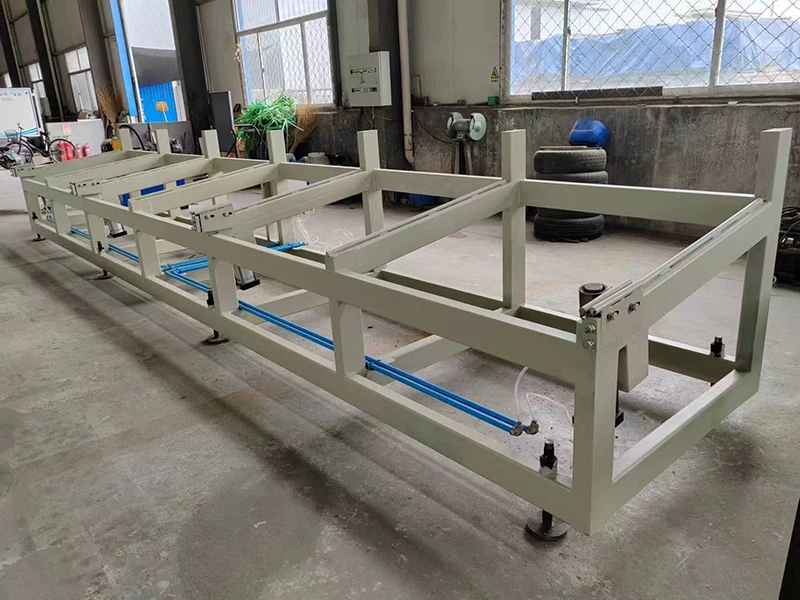
Precautions for Conveyor Chain
The customer works with small, coiled metal springs. Moving them from bulk to a singular spring for their automated machinery proved to be a challenge. Springs have a tendency to tangle and clog machinery. Operators had to constantly monitor the supply line to make sure springs were feeding properly. Constant stops and starts of machinery slowed production.
It designed a delivery system that segregated and positioned the coiled springs down a track without fail. This included a vibratory feeder bowl that moved the bulk parts into position and an end of line mechanism that singulated and positioned them on a gravity track. They were then moved down line to the customer’s machinery for pickup. The feeder system has a failsafe mechanism that ensures that only one spring feeds at a time and that there are no gaps between parts. This saved considerable amount of man hours in oversight of the feeder system and made production much more efficient.
Components of a Conveyor Chain System
Chain links
The primary components that form the chain, provide the necessary length and flexibility. Each link is made up of two inner plates and two outer plates, connected by pins.
Rollers
Positioned between the inner plates, rollers reduce friction as the chain moves along the conveyor track. They enable smooth operation and minimize wear on the chain and track.
Pins
These cylindrical elements connect the chain links and allow them to pivot. They provide the necessary flexibility for the chain to bend and move along the conveyor system.
Bushings
Bushings act as bearings between the pins and rollers, reducing friction and wear. They are essential for the smooth and efficient operation of the conveyor chain.
Sprockets
Toothed wheels that engage with the chain, driving it forward or pulling it along. The size and number of teeth on the sprockets determine the speed and torque of the conveyor system.
Attachments
Additional components mounted on the chain links, such as extended pins or brackets. Attachments allow for the customization of the conveyor system to carry specific items or perform specific tasks.
Our factory
Zibo Jimeng Environmental Protection Equipment Co., Ltd. is located in Huantai County, which is known as the hometown of architecture and the county of tons of grain. It is close to the former residence of Wang Yuyang, a historical and cultural celebrity. The company currently has 30 employees, covers an area of 8,000 square meters, has a standardized production workshop of 2,000 square meters and an office building of 1,000 square meters, and has a relatively complete quality control system and complete processing capabilities. Equipped with a professional team with high and intermediate technical titles and an advanced mechanical drawing system, it is a technology-based enterprise integrating design, development, production and sales. The leading products are casting, automotive leaf springs, automotive coil springs, automotive stabilizers and other special production equipment for medium and low temperature heat treatment and industrial furnaces for other industries.


Our Certificate


FAQ