


Mechanical Equipments
Company Profile
Zibo Jimeng Environmental Protection Equipment Co., Ltd. is located in Huantai County, which is known as the hometown of architecture and the county of tons of grain. It is close to the former residence of Wang Yuyang, a historical and cultural celebrity. The company currently has 30 employees, covers an area of 8,000 square meters, has a standardized production workshop of 2,000 square meters and an office building of 1,000 square meters, and has a relatively complete quality control system and complete processing capabilities.
Why Choose Us
Our factory
The company currently has 30 employees, covers an area of 8,000 square meters, has a standardized production workshop of 2,000 square meters and an office building of 1,000 square meters, and has a relatively complete quality control system and complete processing capabilities.
Our product
The leading products are casting, automotive leaf springs, automotive coil springs, automotive stabilizers and other special production equipment for medium and low temperature heat treatment and industrial furnaces for other industries.
Our team
Equipped with a professional team with high and intermediate technical titles and an advanced mechanical drawing system, it is a technology-based enterprise integrating design, development, production and sales.
Our service
We try and respond to all concerns within 24 hours and our teams are always at your disposal in case of any emergencies.


Mechanical Equipments Includes
Storing Heat Heating Furnace
What Is Storing Heat Heating Furnace
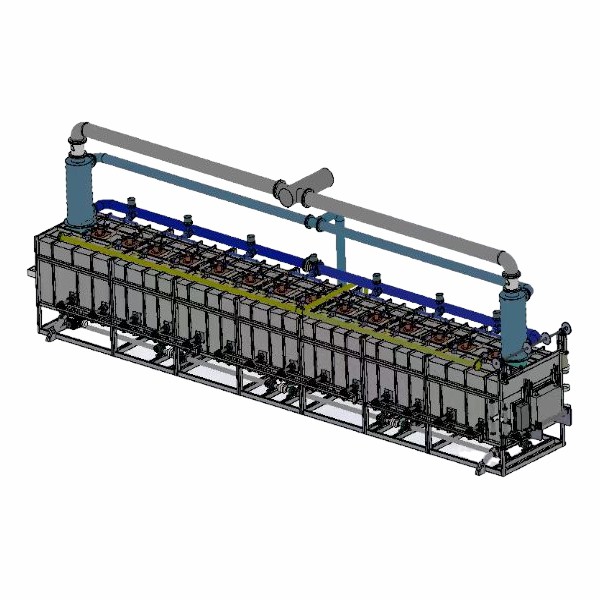
Storing heat heating furnaces are essential in various industries, including the crystallization and processing sectors, where precise temperature control is critical. These furnaces convert different forms of energy into heat and transfer it to materials using thermal radiation and convection. The control of temperature during processes like crystal growth and surface deposition directly impacts product quality.
Advantages of Storing Heat Heating Furnace
Reduce peak demand and level demand
Reduce peak demand and level demand by storing energy when there is less demand and releasing when there is high demand. Reduce CO2 emissions and costs by making sure energy is used when it is cheaper and there is more renewable energy in the mix.
Maximising the use of low carbon energy through thermal storage
Another key benefit of the system is the ability to store the energy captured by a heat pump or generated by solar panels so it can be used at a time when it’s needed. This helps maximise the use of low carbon heat or electricity which may have been lost otherwise, and can reduce a household’s energy bills as less energy needs to be purchased from the grid.
Basic Principle of The Storing Heat Heating Furnace
The basic principle of the heating furnace includes: converting electrical energy into thermal energy using resistance heating, induction heating, or radiant heating, or converting chemical energy into thermal energy by means of the process of fuel combustion, and the uniform transfer of heat to the material to be heated.
The heating furnace is equipped with an internal combustion device for the combustion of fuel to produce high-temperature flue gas. The flue gases are discharged through a flue, while the waste heat of the exhaust gases may be utilized to preheat the air entering the combustion chamber to improve thermal efficiency. The heating furnace may also be equipped with an automatic control and monitoring system to precisely control the temperature and time of the heating process. Continuous heating furnaces usually use gas fuel, heavy oil, or pulverized coal, and some burn lump coal. In order to effectively utilize the heat of the exhaust gases, heat exchangers for preheating air and gas are installed in the flue, or waste heat boilers are installed.
In forging and rolling production, billets are generally heated in an oxidizing atmosphere with a complete combustion flame. The use of incomplete combustion of reducing flames (i.e., “self-protective atmosphere”) to directly heat the metal can be achieved without oxidation or less oxidation. This type of heating is called open-flame or open-flame non-oxidizing heating and is successfully used in rotary-bottom furnaces and chamber furnaces.
General heating furnace structure according to the furnace temperature distribution, the furnace length along the direction of the preheating section, heating section, and even heat section. The preheating section of the furnace temperature is lower, but also the feed end of the raw material, its role is to use the furnace gas heat, to improve the thermal efficiency of the furnace. The heating section is the main heating section, the furnace gas temperature is higher, to facilitate the realization of rapid heating. Even heat section is located in the discharge end, the temperature difference between the furnace gas and the metal material temperature is very small, to ensure that the section temperature of the billet out of the furnace is uniform.
Types of Storing Heat Heating Furnace Output Control
Single-stage
A single-stage furnace has only one stage of operation, it is either on or off. This means that it is relatively noisy, always running at the highest speed, and always pumping out the hottest air at the highest velocity.
One of the benefits to a single-stage furnace is typically the cost for installation. Single-stage furnaces are relatively inexpensive since the technology is rather simple. However, the simplicity of single-stage gas furnaces come at the cost of blower motor noise and mechanical inefficiency. The blower motors on these single-stage furnaces consume more energy overall because, regardless of the heating requirements of the space, the fan and blower motors operate at a fixed-speed. Due to its One-Speed operation, a single-stage furnace is also called a single-speed furnace.
Two-stage
A two-stage furnace has to do two stage full speed and half (or reduced) speed. Depending on the demanded heat, they can run at a lower speed most of the time. They can be quieter, move the air at less velocity, and will better keep the desired temperature in the house.
Modulating
A modulating furnace can modulate the heat output and air velocity nearly continuously, depending on the demanded heat and outside temperature. This means that it only works as much as necessary and therefore saves energy.
Storing Heat Heating Furnace Maintenance
Clean and inspect burners & flame sensor
The storing heat heating furnace burns air and fuel to generate heat. The burners in your furnace should always produce a blue flame. A yellow flame could be a potential sign that your furnace is generating an excess of carbon monoxide or may indicate a gas leak. This component may cause soot and condensation, which, if not cleaned regularly, can reduce the lifespan of your furnace.
Most furnaces produced within the past fifteen years have burners sealed within the system. Therefore, it’s recommended you seek professional assistance.
The flame sensor indicates whether the furnace is functioning correctly. Because it is a part of the same component, it should also be removed and cleaned with the burner.
Inspect the heat exchanger
The most common cause of complete furnace failure is damage to the heat exchanger. The furnace is deemed unsafe and needs to be replaced if the heat exchanger has cracked or deteriorated beyond repair. A technician will inspect the heat exchanger during maintenance to confirm it is in good condition. It is not recommended for a homeowner to investigate their heat exchanger.
Spitfire Furnace
What Is Spitfire Furnace
Spitfire furnaces are specialized equipment designed to heat raw aluminum to its melting point, allowing it to be cast into various shapes and forms. These furnaces are crucial for industries that rely on aluminum, as they provide an efficient and controlled way to work with this valuable material. Spitfire furnaces are pivotal in the initial phase of aluminum production, where raw aluminum scrap or ingots are transformed into a molten state. This molten aluminum serves as the precursor for a myriad of applications, including automotive components, aerospace materials, construction supplies, and consumer goods.
Advantages of Spitfire Furnace
Energy efficiency
These furnaces reduce energy consumption, making them a cost-effective choice for aluminum processing plants.
Precise melting
Spitfire furnaces ensure that the metal is melted uniformly and accurately, meeting the specific requirements of each application.
Cleaner operations
With minimal emissions and reduced waste, spitfire furnaces support environmentally friendly practices.
Reduced maintenance
Spitfire furnacees require less maintenance compared to traditional methods, saving both time and resources.
The basic working principle of an aluminum melting furnace is to heat and melt aluminum raw materials to make them into usable aluminum liquid. The aluminum melting furnace uses high temperature to heat aluminum and its alloys to above the melting point to convert them into liquid state, and then removes impure substances through the slag discharge port at the bottom of the furnace to obtain pure aluminum liquid.
The aluminum melting furnace is mainly composed of a furnace body, heating elements, a temperature control system, and aluminum liquid processing equipment. The furnace body is the part that holds the aluminum alloy material, the heating elements convert electrical energy into thermal energy, the temperature control system ensures the stable operation of the smelting process, and the aluminum liquid processing equipment is used to filter and purify the aluminum liquid.

How Do Spitfire Furnace Work?
Aluminum is an important metal that is widely used in many industries today. Widely used in various sectors such as automotive, aviation, construction and packaging, aluminum is preferred especially for its lightness, durability and thermal conductivity. With the increase in the use of aluminum, melting aluminum into different forms has become an important process. Spitfire furnaces play an important role in this process.
Spitfire furnaces are special furnaces that provide melting of aluminum by heating. These furnaces are equipped with special heating systems that can operate at high temperatures and maintain a temperature above the melting point of aluminum. So, how do spitfire furnaces work? Here is a process explained in detail:
First preparation
Before the aluminum melting process, the aluminum material to be used is determined and the necessary preparations are made. The aluminum material to be used in this step is usually obtained from recycled aluminum. The material is cleaned, sorted and cut into suitable sizes as needed.
Preparing the oven
The spitfire furnace is prepared in such a way that it can provide suitable temperatures for the melting process. The furnace is lined with high temperature resistant refractory materials and equipped with heating elements. Gas or electric heating systems are used to provide a suitable environment for the melting process in the furnace.
Melting process
Prepared aluminum material is placed in the spitfire furnace. The furnace operates at high temperatures to melt the aluminum material. Aluminum material melts and becomes liquid by contacting the temperature inside the furnace. Aluminum, which has a melting point of about 660°c, melts at this temperature and becomes workable.
Control of molten aluminum
The temperature and composition of the molten aluminum are checked regularly. Where necessary, processes such as adding alloys or refining the metal are carried out. Thus, aluminum with the desired quality and properties is obtained.
Pouring molten aluminum
Molten aluminum is poured using suitable forming methods. This pouring can be done by means of molds. After the pouring process, the aluminum is cooled and solidified and takes the desired form.
Spitfire furnaces are an important tool for recycling, reshaping and using aluminum in different industries. These furnaces provide temperatures above the melting point of aluminum, making it possible to melt the material. In this process, the temperature and composition of the molten aluminum are regularly controlled to produce aluminum with the desired quality and properties.
How to Choose the Right Spitfire Furnace for Your Casting Process?
Determine your casting needs
Before you begin your search for an spitfire furnace, it's important to understand your specific casting needs. Consider factors such as type and size of casting, throughput, and desired production rate. This will help you determine the capacity and capabilities required in the furnace to meet your operational needs.
Evaluate energy efficiency
Energy efficiency has a significant impact on operational costs and environmental impact. Look for spitfire furnaces with advanced insulation materials, efficient burners and heat recovery systems.
Consider oven design
The design of the oven plays an important role in its performance and ease of use. Look for ovens with features like a durable construction, easy access for maintenance, and user-friendly controls.
Evaluate heating method
Spitfire furnaces use a variety of heating methods, such as electrical resistance, gas-fired and oil-fired systems. Each method has its advantages and factors to consider. Evaluate factors such as energy costs, heating efficiency and availability of resources in your area.
Quality and reliability
Choosing a reputable manufacturer when choosing an spitfire furnace is important to ensure the quality and reliability of the furnace. It has built a solid reputation for providing high quality and reliable casting solutions with its extensive experience and expertise in the industry. Their commitment to customer satisfaction and attention to detail make them a reliable business partner for many casting operations.
Your spitfire furnace refractory can experience extensive deterioration due to dross buildup on the refractory and penetration into the refractory. This build-up requires daily cleaning, frequent repairs, and eventually relining your entire furnace.
The furnace walls, floors, and doors must be scraped frequently to remove any aluminum-oxide dross buildup. That buildup can occur when air comes into contact with molten aluminum. However, the tenacity of dross requires an extremely aggressive cleaning process which often removes part of the refractory.
If you let aluminum oxide penetrate the refractory and build-up on the walls of the furnace, it will gradually reduce the furnace capacity. Not only will that affect the efficiency of the furnace, but it can even deform the walls to the point where major repairs are needed.
In areas where build-up is extremely bad, the insulating properties of the refractory are reduced. In turn, this reduces the heat retention in the melt bath and makes the furnace work harder to hold a batch of metal at a given temperature.
If you let these problems persist and are not committed to preventative maintenance, you will eventually need a complete furnace reline which could put the furnace out of commission.
There are some common practices that can help. Many furnace operators will regularly track the refractory lining in a furnace by taking measurements of the lining during planned outages. The type of refractory used and the rate of deterioration are very important to consider. It is also possible to use thermal imaging while a furnace is online to monitor refractory health.
Our factory
Zibo Jimeng Environmental Protection Equipment Co., Ltd. is located in Huantai County, which is known as the hometown of architecture and the county of tons of grain. It is close to the former residence of Wang Yuyang, a historical and cultural celebrity. The company currently has 30 employees, covers an area of 8,000 square meters, has a standardized production workshop of 2,000 square meters and an office building of 1,000 square meters, and has a relatively complete quality control system and complete processing capabilities. Equipped with a professional team with high and intermediate technical titles and an advanced mechanical drawing system, it is a technology-based enterprise integrating design, development, production and sales. The leading products are casting, automotive leaf springs, automotive coil springs, automotive stabilizers and other special production equipment for medium and low temperature heat treatment and industrial furnaces for other industries.


Our Certificate


FAQ