

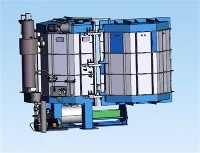


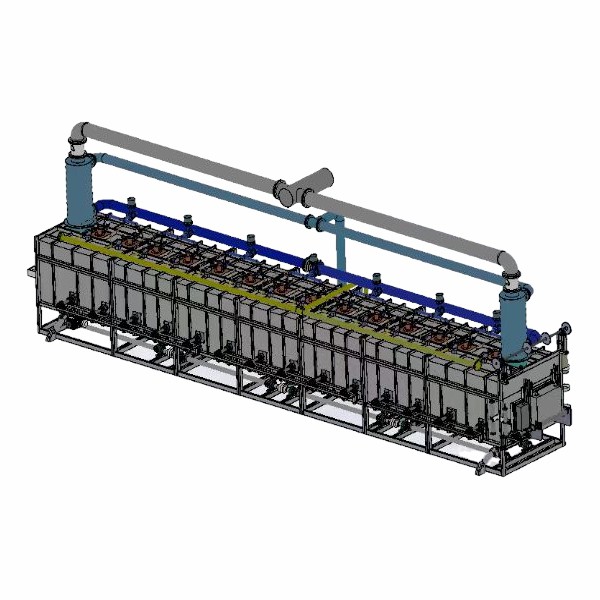
Regenerative Heating Furnace
Products Description
Industrial heating processes often consume a large amount of fuel because high-temperature exhaust gases leave the furnace carrying valuable heat energy. The regenerative heating system was developed to recover this lost energy and return it back into the combustion process.
JIMENG's Regenerative Heating Furnace combines heat storage technology with optimized combustion control to help manufacturers improve furnace efficiency, reduce operating costs, and achieve more sustainable metal heating processes.
How Does the Regenerative Heating Furnace Work?
The working principle of the Regenerative Heating Furnace is based on heat storage and heat exchange.
During operation, the heat generated from combustion is partially stored by regenerative materials when hot exhaust gases leave the furnace chamber. The stored heat is then transferred back to incoming combustion air, allowing the burner system to achieve more efficient combustion.
This continuous heat recovery process reduces exhaust heat loss and improves the overall thermal efficiency of the heating system.
Reducing Energy Loss in Metal Heating
For industries such as steel processing and forging, heating processes often run continuously for many hours. Recovering exhaust heat can significantly improve overall energy utilization.
Maintaining Consistent Heating Conditions
Stable combustion conditions help maintain uniform furnace temperature during long production periods.
Supporting Cleaner Manufacturing
Improved fuel utilization reduces unnecessary energy consumption and lowers emissions from industrial heating operations.
Reduced Heat Loss
Optimized furnace insulation and heat recovery design minimize energy waste during operation.
Applications
The Regenerative Heating Furnace is applied in:
Steel bar heating
Round steel heating
Forging preparation
Metal forming processes
Heat treatment production
Automotive component manufacturing
It is especially suitable for factories looking to upgrade existing gas-fired heating systems with improved heat recovery technology.
Why Choose JIMENG
JIMENG specializes in industrial heating and heat treatment equipment for metal processing industries.
Our experience includes:
Spring steel heating systems
Heat treatment furnaces
Walking beam furnaces
Industrial thermal equipment
By combining equipment manufacturing capability with process experience, we help customers develop practical heating solutions for modern production requirements.


About us

FAQ
1. What is a Regenerative Heating Furnace used for?
A Regenerative Heating Furnace is used for industrial metal heating processes where recovering waste heat can improve fuel utilization. It is suitable for applications such as steel bar heating, round steel heating, forging preparation, and other metal processing operations, depending on the furnace configuration.
2. How does a regenerative heating system save energy?
A regenerative heating system uses heat storage materials to recover thermal energy from exhaust gases. The recovered heat is transferred to incoming combustion air, reducing the amount of fuel required to reach the target heating conditions.
3. What is the difference between a regenerative heating furnace and a conventional industrial furnace?
A conventional furnace may discharge a considerable amount of heat through exhaust gases. A regenerative heating furnace uses a heat recovery system to store and reuse part of this energy, helping reduce exhaust heat loss and improve overall thermal efficiency.
4. What materials can be heated in a Regenerative Heating Furnace?
Depending on the furnace design and process requirements, regenerative heating furnaces can be used for heating steel bars, round steel, spring steel, and other metal materials. The furnace configuration is selected according to material dimensions, heating temperature, and production capacity.
5. Can a Regenerative Heating Furnace be customized for different production capacities?
Yes. JIMENG provides customized furnace designs according to workpiece dimensions, required heating temperature, production capacity, fuel type, and workshop layout. The heating system and furnace structure can be evaluated according to the customer's production requirements.
6. Can a regenerative heating furnace be integrated into an existing production line?
Yes. A regenerative heating furnace can be designed as an independent heating unit or integrated into an existing metal processing or forging production line. The connection and material handling arrangement depend on the customer's production process and workshop conditions.
Hot Tags: Regenerative Heating Furnace, China Regenerative Heating Furnace suppliers, factory, iron melting furnace for sale, induction furnace for copper melting, crucible furnace for sale, automatic melting furnace, electric melting furnace gold silver, high frequency induction melting furnace
Previous
No InformationNext
Spitfire FurnaceYou Might Also Like


Send Inquiry