


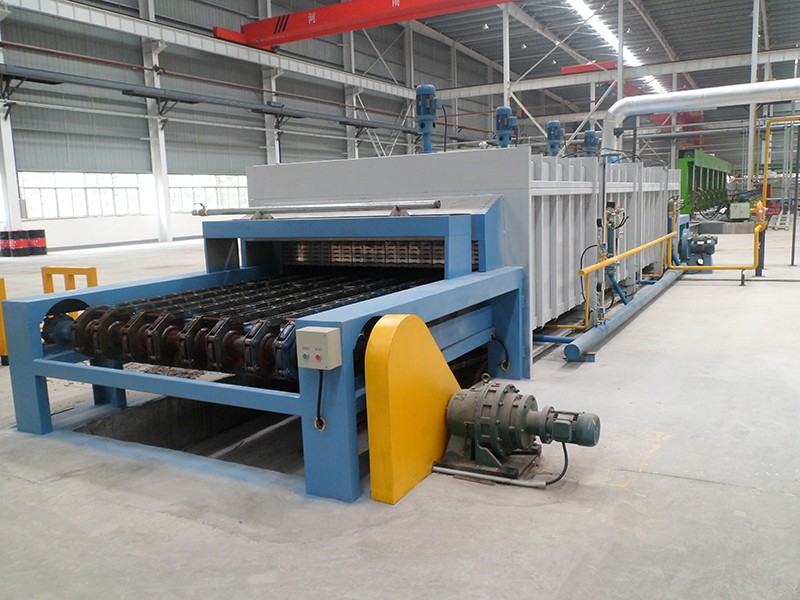
Tempering Furnace
Company Profile
Zibo Jimeng Environmental Protection Equipment Co., Ltd. is located in Huantai County, which is known as the hometown of architecture and the county of tons of grain. It is close to the former residence of Wang Yuyang, a historical and cultural celebrity. The company currently has 30 employees, covers an area of 8,000 square meters, has a standardized production workshop of 2,000 square meters and an office building of 1,000 square meters, and has a relatively complete quality control system and complete processing capabilities.
Why Choose Us
Our factory
The company currently has 30 employees, covers an area of 8,000 square meters, has a standardized production workshop of 2,000 square meters and an office building of 1,000 square meters, and has a relatively complete quality control system and complete processing capabilities.
Our product
The leading products are casting, automotive leaf springs, automotive coil springs, automotive stabilizers and other special production equipment for medium and low temperature heat treatment and industrial furnaces for other industries.
Our team
Equipped with a professional team with high and intermediate technical titles and an advanced mechanical drawing system, it is a technology-based enterprise integrating design, development, production and sales.
Our service
We try and respond to all concerns within 24 hours and our teams are always at your disposal in case of any emergencies.
Related Product

Walking Beam Reheating Furnace
The walking beam reheating furnace for automobile leaf springs is an industrial equipment specially used for heating automobile leaf springs.

Tempering furnace is a special equipment for heat treatment process of leaf spring, suitable for mass production.

Leaf spring end heating furnace adopts advanced heating technology, which can quickly heat up in a short time and achieve efficient production rhythm.

The mandrel in-and-out mechanism, the ear coiling clamping mechanism, the flipping mechanism that revolves around the mandrel, and the positioning and lifting mechanism are all part of the ear coiling device.

It is a device specially used for cooling during the quenching process of automobile leaf springs (i.e. steel leaf springs).

Leaf springs are usually used in the suspension system of automobiles, and in their production process, drilling is a key step for installation and fixing.

It is a kind of equipment specially used for heat treatment and quenching process of automobile leaf springs. Leaf springs are usually used in the suspension system of automobiles to provide shock absorption and support functions, and the quenching process is a key step to improve the hardness and strength of leaf springs.
What Is Tempering Furnace
Tempering furnace is a special equipment for heat treatment process of leaf spring, suitable for mass production. The product adopts advanced temperature control technology to ensure the temperature uniformity and stability during the whole tempering process. The furnace design focuses on energy saving and consumption reduction, equipped with automatic control system, and simplifies the operation process.
Improved strength and durability
One of the primary benefits of tempering furnace is that it improves the strength and durability of metals. When metal is heated and then cooled slowly, the molecules within the metal align themselves in a more orderly fashion. This process makes the metal stronger and less likely to break or shatter.
Increased hardness
Another benefit of tempering furnace is that it increases the hardness of the metal. Harder metal is less likely to be dented or scratched and can therefore maintain a more polished appearance for longer periods of time.
Ductility
In addition to increased strength and hardness, tempering furnace also improves the ductility of the metal. Ductility is a measure of a material's ability to deform under stress without breaking. By improving ductility, tempering furnace makes the metal less likely to crack or break under stress.
Corrosion resistance
Tempering furnace also helps to improve the corrosion resistance of a metal. When metal is heated and then cooled slowly, the outer layer of the metal becomes harder and less porous. This improved surface layer helps to protect the metal from corrosion and oxidation.
Enhanced electrical and thermal conductivity
Finally, tempering furnace can also enhance the electrical and thermal conductivity of the metal. This improved conductivity makes tempered metal an ideal choice for use in electrical applications where good conductivity is required.
Types of Tempering Furnaces
We offers a complete line of various glass tempering furnaces. Our expert team of engineers is available to help you choose the tempering furnace model that best fits your business.
Convection glass tempering furnaces
A type of tempering furnace that ensures even heating, spotless glass and low energy use.
Radiation glass tempering furnaces
Perfect for small- to medium-sized companies, this type of tempering furnace uses external compressed air to feed the convection system.
Continuous tempering furnaces
A tempering furnace build for high volume, this furnace can produce up to 11,302 feet of tempered glass per hour.
Glass bending furnaces
A tempering furnace for fabricators who produce j- or r-shaped tempered glass.
Learn more about finding the right tempering furnace for your business needs by filling out the form below.
Step-by-Step Guide to Using Tempering Furnace
Navigating the tempering process with tempering furnaces is a fascinating journey from preparation to completion. Here's a straightforward guide to ensure you get the most out of your tempering efforts:
Preparation
Begin by thoroughly cleaning the metal pieces to remove any surface impurities or residues. This prevents any inconsistencies during the tempering process. Properly preparing the metal ensures that the heat treatment is uniformly applied, leading to more predictable and desirable characteristics in the final product.
Preheating
Before introducing the metal, preheat your tempering furnace to the specific temperature required for your metal type. This temperature varies significantly depending on the alloy and the desired physical properties. Preheating the oven ensures that the metal is exposed to a consistent temperature as soon as it's placed inside, which is critical for achieving the desired outcome.
Placement
Carefully place the prepared metal inside the oven, ensuring it's positioned to allow for optimal air circulation around it. This provides even heating and avoids hotspots, which could lead to uneven tempering. The arrangement of the metal pieces inside the oven can significantly affect the tempering process's efficiency and effectiveness.
Tempering
Heat the metal for the predetermined time required to achieve the desired hardness and toughness. Depending on the metal's thickness and composition, this period can range from a few minutes to several hours. Consistency in timing is crucial as it directly influences the metal's final properties.
Monitoring
Throughout the tempering process, closely monitor the oven's temperature to ensure it remains steady. Fluctuations in temperature can alter the metal's structural integrity, potentially leading to suboptimal characteristics. This constant vigilance helps maintain the precision necessary for a successful tempering process.
Cooling
After the tempering time has elapsed, allow the metal to cool down. This can be done either inside the oven with the power off, promoting a gradual cooling process or by removing the metal to air cool in a controlled environment. The cooling method plays a significant role in determining the metal's final structure and properties.
When Is Tempering Furnace Used?
Tempering is most often performed after hardening processes. In these processes, the material is heated above its upper critical temperature followed by a rapid cooling aka quenching operation. Quenching is the immersion of steel in oil, hot water or forced air.
Such an operation makes the material hard and brittle, as brittle as glass in some cases. While we do need high hardness in many applications, the increased brittleness that accompanies it is not as desirable.
To reduce the brittleness and restore ductility, the metals are reheated, this time to lower temperatures (above 200°C). This helps us to strike a balance between hardness and ductility. The cooling rate during tempering is also slower than quenching.
For best results, the tempering process must be carried out immediately after quench-hardening. This helps to avoid the brittle characteristics brought out by the hardening process.
It should be kept in mind that any errors during the process can damage, distort or warp the material.
Tempering is also carried out when the material is hardened through other means such as a welding process. It also works for work-hardened materials. These are materials that have become hard through processes such as bending, drilling, forming, punching and rolling.
The tempering process significantly enhances the performance and durability of various metals, making it a key technique in many industries. Here's a closer look at the types of metals that benefit most from tempering:
1. Carbon steel
Widely used for its affordability and strength, carbon steel becomes even more durable and resistant to wear after tempering.
2. Alloy steel
This metal's versatility is enhanced by tempering, which improves its ability to withstand stress without becoming brittle.

3. Stainless steel
While it's known for its corrosion resistance, tempering stainless steel further increases its toughness, making it suitable for various applications.
4. Tool steel
Tools made from this metal are hardened and then tempered to achieve a balance of hardness and toughness, essential for cutting and machining tasks.
5. Spring steel
Tempering is crucial for spring steel, as it enhances its elasticity and ability to return to the original shape after bending or twisting.
Each of these metals undergoes tempering to achieve specific properties tailored to their applications, from automotive components to construction materials and beyond. The tempering metal process extends the life of these materials and enhances their performance in demanding environments.
Tempering furnaces play a pivotal role in executing heat treatment processes. These specialized heating devices create the controlled environments necessary for achieving precise temperature conditions during heat treatment. The choice of tempering furnace directly impacts the effectiveness of the treatment, influencing the material's final properties.
Temperature control
The ability to precisely control and maintain temperatures is crucial for achieving desired material properties. Different heat treatment processes require specific temperature ranges, and tempering furnaces must provide this accuracy.
Uniform heating
Tempering furnaces need to ensure even distribution of heat across the material. This uniformity prevents inconsistencies and ensures that the entire material undergoes the desired transformation.
Cooling mechanisms
Some heat treatment processes involve rapid cooling. Tempering furnaces may incorporate features or mechanisms for controlled cooling rates, a critical consideration for achieving the intended material characteristics.
Material compatibility
The type of material being treated influences the choice of tempering furnace. Different materials react differently to heat, and the tempering furnace must be compatible with the specific material's characteristics.
Safety measures
Tempering furnaces must adhere to safety standards to protect both the material being treated and the personnel involved in the process. This includes features such as emergency shut-off systems and protective enclosures.
Energy efficiency
In the context of modern industrial practices, energy efficiency is a key consideration. Efficient tempering furnaces not only reduce operational costs but also contribute to sustainability efforts.
Size and capacity
The tempering furnace must be appropriately sized to accommodate the volume and size of the materials being treated. This ensures efficiency and prevents unnecessary energy consumption.
Scenarios of Tempering Furnace
Tempering is used for steel, and some other metals, to improve the durability and strength of the material. Therefore, it is used in various industries and fields.
Manufacturing industry
The tempering furnace process is widely used in the manufacturing industry. For instance, the automotive industry utilizes tempering furnace furnaces to process vehicle components, such as engine parts, transmission components, and chassis. The aerospace industry uses the tempering process for aircraft parts to enhance their strength and durability. In the tool manufacturing industry, tools like hammers, wrenches, and chisels are often tempered to improve their hardness and fatigue resistance. In the construction industry, tempered steel is used for construction machinery, to improve the service life and safety performance.
Energy industry
The energy industry applies the tempering furnace process to produce heat-resistant and pressure-resistant steel components. For example, in the oil and gas industry, pipeline valves and drill bits are tempered to withstand high-pressure and high-temperature environments.
Electronics industry
The electronics industry also uses the tempering furnace process for some precision electronic components. For example, some tempered steel springs are used in electronic products to provide precise control and stability.
Renewable energy
Tempering furnace furnaces are also used in the field of renewable energy, such as solar and wind energy. In the solar industry, the process can be used to treat solar panels, brackets, and support structures to improve their resistance to environmental conditions. In the wind energy sector, turbine components, such as gears and shafts, can be subjected to tempering furnace to enhance their strength and reliability.
Preventative Maintenance for Tempering Furnace
Tempering furnaces play an important role in many metallurgical manufacturing operations including tempering, preheating, quenching, stress relieving, normalizing, aging, heat treatment solution, annealing, hydrogen embitterment relief, and more. These processes are often performed continuously, and that is why preventative maintenance on tempering furnaces is crucial. This can prolong the overall lifespan of your equipment as well as minimize the possibility of debilitating downtime. The most important part of preventative maintenance is regularly scheduled thorough inspections of the heat treating equipment. Inspections can catch small issues before they become major problems with expensive solutions. Below are some general guidelines and procedures when it comes to general maintenance and part replacement for your tempering furnace.
The first recommendations for preventative maintenance are about keeping the furnace clean. Always turn the equipment off before cleaning. Regularly clean rear and front louvers and ventilation ports. Clean interior control panel when dirty. Make sure your hands are free from oil, dirt, and chemicals when setting the temperature selector. Clean up and spills and remove any deposits from chamber walls. Always take care when loading or unloading the chamber to avoid damage to thermocouples or heating elements. It is also important to lubricate fan shaft bearings with high-temp lithium grease every three months. Inspect the fan belt regularly and replace if it looks cracked or worn. And obviously, never exceed the maximum operating temperature of the furnace.
In addition to cleaning and preventing failures of parts, it is important to keep an eye on the amount of energy being used and making sure your machine is running at the highest efficiency. Regularly inspecting the door seal will prevent heat and energy loss that can be quite costly if such loss goes unnoticed. These simple preventative tasks can prevent expensive replacements and downtime. Always refer to the user's manual for your tempering furnace when performing maintenance and repairs, and call the manufacturer if you have further questions or concerns about how your equipment is running. Being careless early on, or ignoring warning signs can mean big head aches later in the game. Save yourself the trouble and time by performing regular preventative maintenance.
Our factory
Zibo Jimeng Environmental Protection Equipment Co., Ltd. is located in Huantai County, which is known as the hometown of architecture and the county of tons of grain. It is close to the former residence of Wang Yuyang, a historical and cultural celebrity. The company currently has 30 employees, covers an area of 8,000 square meters, has a standardized production workshop of 2,000 square meters and an office building of 1,000 square meters, and has a relatively complete quality control system and complete processing capabilities. Equipped with a professional team with high and intermediate technical titles and an advanced mechanical drawing system, it is a technology-based enterprise integrating design, development, production and sales. The leading products are casting, automotive leaf springs, automotive coil springs, automotive stabilizers and other special production equipment for medium and low temperature heat treatment and industrial furnaces for other industries.


Our Certificate


FAQ
Hot Tags: tempering furnace, China tempering furnace suppliers, factory, small glass tempering machine, leaf spring fittings, leaf spring connectors, leaf spring forging equipment, drill machine automatic, leaf spring circuit breakers
Previous
Walking Beam Reheating FurnaceYou Might Also Like


Send Inquiry