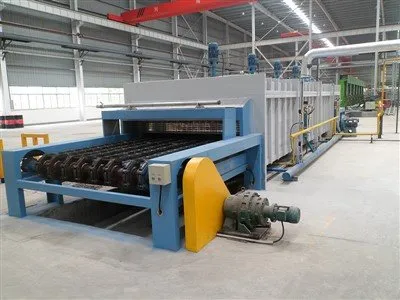
An automatic drilling machine is a sophisticated piece of equipment widely used in various industries, from manufacturing to construction. At the heart of many automatic drilling machines lies a crucial component: the hydraulic system. In this blog post, as an automatic drilling machine supplier, I'll delve into what the hydraulic system of an automatic drilling machine is, how it works, and its significance.
What is a Hydraulic System in an Automatic Drilling Machine?
A hydraulic system in an automatic drilling machine is a power - transmission system that uses pressurized hydraulic fluid to generate, control, and transmit power. It consists of several key components, each with a specific function.
The main parts of the hydraulic system in an automatic drilling machine include a hydraulic pump, hydraulic cylinders, valves, and hydraulic fluid. The hydraulic pump is responsible for converting mechanical energy into hydraulic energy by forcing the hydraulic fluid through the system. This pump is typically driven by an electric motor or an engine.
Hydraulic cylinders are another essential part of the system. They convert the hydraulic energy back into mechanical energy, which is used to perform the actual drilling operations. For example, the cylinder can be used to move the drill bit up and down, apply pressure to the workpiece during drilling, or control the feed rate of the drill.


Valves play a crucial role in controlling the flow and pressure of the hydraulic fluid. There are different types of valves, such as directional control valves, pressure control valves, and flow control valves. Directional control valves determine the direction of the fluid flow, allowing the hydraulic cylinders to move in the desired direction. Pressure control valves regulate the pressure within the system to prevent over - pressurization, which could damage the components. Flow control valves, on the other hand, control the speed of the hydraulic cylinders by adjusting the flow rate of the fluid.
The hydraulic fluid itself is a vital component. It serves as the medium for transmitting power and also lubricates the moving parts within the system, reducing friction and wear. Commonly used hydraulic fluids include mineral oils, synthetic oils, and water - glycol mixtures.
How Does the Hydraulic System Work?
The operation of the hydraulic system in an automatic drilling machine can be divided into several steps. First, the hydraulic pump draws in the hydraulic fluid from a reservoir. As the pump operates, it increases the pressure of the fluid and forces it into the hydraulic lines.
The pressurized fluid then flows through the valves, which direct it to the appropriate hydraulic cylinders. When the fluid enters a hydraulic cylinder, it acts on a piston inside the cylinder. The pressure of the fluid causes the piston to move, and this movement is transferred to the drill bit or other components of the drilling machine.
For example, when the drill needs to be lowered onto the workpiece, the directional control valve allows the fluid to enter the bottom of the hydraulic cylinder. The pressure of the fluid pushes the piston upwards, causing the drill to move down. Conversely, when the drill needs to be retracted, the valve redirects the fluid to the top of the cylinder, pushing the piston down and lifting the drill.
The pressure control valves continuously monitor the pressure within the system. If the pressure exceeds a pre - set limit, the pressure control valve will open, allowing some of the fluid to return to the reservoir, thus reducing the pressure. The flow control valves adjust the speed of the drill's movement by regulating the amount of fluid flowing into the cylinders.
Significance of the Hydraulic System in an Automatic Drilling Machine
The hydraulic system offers several advantages that make it an ideal choice for automatic drilling machines.
Power and Precision
One of the main advantages is its ability to generate high forces. Hydraulic systems can produce a large amount of force with relatively small components. This is crucial for drilling operations, especially when dealing with hard materials or large - diameter holes. The high - force output allows the drill bit to penetrate the workpiece effectively.
In addition to power, hydraulic systems also offer high precision. The valves can be precisely controlled to regulate the flow and pressure of the fluid, which in turn allows for accurate control of the drill's movement. This precision is essential for achieving the required hole size, depth, and surface finish.
Flexibility
Hydraulic systems are highly flexible. They can be easily adapted to different drilling requirements. For example, by changing the settings of the valves, the feed rate, pressure, and stroke length of the drill can be adjusted. This flexibility makes automatic drilling machines with hydraulic systems suitable for a wide range of applications, from small - scale workshops to large - scale industrial production.
Reliability
Hydraulic systems are known for their reliability. The hydraulic fluid lubricates the moving parts, reducing friction and wear. This extends the lifespan of the components and reduces the need for frequent maintenance. In addition, the simple and robust design of hydraulic components makes them less prone to failure compared to some other types of power - transmission systems.
Related Equipment and Links
As an automatic drilling machine supplier, we also offer related equipment such as Quenching Machine and Leaf Spring Forming Equipment. Our Quenching Machine is designed to improve the hardness and strength of metal parts, which is often required after the drilling process. The leaf spring forming equipment can be used to manufacture leaf springs, which are important components in many mechanical systems.
Contact for Purchase and Negotiation
If you are interested in our automatic drilling machines or related equipment, we welcome you to contact us for purchase and negotiation. Our team of experts is ready to provide you with detailed information, technical support, and customized solutions to meet your specific needs. Whether you are a small - business owner or a large - scale manufacturer, we have the right products for you.
References
- Hydraulic Systems Technology, Third Edition by Arthur R. Spitzer
- Fluid Power with Applications by Anthony Esposito