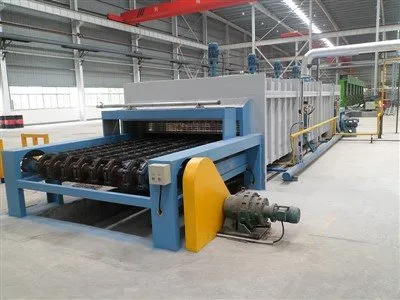
In the realm of industrial manufacturing, the quenching machine stands as a cornerstone technology, playing a pivotal role in enhancing the mechanical properties of metals. As a leading supplier of quenching machines, I am excited to delve into the intricacies of these remarkable devices, exploring their functions, applications, and the benefits they offer to various industries.
What is a Quenching Machine?
A quenching machine is a specialized piece of equipment designed to rapidly cool heated metal components, a process known as quenching. Quenching is a critical step in heat treatment, which is used to alter the physical and mechanical properties of metals, such as hardness, strength, and toughness. By subjecting the metal to a controlled cooling process, the quenching machine can transform its microstructure, resulting in improved performance and durability.
The basic principle behind quenching is to heat the metal to a specific temperature, known as the austenitizing temperature, and then rapidly cool it by immersing it in a quenching medium, such as water, oil, or polymer solution. The rapid cooling rate prevents the formation of soft ferrite and pearlite phases, instead promoting the formation of a hard and brittle phase called martensite. The resulting martensitic structure gives the metal its enhanced hardness and strength.
Types of Quenching Machines
There are several types of quenching machines available, each designed to meet the specific needs of different industries and applications. Some of the most common types include:
- Batch Quenching Machines: These machines are used for processing a batch of metal components at once. The components are loaded into a basket or fixture and then immersed in the quenching medium. Batch quenching machines are suitable for small to medium-sized production runs and are often used in job shops and small manufacturing facilities.
- Continuous Quenching Machines: Continuous quenching machines are designed for high-volume production. The metal components are fed through the machine on a conveyor belt or other continuous feeding system and are quenched as they pass through the quenching zone. Continuous quenching machines are commonly used in large-scale manufacturing plants, such as automotive and aerospace industries.
- Induction Quenching Machines: Induction quenching machines use electromagnetic induction to heat the metal components locally before quenching. This method allows for precise control of the heating and quenching process, resulting in improved hardness and surface finish. Induction quenching machines are often used for hardening specific areas of a component, such as gears, shafts, and bearings.
- Salt Bath Quenching Machines: Salt bath quenching machines use a molten salt bath as the quenching medium. The salt bath provides a more uniform cooling rate compared to other quenching media, resulting in less distortion and cracking of the metal components. Salt bath quenching machines are commonly used for quenching high-alloy steels and other materials that require a slow cooling rate.
Applications of Quenching Machines
Quenching machines are used in a wide range of industries, including automotive, aerospace, manufacturing, and tool and die making. Some of the common applications of quenching machines include:
- Automotive Industry: Quenching machines are used to harden various automotive components, such as gears, shafts, and crankshafts. By improving the hardness and strength of these components, quenching helps to increase their durability and performance, reducing the risk of wear and failure.
- Aerospace Industry: In the aerospace industry, quenching machines are used to process high-strength alloys and titanium components. These materials require precise heat treatment to achieve the desired mechanical properties, and quenching machines play a crucial role in ensuring the quality and reliability of aerospace components.
- Manufacturing Industry: Quenching machines are used in the manufacturing of a variety of products, including machinery parts, tools, and equipment. By improving the hardness and strength of these products, quenching helps to increase their lifespan and performance, reducing the need for frequent replacements.
- Tool and Die Making Industry: Quenching machines are used to harden cutting tools, dies, and molds. By improving the hardness and wear resistance of these tools, quenching helps to increase their cutting performance and lifespan, reducing the cost of tooling and improving productivity.
Benefits of Using Quenching Machines
There are several benefits to using quenching machines in industrial manufacturing, including:
- Improved Mechanical Properties: Quenching machines can significantly improve the hardness, strength, and toughness of metal components, making them more durable and resistant to wear and fatigue.
- Enhanced Product Quality: By precisely controlling the quenching process, quenching machines can ensure consistent and uniform hardness and microstructure throughout the metal component, resulting in improved product quality and performance.
- Increased Productivity: Quenching machines can process metal components quickly and efficiently, reducing the time and cost of production. This allows manufacturers to increase their productivity and meet the demands of their customers more effectively.
- Cost Savings: By improving the durability and performance of metal components, quenching machines can reduce the need for frequent replacements, resulting in cost savings for manufacturers. Additionally, the use of quenching machines can help to reduce scrap rates and improve overall production efficiency, further reducing costs.
Our Quenching Machines
As a leading supplier of quenching machines, we offer a wide range of high-quality machines to meet the specific needs of our customers. Our quenching machines are designed and manufactured using the latest technology and materials, ensuring reliable performance and long service life.
Our product portfolio includes batch quenching machines, continuous quenching machines, induction quenching machines, and salt bath quenching machines. We also offer custom-designed quenching machines to meet the unique requirements of our customers. Our team of experienced engineers and technicians can work with you to develop a quenching solution that is tailored to your specific needs and applications.
In addition to our quenching machines, we also offer a range of related products and services, including Walking Beam Reheating Furnace and Leaf Spring Forming Equipment. Our comprehensive range of products and services allows us to provide our customers with a complete solution for their heat treatment needs.
Contact Us for Quenching Machine Solutions
If you are looking for a reliable and high-quality quenching machine for your industrial manufacturing needs, look no further. We are a leading supplier of quenching machines, offering a wide range of products and services to meet the specific needs of our customers.
Whether you need a batch quenching machine for small to medium-sized production runs or a continuous quenching machine for high-volume production, we have the solution for you. Our team of experienced engineers and technicians can work with you to develop a quenching solution that is tailored to your specific needs and applications.


To learn more about our quenching machines and how they can benefit your business, please visit our website at Quenching Machine. You can also contact us directly to speak with one of our sales representatives. We look forward to hearing from you and helping you find the perfect quenching machine for your needs.
References
- ASM Handbook Volume 4: Heat Treating. ASM International.
- Metals Handbook: Properties and Selection: Irons and Steels. ASM International.
- Heat Treatment Principles and Techniques. ASM International.