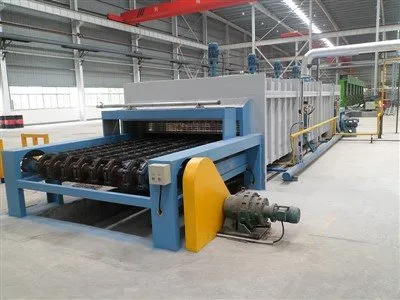
As a quenching pool supplier, I've witnessed firsthand the challenges that come with the noise generated by these industrial components. Quenching pools are essential in many manufacturing processes, especially in heat treatment, where they rapidly cool metal parts to achieve desired material properties. However, the noise they produce can be a significant issue, not only for the workers in the vicinity but also for meeting environmental noise regulations. In this blog, I'll share some effective strategies on how to reduce the noise generated by a quenching pool.
Understanding the Sources of Noise in Quenching Pools
Before we dive into the solutions, it's crucial to understand where the noise in quenching pools comes from. The primary sources of noise include the rapid vaporization of water when hot metal is immersed, the splashing of water, and the operation of associated equipment such as pumps and agitators.
When a hot metal part is plunged into the quenching pool, the water in contact with the metal surface instantly vaporizes, creating steam bubbles. The rapid formation and collapse of these bubbles, known as cavitation, generate intense noise. Additionally, the splashing of water as the metal enters the pool and the movement of water due to agitation can contribute to the overall noise level.
1. Optimize the Quenching Process
One of the most effective ways to reduce noise is to optimize the quenching process itself. This can involve adjusting the temperature of the quenching medium, the speed at which the metal is immersed, and the size and shape of the metal parts.
- Temperature Control: Maintaining the quenching medium at an appropriate temperature can reduce the intensity of vaporization and cavitation. If the water is too cold, the vaporization will be more rapid and violent, leading to increased noise. On the other hand, if the water is too hot, the quenching effect may be compromised. By carefully controlling the temperature, we can achieve a balance between effective quenching and noise reduction.
- Immersion Speed: The speed at which the hot metal is immersed in the quenching pool also affects the noise level. A slower immersion speed can reduce the sudden impact and splashing, resulting in less noise. However, it's important to ensure that the immersion speed is still fast enough to achieve the desired quenching effect.
- Part Design: The size and shape of the metal parts can influence the noise generated during quenching. Irregularly shaped parts or parts with sharp edges can cause more turbulence and splashing, leading to increased noise. By optimizing the part design, we can minimize these effects and reduce the overall noise level.
2. Use Noise - Absorbing Materials
Another approach to reducing noise is to use noise - absorbing materials around the quenching pool. These materials can help to dampen the sound waves and prevent them from spreading into the surrounding environment.
- Pool Liners: Installing noise - absorbing pool liners can be an effective way to reduce the noise generated by the splashing of water. These liners are made of materials that can absorb sound energy, such as rubber or foam. They can be installed on the walls and bottom of the quenching pool to reduce the noise reflections.
- Enclosures: Building an enclosure around the quenching pool can also help to contain the noise. The enclosure can be made of sound - insulating materials, such as fiberglass or acoustic panels. It should be designed to fit tightly around the pool and have proper ventilation to prevent overheating.
3. Upgrade Associated Equipment
The equipment associated with the quenching pool, such as pumps and agitators, can also be a significant source of noise. Upgrading this equipment to more quiet models can help to reduce the overall noise level.
- Pumps: Pumps are used to circulate the quenching medium and maintain its temperature. Older pumps may be noisy due to worn - out bearings or inefficient designs. By upgrading to newer, more energy - efficient pumps with quieter operation, we can significantly reduce the noise generated by the pumping system.
- Agitators: Agitators are used to ensure uniform temperature distribution in the quenching pool. Similar to pumps, older agitators may be noisy. Upgrading to modern agitators with better - designed impellers and motors can help to reduce the noise level.
4. Implement Maintenance Programs
Regular maintenance of the quenching pool and its associated equipment is essential for noise reduction. A well - maintained system is less likely to produce excessive noise.
- Inspection and Repair: Regularly inspect the quenching pool, pumps, agitators, and other equipment for signs of wear and damage. Replace any worn - out parts promptly to prevent them from causing increased noise.
- Lubrication: Proper lubrication of moving parts, such as pump bearings and agitator shafts, can reduce friction and noise. Follow the manufacturer's recommendations for lubrication intervals and use the appropriate lubricants.
5. Consider Alternative Quenching Methods
In some cases, it may be possible to use alternative quenching methods that generate less noise. For example, Tempering Furnace and Tempering Furnace can be used in combination with other heat treatment processes to achieve similar results with less noise.
- Gas Quenching: Gas quenching is an alternative to water quenching that uses a high - pressure gas, such as nitrogen or helium, to cool the metal parts. Gas quenching can generate less noise compared to water quenching because there is no rapid vaporization or splashing of water. However, it may require more specialized equipment and higher operating costs.
- Polymer Quenching: Polymer quenching uses a water - based polymer solution as the quenching medium. This solution can provide a more controlled cooling rate and reduce the noise generated by vaporization and cavitation. Polymer quenching is also less corrosive than water quenching, which can extend the lifespan of the quenching pool and associated equipment.
Conclusion
Reducing the noise generated by a quenching pool is a multi - faceted challenge that requires a combination of process optimization, the use of noise - absorbing materials, equipment upgrades, maintenance, and, in some cases, alternative quenching methods. As a quenching pool supplier, I'm committed to helping our customers find the most effective solutions to this problem.
If you're facing noise issues with your quenching pool or are interested in learning more about our products and services, I encourage you to reach out to us for a consultation. We can work together to develop a customized solution that meets your specific needs and helps you achieve a quieter and more efficient manufacturing environment.

References
- ASM Handbook Volume 4: Heat Treating. ASM International.
- Industrial Noise Control and Acoustics. C. M. Harris. McGraw - Hill.
- Heat Treatment Principles and Techniques. R. A. Lula. CRC Press.