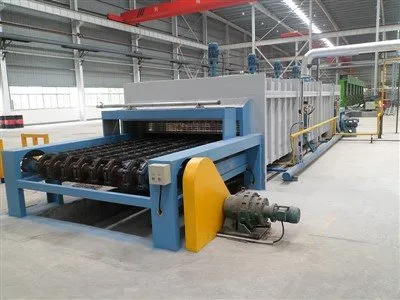
In the realm of industrial manufacturing, the quenching pool holds a position of paramount importance. As a leading quenching pool supplier, I've witnessed firsthand the transformative role these pools play in various manufacturing processes. This blog aims to delve into the purpose of a quenching pool, exploring its significance, applications, and the benefits it offers to industries worldwide.
Understanding Quenching
Before we dive into the purpose of a quenching pool, it's essential to understand the process of quenching itself. Quenching is a heat treatment process that involves rapidly cooling a material, typically metal, from a high temperature to room temperature. This rapid cooling is achieved by immersing the heated material in a quenching medium, such as water, oil, or a polymer solution. The goal of quenching is to alter the material's microstructure, which in turn enhances its mechanical properties, such as hardness, strength, and wear resistance.
The Purpose of a Quenching Pool
The primary purpose of a quenching pool is to provide a controlled environment for the quenching process. By immersing the heated material in the pool, manufacturers can ensure that the cooling rate is consistent and rapid, which is crucial for achieving the desired material properties. Here are some of the key purposes of a quenching pool:
1. Hardening Metals
One of the most common applications of a quenching pool is to harden metals. When a metal is heated to a specific temperature and then rapidly cooled, its crystal structure undergoes a transformation, resulting in increased hardness. This is particularly important in industries such as automotive, aerospace, and tool manufacturing, where hard and durable components are essential. For example, in the production of Leaf Spring Forming Equipment, quenching is used to harden the springs, ensuring they can withstand the high stresses and loads they are subjected to.
2. Improving Wear Resistance
In addition to hardening metals, quenching can also improve their wear resistance. By altering the microstructure of the metal, quenching can create a surface layer that is more resistant to abrasion, corrosion, and other forms of wear. This is beneficial in applications where components are exposed to harsh environments or high levels of friction, such as in mining equipment, construction machinery, and industrial bearings.
3. Enhancing Strength and Toughness
Quenching can also enhance the strength and toughness of metals. By controlling the cooling rate during the quenching process, manufacturers can optimize the balance between hardness and toughness, resulting in components that are both strong and ductile. This is important in applications where components need to withstand high impact loads or dynamic stresses, such as in the Volume Ear Furnace industry, where furnace components need to be able to withstand extreme temperatures and mechanical forces.
4. Controlling Distortion
Another important purpose of a quenching pool is to control distortion. When a metal is heated and cooled rapidly, it can undergo significant thermal stresses, which can cause it to warp or deform. By using a quenching pool, manufacturers can control the cooling rate and minimize these thermal stresses, reducing the risk of distortion and ensuring that components maintain their dimensional accuracy.
Types of Quenching Pools
There are several types of quenching pools available, each designed to meet the specific needs of different industries and applications. Some of the most common types of quenching pools include:
1. Water Quenching Pools
Water quenching pools are the most commonly used type of quenching pool. Water is an excellent quenching medium because it has a high heat transfer coefficient, which means it can rapidly cool the heated material. However, water quenching can also cause problems such as distortion and cracking, especially in materials that are sensitive to rapid cooling. To minimize these problems, water quenching pools often use additives or agitation to control the cooling rate.
2. Oil Quenching Pools
Oil quenching pools are another popular type of quenching pool. Oil has a lower heat transfer coefficient than water, which means it cools the heated material more slowly. This makes oil quenching a better option for materials that are sensitive to rapid cooling, such as high-carbon steels and alloy steels. Oil quenching can also provide better control over the cooling rate, which can help to minimize distortion and cracking.
3. Polymer Quenching Pools
Polymer quenching pools use a polymer solution as the quenching medium. Polymer solutions have a variable heat transfer coefficient, which means they can be tailored to provide a specific cooling rate. This makes polymer quenching a versatile option for a wide range of materials and applications. Polymer quenching can also provide better control over the cooling rate than water or oil quenching, which can help to minimize distortion and cracking.
Benefits of Using a Quenching Pool
Using a quenching pool offers several benefits to industries that require high-quality, durable components. Some of the key benefits of using a quenching pool include:
1. Improved Material Properties
By using a quenching pool, manufacturers can improve the mechanical properties of their materials, such as hardness, strength, and wear resistance. This can result in components that are more durable, reliable, and perform better in their intended applications.
2. Increased Productivity
Quenching pools can also help to increase productivity by reducing the time and cost required to produce high-quality components. By providing a controlled environment for the quenching process, manufacturers can ensure that the cooling rate is consistent and rapid, which can help to reduce the overall processing time. Additionally, quenching pools can help to minimize the need for post-processing operations, such as machining and grinding, which can further reduce the production time and cost.
3. Enhanced Quality Control
Using a quenching pool can also enhance quality control by providing a more consistent and repeatable quenching process. By controlling the cooling rate and other process parameters, manufacturers can ensure that the components they produce meet the required specifications and standards. This can help to reduce the risk of product failures and recalls, which can have a significant impact on the reputation and profitability of a company.
4. Environmental Friendliness
Quenching pools can also be more environmentally friendly than other heat treatment processes. By using a quenching pool, manufacturers can reduce the amount of energy and water required to produce high-quality components. Additionally, some quenching pools use environmentally friendly quenching media, such as polymer solutions, which can help to reduce the environmental impact of the quenching process.
Conclusion
In conclusion, the purpose of a quenching pool is to provide a controlled environment for the quenching process, which is essential for achieving the desired material properties in various industries and applications. By using a quenching pool, manufacturers can improve the hardness, strength, wear resistance, and other mechanical properties of their materials, resulting in components that are more durable, reliable, and perform better in their intended applications. As a leading Quenching Pool supplier, we understand the importance of providing high-quality quenching pools that meet the specific needs of our customers. If you are interested in learning more about our quenching pools or would like to discuss your specific requirements, please contact us to start a procurement negotiation. We look forward to working with you to help you achieve your manufacturing goals.


References
- ASM Handbook Volume 4: Heat Treating, ASM International
- Metals Handbook: Properties and Selection: Irons and Steels, ASM International
- Heat Treatment Principles and Techniques, CRC Press