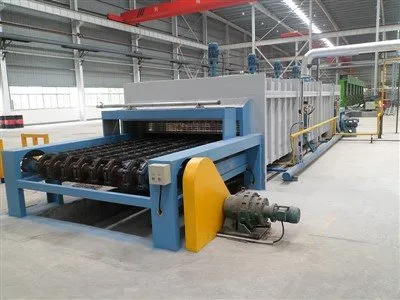
Hey there! If you're in the business of metalworking, you're probably familiar with quenching, a crucial process that can transform the properties of metals. As a quenching pool supplier, I get asked a lot about the maximum size of workpieces that can be quenched in a pool. So, let's dive right into it!
Understanding Quenching
Before we talk about the size limits, let's quickly go over what quenching is. Quenching is a heat treatment process where a metal is heated to a specific temperature and then rapidly cooled, usually by immersing it in a liquid like water, oil, or a polymer solution. This rapid cooling changes the metal's microstructure, making it harder and more wear-resistant.
Factors Affecting the Maximum Workpiece Size
The maximum size of a workpiece that can be quenched in a pool depends on several factors. Here are the main ones:
1. Quenching Pool Capacity
The most obvious factor is the size of the quenching pool itself. A larger pool can accommodate bigger workpieces. But it's not just about the physical dimensions. The pool also needs to have enough liquid volume to absorb the heat from the workpiece without overheating too quickly. If the liquid gets too hot, it won't be able to cool the workpiece fast enough, and the quenching process won't be effective.
2. Heat Transfer Rate
The rate at which heat is transferred from the workpiece to the quenching liquid is crucial. Larger workpieces have more mass and therefore more heat to dissipate. If the heat transfer rate is too slow, the center of the workpiece may not cool fast enough, resulting in uneven hardness and potential cracking. The type of quenching liquid used can also affect the heat transfer rate. For example, water has a higher heat transfer coefficient than oil, so it can cool the workpiece faster.
3. Workpiece Material
Different metals have different thermal properties, which can affect how they respond to quenching. Some metals, like steel, are more suitable for quenching than others. The composition of the metal, including the presence of alloying elements, can also influence the quenching process. For example, high-carbon steels tend to harden more easily during quenching than low-carbon steels.
4. Quenching Method
There are different ways to quench a workpiece, such as direct immersion, spray quenching, or interrupted quenching. The method used can affect the maximum size of the workpiece that can be quenched effectively. For example, spray quenching can be more suitable for larger workpieces because it allows for more controlled cooling.
Calculating the Maximum Workpiece Size
So, how do you determine the maximum size of a workpiece that can be quenched in a particular pool? Well, there's no one-size-fits-all answer. It usually involves a combination of theoretical calculations and practical experience.
One way to estimate the maximum size is to consider the heat capacity of the quenching liquid and the heat generated by the workpiece. The heat capacity of a liquid is the amount of heat it can absorb per unit mass per degree of temperature change. By knowing the heat capacity of the quenching liquid and the initial and final temperatures of the liquid and the workpiece, you can calculate how much heat the liquid can absorb.
However, these calculations can be quite complex, and they often need to be adjusted based on real-world factors. That's where our expertise as a quenching pool supplier comes in. We've worked with a wide range of workpieces and quenching applications, and we can help you determine the best pool size and quenching setup for your specific needs.
Examples of Workpiece Sizes
To give you a better idea of what's possible, here are some examples of workpiece sizes that can typically be quenched in different types of pools:


- Small Pools: These are usually used for small to medium-sized workpieces, such as gears, shafts, and small tooling. Workpieces up to a few inches in diameter and a few feet in length can be quenched in small pools.
- Medium Pools: Medium-sized pools can handle larger workpieces, such as automotive components, industrial machinery parts, and medium-sized forgings. Workpieces up to a foot or two in diameter and several feet in length can be quenched in medium pools.
- Large Pools: For very large workpieces, such as heavy-duty industrial equipment parts, large forgings, and structural components, large pools are required. Workpieces several feet in diameter and tens of feet in length can be quenched in large pools.
The Importance of Choosing the Right Quenching Pool
Choosing the right quenching pool is crucial for the success of your quenching process. A pool that's too small won't be able to accommodate your workpieces, while a pool that's too large can be wasteful and expensive to operate.
As a quenching pool supplier, we offer a wide range of pool sizes and configurations to meet your specific requirements. Our pools are designed to provide efficient heat transfer, uniform cooling, and reliable performance. We also offer custom solutions to ensure that your quenching pool is tailored to your exact needs.
Related Equipment
In addition to quenching pools, we also supply other equipment that can enhance your quenching process. For example, Walking Beam Reheating Furnace is a great option for heating your workpieces to the right temperature before quenching. It provides precise temperature control and uniform heating, which is essential for a successful quenching process.
Another important piece of equipment is the Leaf Spring Forming Equipment. This equipment can be used to shape your workpieces into the desired form before quenching. It ensures that your workpieces have the right dimensions and geometry for optimal quenching results.
And if you're looking for a reliable source of walking beam reheating furnaces, check out our Walking Beam Reheating Furnace factory. We have years of experience in manufacturing high-quality furnaces that are designed to meet the needs of the metalworking industry.
Contact Us for Your Quenching Needs
If you're interested in learning more about our quenching pools or any of our other products, don't hesitate to contact us. We're here to help you find the best solutions for your metalworking needs. Whether you're a small shop or a large industrial manufacturer, we have the expertise and resources to provide you with the right equipment and support.
Let's work together to take your quenching process to the next level!
References
- "Metallurgy for the Non-Metallurgist" by John D. Verhoeven
- "Heat Treatment Principles and Techniques" by George E. Totten and David Scott MacKenzie