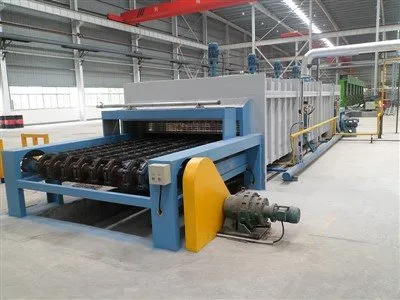
The disposal of solid waste has become a global challenge in recent years. With increasing population and urbanization, the volume of solid waste is rising at an alarming rate. Traditional waste - disposal methods are proving to be less effective and environmentally unfriendly. One promising technology is the Plasma Solid Waste Furnace. As a supplier of Plasma Solid Waste Furnaces, I am here to delve into the regulations and standards governing these remarkable pieces of equipment.
The Basics of Plasma Solid Waste Furnaces
A Plasma Solid Waste Furnace is a high - tech solution for waste treatment. It uses plasma technology, which generates extremely high temperatures. When solid waste is introduced into the furnace, the high - energy plasma breaks down the waste at the molecular level. This process is known as gasification or pyrolysis, depending on the operating conditions. Organic materials are converted into synthesis gas (syngas), while inorganic materials are vitrified into a stable slag.
International and National Regulations
International Perspective
On an international scale, there are several agreements and initiatives that indirectly influence the regulations of Plasma Solid Waste Furnaces. The Basel Convention, for example, aims to control the transboundary movement of hazardous waste. Since some solid waste may contain hazardous substances, Plasma Solid Waste Furnaces must comply with the principles of this convention when dealing with waste import and export.


The World Health Organization (WHO) also sets air - quality guidelines. Plasma Solid Waste Furnaces are required to limit the emission of harmful pollutants such as dioxins, furans, heavy metals, and particulate matter. These pollutants can have severe health impacts, including respiratory diseases, cancer, and neurotoxicity.
National Regulations
Each country has its own set of regulations for waste management and environmental protection. In the United States, the Environmental Protection Agency (EPA) has strict rules regarding emissions from waste - to - energy facilities, including Plasma Solid Waste Furnaces. The Clean Air Act mandates limits on the release of pollutants into the atmosphere. The Resource Conservation and Recovery Act (RCRA) regulates the handling, treatment, storage, and disposal of solid and hazardous waste.
In the European Union, the Waste Framework Directive sets the overall strategy for waste management. Member states are required to implement specific regulations based on this directive. For example, the Industrial Emissions Directive (IED) aims to reduce emissions from industrial installations, including waste - treatment facilities. Plasma Solid Waste Furnaces in EU countries must adhere to these strict emissions limits and undergo regular inspections.
Technical Standards
Design Standards
The design of a Plasma Solid Waste Furnace must meet certain technical requirements. The materials used in the construction of the furnace should be able to withstand high temperatures and corrosive environments. The insulation system is crucial to prevent heat loss and ensure the safety of the operators.
The furnace should have a proper feeding system to ensure a continuous and uniform supply of solid waste. The feeding mechanism must be designed to handle different types and sizes of waste materials. Additionally, the furnace should have efficient gas - collection systems to capture and treat the syngas produced during the waste - treatment process.
Safety Standards
Safety is of utmost importance in the operation of Plasma Solid Waste Furnaces. There should be multiple safety features, such as emergency shutdown systems, pressure - relief valves, and fire - suppression systems. The operators must be trained to handle potential hazards, including high - voltage plasma generation and the handling of hazardous gases.
The furnace should also be designed to prevent the leakage of harmful substances. This includes proper sealing of all openings and connections, as well as the installation of gas - monitoring systems to detect any leaks early.
Performance Standards
Performance standards are used to evaluate the efficiency and effectiveness of Plasma Solid Waste Furnaces. One of the key performance indicators is the waste - conversion rate. A high - quality furnace should be able to convert a large percentage of the input waste into useful products, such as syngas and slag.
The energy efficiency of the furnace is also an important factor. A well - designed Plasma Solid Waste Furnace should minimize the energy input required for the waste - treatment process and maximize the energy output in the form of syngas.
Associated Equipment and Standards
Plasma Solid Waste Furnaces are often part of a larger waste - treatment system. Other equipment, such as Storing Heat To Burn Exhaust Gas Furnace and Desulfurization and Denitrification Tower, are used to further treat the exhaust gases and improve the overall environmental performance of the system.
The Storing Heat To Burn Exhaust Gas Furnace helps to utilize the heat generated during the waste - treatment process more efficiently. It stores the heat and uses it to burn the exhaust gases, reducing the need for additional fuel. The standards for this equipment focus on heat - storage efficiency, combustion efficiency, and emissions control.
The Desulfurization and Denitrification Tower is used to remove sulfur dioxide (SO₂) and nitrogen oxides (NOₓ) from the exhaust gases. The standards for this equipment are related to the removal efficiency of these pollutants. The tower should be able to achieve a high removal rate while minimizing the consumption of chemicals and energy.
Our Plasma Solid Waste Furnaces and Compliance
As a supplier of Plasma Solid Waste Furnaces, we take great pride in ensuring that our products comply with all relevant regulations and standards. We work closely with research institutions and regulatory authorities to stay updated on the latest requirements.
Our furnaces are designed and manufactured using state - of - the - art technology and high - quality materials. We conduct rigorous testing and quality - control procedures to ensure that each furnace meets the performance, safety, and environmental standards. Our team of experts provides comprehensive training and after - sales support to our customers to ensure the proper operation and maintenance of the equipment.
Conclusion
The regulations and standards for Plasma Solid Waste Furnaces are essential for ensuring environmental protection, public health, and the efficient operation of waste - treatment facilities. As a supplier, we are committed to providing high - quality products that comply with these regulations. If you are in the market for a Plasma Solid Waste Furnace or want to learn more about our products, we encourage you to contact us for a detailed discussion and potential procurement. We are ready to work with you to find the best waste - treatment solution for your needs.
References
- Basel Convention on the Control of Transboundary Movements of Hazardous Wastes and Their Disposal.
- World Health Organization, Air Quality Guidelines.
- United States Environmental Protection Agency, Clean Air Act and Resource Conservation and Recovery Act.
- European Union, Waste Framework Directive and Industrial Emissions Directive.