Hey there! As a quenching pool supplier, I've been getting a lot of questions lately about the flow patterns in a quenching pool. So, I thought I'd take some time to break it down and share what I know.
First off, let's start with the basics. Quenching is a heat treatment process where a metal is heated to a specific temperature and then rapidly cooled by plunging it into a quenching medium, like water, oil, or a polymer solution. The quenching pool is where this rapid cooling takes place, and the flow patterns within it play a crucial role in determining the quality of the quenched metal.
Types of Flow Patterns
There are mainly two types of flow patterns in a quenching pool: laminar flow and turbulent flow.
Laminar Flow
Laminar flow is like a well - behaved stream. In this pattern, the fluid moves in smooth, parallel layers with little to no mixing between the layers. Think of it as cars on a highway all moving in straight lines at a constant speed. In a quenching pool, laminar flow can be beneficial in some cases. For example, when you're quenching small, delicate parts, laminar flow can provide a more uniform cooling rate. The smooth flow ensures that the heat is transferred evenly from the metal to the quenching medium, reducing the risk of thermal stress and cracking.
However, laminar flow also has its drawbacks. Since there's limited mixing, the temperature of the quenching medium near the metal surface can quickly rise. This can lead to a phenomenon called "vapor blanketing." When the metal is plunged into the quenching medium, the heat causes a layer of vapor to form around it. In laminar flow, this vapor layer can persist, insulating the metal from the cooler parts of the quenching medium and slowing down the cooling rate.
Turbulent Flow
Turbulent flow is the complete opposite of laminar flow. It's chaotic, with the fluid moving in irregular patterns and mixing vigorously. Picture a wild river with lots of eddies and whirlpools. In a quenching pool, turbulent flow is often preferred for larger parts or when you need a very rapid cooling rate.
The intense mixing in turbulent flow helps to break up the vapor layer that forms around the metal during quenching. This allows the cooler parts of the quenching medium to constantly come into contact with the metal surface, ensuring a more efficient heat transfer. As a result, the metal cools down faster, which can improve its hardness and mechanical properties. But turbulent flow also has its challenges. The uneven forces exerted by the turbulent fluid can cause distortion in the quenched parts, especially if they're not properly supported.
Factors Affecting Flow Patterns
Several factors can influence the flow patterns in a quenching pool.
Quenching Medium
The type of quenching medium you use has a big impact on the flow patterns. For instance, water has a relatively low viscosity, which means it can flow more easily and is more likely to form turbulent flow. On the other hand, oil has a higher viscosity, so it tends to have a more laminar flow. Polymer solutions can be adjusted to have different viscosities, allowing you to control the flow pattern to some extent.
Agitation
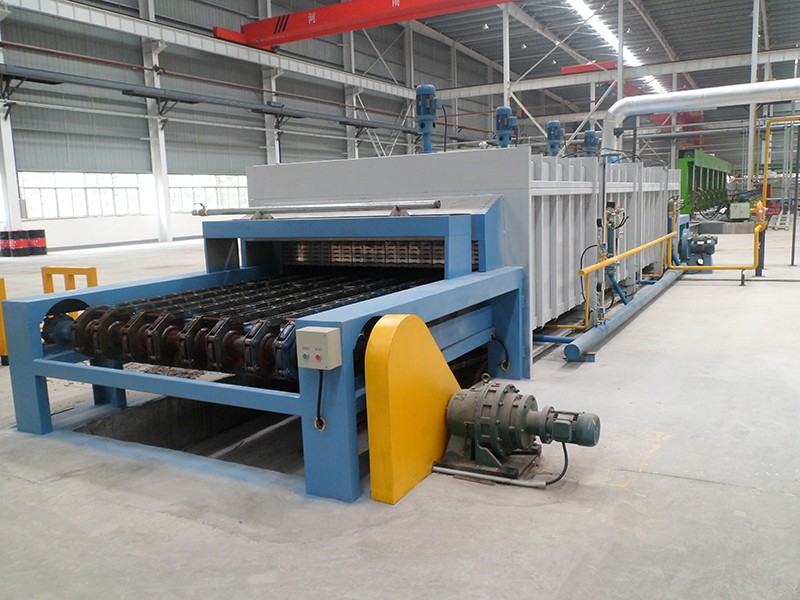
Agitation is another key factor. You can use pumps, stirrers, or jets to create movement in the quenching pool. The more intense the agitation, the more likely you are to get turbulent flow. For example, if you're using a Quenching Machine with built - in agitation systems, you can fine - tune the speed and direction of the flow to achieve the desired cooling rate for your parts.
Part Geometry
The shape and size of the parts being quenched also matter. Complex geometries can disrupt the flow of the quenching medium, creating areas of stagnant flow or uneven cooling. For example, parts with sharp corners or holes can cause the fluid to flow in unexpected ways, leading to variations in the cooling rate.
Importance of Controlling Flow Patterns
Controlling the flow patterns in a quenching pool is essential for getting consistent and high - quality results. If the flow is too laminar, you might end up with parts that are not hard enough or have internal stresses. On the other hand, if the flow is too turbulent, the parts could get distorted or cracked.
By understanding the flow patterns and how to control them, you can optimize the quenching process for different types of parts. For example, if you're quenching a large, thick part, you might want to start with a more turbulent flow to ensure rapid cooling and then switch to a more laminar flow towards the end to reduce the risk of distortion.
Our Quenching Pools and Flow Pattern Control
As a quenching pool supplier, we've designed our products to give you the best control over the flow patterns. Our quenching pools are equipped with state - of - the - art agitation systems that allow you to adjust the flow from laminar to turbulent as needed. Whether you're working with small, precision parts or large industrial components, our pools can be customized to meet your specific requirements.
In addition, we also offer a range of accessories and options to enhance the performance of our quenching pools. For example, we can install baffles inside the pool to direct the flow of the quenching medium and create more uniform cooling. We also provide advanced monitoring systems that can measure the temperature and flow rate in real - time, so you can make adjustments on the fly.
If you're using a Volume Ear Furnace to heat your parts before quenching, our quenching pools can work seamlessly with it. The same goes for a Tempering Furnace if you need to perform tempering after quenching. Our products are designed to be part of a complete heat treatment solution, ensuring that you get the best results from start to finish.

Conclusion
So, there you have it! The flow patterns in a quenching pool are a complex but crucial aspect of the quenching process. By understanding the different types of flow patterns, the factors that affect them, and how to control them, you can improve the quality of your quenched parts and increase the efficiency of your heat treatment operations.
If you're in the market for a quenching pool or need to upgrade your existing one, I'd love to have a chat with you. We can discuss your specific needs and see how our products can help you achieve your goals. Whether you're a small workshop or a large industrial facility, we have the expertise and the products to support you. So, don't hesitate to reach out and let's start a conversation about how we can work together to take your heat treatment process to the next level.
References
- "Heat Treatment Principles and Techniques" by George E. Totten
- "Metallurgy for the Non - Metallurgist" by John R. Davis