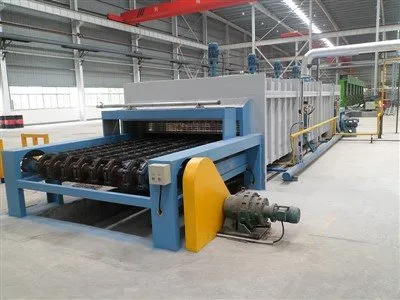
As a supplier of Quenching Pools, I've witnessed firsthand the critical role these pools play in the quenching process. Quenching is a heat treatment process where a metal is rapidly cooled to achieve specific mechanical properties. However, the presence of contaminants in the quenching pool can significantly affect the process and the quality of the final product. In this blog, I'll explore the various effects of quenching pool contaminants on the quenching process.
1. Impact on Cooling Rate
One of the primary functions of a quenching pool is to provide a controlled and rapid cooling rate to the heated metal. Contaminants in the pool can disrupt this cooling process. For example, oil or grease contaminants can form a thin film on the surface of the metal. This film acts as an insulator, reducing the heat transfer rate between the metal and the quenching medium. As a result, the cooling rate is slower than desired, which can lead to inconsistent hardness and microstructure in the quenched metal.
A slower cooling rate may cause the formation of softer phases such as ferrite and pearlite instead of the desired martensite. Martensite is a hard and brittle phase that is typically formed during rapid quenching. If the cooling rate is not fast enough, the metal may not transform completely to martensite, resulting in reduced hardness and strength. This can be a significant problem, especially in applications where high hardness and strength are required, such as in the manufacturing of Volume Ear Furnace components or parts for the Volume Ear Machine.


2. Corrosion and Oxidation
Contaminants in the quenching pool can also promote corrosion and oxidation of the quenched metal. Water-based quenching media are particularly susceptible to contamination by dissolved oxygen, salts, and other impurities. Oxygen can react with the metal surface during the quenching process, forming metal oxides. These oxides can cause surface defects, such as pitting and scaling, which can reduce the surface finish and dimensional accuracy of the quenched part.
Salts and other ionic contaminants can act as electrolytes, accelerating the corrosion process. Corrosion not only affects the appearance of the metal but also weakens its structure. In some cases, corrosion can lead to premature failure of the quenched part, especially in environments where the part is exposed to moisture or corrosive substances. As a Quenching Pool supplier, I understand the importance of providing a clean and contaminant-free quenching environment to prevent corrosion and oxidation.
3. Foaming and Emulsification
Certain contaminants, such as detergents, oils, and surfactants, can cause foaming and emulsification in the quenching pool. Foaming can reduce the effectiveness of the quenching process by preventing the proper contact between the metal and the quenching medium. The foam layer acts as a barrier, reducing the heat transfer rate and leading to uneven cooling.
Emulsification occurs when oil or other immiscible liquids are dispersed in the quenching medium in the form of small droplets. This can also affect the cooling properties of the quenching medium and lead to inconsistent quenching results. Additionally, foaming and emulsification can make it difficult to monitor and control the quenching process, as the foam and emulsion can interfere with the operation of sensors and other monitoring equipment.
4. Contamination of the Quenching Medium
Over time, contaminants can accumulate in the quenching pool, leading to a degradation of the quenching medium. This can affect the chemical and physical properties of the medium, such as its viscosity, specific heat, and boiling point. Changes in these properties can have a significant impact on the cooling rate and the overall performance of the quenching process.
For example, an increase in viscosity can reduce the flow rate of the quenching medium, which can lead to poor heat transfer and uneven cooling. A change in the boiling point can also affect the cooling mechanism, as the quenching medium may not vaporize at the desired rate. As a result, the quenching process may become less efficient and less predictable, leading to a higher rate of defective parts.
5. Impact on the Quenching Pool Equipment
Contaminants in the quenching pool can also have a negative impact on the quenching pool equipment. For example, abrasive particles can cause wear and tear on the pumps, valves, and other components of the pool. This can lead to increased maintenance costs and downtime, as well as a reduced lifespan of the equipment.
Corrosive contaminants can also damage the pool lining and other metal components, leading to leaks and other structural problems. In addition, the presence of contaminants can make it more difficult to clean and maintain the quenching pool, which can further contribute to the degradation of the equipment and the quality of the quenching process.
Solutions to Quenching Pool Contamination
To mitigate the effects of quenching pool contaminants, it is important to implement a comprehensive contamination control program. This program should include regular monitoring of the quenching medium for contaminants, as well as the use of appropriate filtration and purification systems.
Filtration systems can remove solid particles, such as dirt, rust, and scale, from the quenching medium. This can help to maintain the cleanliness of the medium and prevent abrasive wear on the equipment. Purification systems, such as ion exchange resins and activated carbon filters, can remove dissolved contaminants, such as salts, oils, and organic compounds.
In addition to filtration and purification, it is also important to maintain the proper chemical balance of the quenching medium. This can be achieved through the use of additives, such as corrosion inhibitors and pH buffers, to prevent corrosion and oxidation and to maintain the desired chemical properties of the medium.
Conclusion
In conclusion, the presence of contaminants in the quenching pool can have a significant impact on the quenching process and the quality of the final product. From affecting the cooling rate and causing corrosion to promoting foaming and emulsification, contaminants can lead to a range of problems that can reduce the efficiency and effectiveness of the quenching process.
As a Quenching Pool supplier, I am committed to providing high-quality quenching pools and solutions to help our customers overcome these challenges. By implementing a comprehensive contamination control program and using the latest filtration and purification technologies, we can help our customers ensure a clean and efficient quenching process, resulting in high-quality parts and components.
If you are interested in learning more about our Quenching Pools or our contamination control solutions, please feel free to contact us for a consultation. We look forward to working with you to meet your quenching needs.
References
- Totten, G. E., & MacKenzie, D. E. (2003). Handbook of Quenching and Quenching Technology. ASM International.
- Liscic, B., & Totten, G. E. (2006). Quenching Theory and Technology. CRC Press.
- Davis, J. R. (2001). Heat Treating Principles and Processes. ASM International.