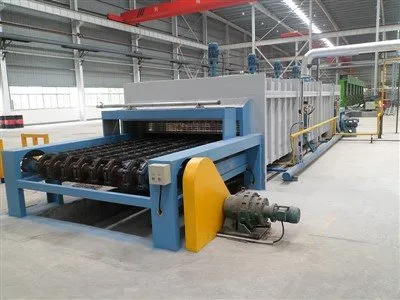
Roller type heating furnaces are essential equipment in various industries, especially in steel pipe heat treatment. As a supplier of Roller Type Heating Furnaces, I understand the significance of choosing the right roller materials. Different roller materials can significantly affect the performance, efficiency, and lifespan of the heating furnace. In this blog, I will explore the various roller materials used in a roller type heating furnace and their characteristics.
1. Carbon Steel Rollers
Carbon steel is one of the most commonly used materials for rollers in heating furnaces. It is known for its high strength and relatively low cost. Carbon steel rollers can withstand high temperatures to a certain extent, making them suitable for many industrial applications.
-
Advantages
- Cost - effective: Carbon steel is widely available and inexpensive compared to some other materials. This makes it a popular choice for budget - conscious customers.
- Good mechanical properties: It has high tensile strength and can handle heavy loads, which is important when transporting steel pipes or other heavy materials through the heating furnace.
-
Disadvantages


- Limited heat resistance: Carbon steel starts to lose its strength at relatively high temperatures. In a very high - temperature heating furnace, it may deform or even break, which can lead to production disruptions.
- Susceptible to oxidation: When exposed to high - temperature environments, carbon steel is prone to oxidation, which can reduce its service life.
2. Alloy Steel Rollers
Alloy steel rollers are an improvement over carbon steel rollers. By adding various alloying elements such as chromium, nickel, and molybdenum, the properties of the steel can be enhanced.
-
Advantages
- Enhanced heat resistance: The addition of alloying elements increases the temperature at which the steel can maintain its strength. This allows alloy steel rollers to be used in higher - temperature heating furnaces.
- Better corrosion resistance: Alloy steel is more resistant to oxidation and corrosion compared to carbon steel, which extends its service life in harsh environments.
-
Disadvantages
- Higher cost: The production of alloy steel involves adding expensive alloying elements, which makes the rollers more costly than carbon steel rollers.
- Complex manufacturing process: The manufacturing of alloy steel rollers requires more precise control of the alloying process, which can increase production time and cost.
3. Ceramic Rollers
Ceramic rollers have gained popularity in recent years due to their excellent high - temperature properties.
-
Advantages
- Extremely high heat resistance: Ceramics can withstand very high temperatures without significant deformation or loss of strength. This makes them ideal for use in high - temperature roller type heating furnaces.
- Low thermal expansion: Ceramic materials have a low coefficient of thermal expansion, which means they are less likely to crack or break due to temperature changes.
- Non - reactive: Ceramics are chemically inert, which means they do not react with most metals or other materials at high temperatures. This is beneficial when heating steel pipes or other materials, as it prevents contamination.
-
Disadvantages
- Brittleness: Ceramics are brittle materials, which means they are more likely to break if subjected to sudden impacts or excessive stress.
- High cost: The production of ceramic rollers is a complex and expensive process, which makes them relatively costly compared to steel rollers.
4. Composite Rollers
Composite rollers combine the advantages of different materials to achieve better performance.
-
Advantages
- Optimized properties: By combining materials such as steel and ceramic, composite rollers can have high strength like steel and excellent heat resistance like ceramic.
- Customizability: The composition of composite rollers can be adjusted according to specific application requirements, allowing for more customized solutions.
-
Disadvantages
- Complex manufacturing: The manufacturing process of composite rollers is more complex than that of single - material rollers, which can increase production costs and time.
- Interface issues: There may be interface problems between different materials in the composite, which can affect the overall performance and lifespan of the rollers.
Choosing the Right Roller Material
When choosing the roller material for a roller type heating furnace, several factors need to be considered.
- Temperature requirements: The maximum temperature in the heating furnace is a crucial factor. For low - to medium - temperature applications, carbon steel or alloy steel rollers may be sufficient. However, for high - temperature applications, ceramic or composite rollers are more suitable.
- Load capacity: If the furnace needs to transport heavy steel pipes or other materials, rollers with high strength, such as alloy steel or carbon steel, should be selected.
- Budget: Cost is always an important consideration. If budget is limited, carbon steel rollers may be a good choice. However, if long - term performance and reliability are more important, investing in more expensive materials like alloy steel, ceramic, or composite rollers may be worthwhile.
As a supplier of Roller Type Heating Furnaces, we offer a wide range of roller materials to meet different customer needs. Our heating furnaces are designed to work efficiently with various roller materials, ensuring optimal performance and long - term reliability.
In addition to roller type heating furnaces, we also provide other related equipment such as Seamless Steel Pipe Walking Beam Heating Furnace and Steel Pipe Automatic Feeding Machine. These products are all part of our comprehensive steel pipe heat treatment equipment solutions.
If you are in the market for a roller type heating furnace or related equipment, we encourage you to contact us for more information. Our team of experts can help you choose the right roller material and equipment based on your specific requirements. We are committed to providing high - quality products and excellent customer service. Don't hesitate to reach out to us for a consultation and start your journey towards more efficient steel pipe heat treatment.
References
- ASM Handbook Committee. ASM Handbook Volume 1: Properties and Selection: Irons, Steels, and High - Performance Alloys. ASM International, 1990.
- Kingery, W. D., Bowen, H. K., & Uhlmann, D. R. Introduction to Ceramics. John Wiley & Sons, 1976.
- Reed, J. S. Principles of Ceramic Processing. John Wiley & Sons, 1995.