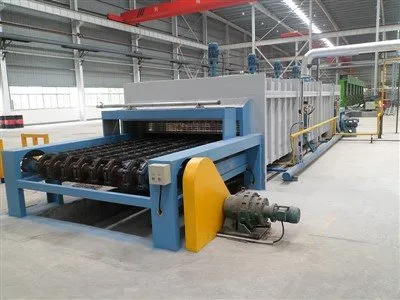
Hey there! As a supplier of Tempering Furnaces, I often get asked, "How long does the tempering process usually take in a tempering furnace?" Well, let's dig into this topic and break it down.
First off, what is tempering? Tempering is a heat treatment process that follows quenching. After a metal is quenched, it becomes hard but also brittle. Tempering helps to reduce this brittleness and increase the metal's toughness and ductility. It involves reheating the quenched metal to a temperature below its lower critical point and then holding it at that temperature for a specific period before cooling it down.
Now, the time it takes for the tempering process can vary widely depending on several factors. One of the most significant factors is the type of metal being tempered. Different metals have different microstructures and properties, which means they require different tempering conditions. For example, steel is one of the most commonly tempered metals. Carbon steel and alloy steel have different tempering requirements. Carbon steel might take anywhere from 30 minutes to a few hours for tempering, while alloy steel, which contains additional elements like chromium, nickel, or molybdenum, could take longer, sometimes up to 8 hours or more.
Another crucial factor is the size and shape of the workpiece. Larger and thicker workpieces take longer to heat evenly throughout their volume. If you're tempering a small, thin piece of metal, it can reach the desired tempering temperature relatively quickly and may only need a short holding time. But if you're dealing with a large, thick forging or a complex-shaped component, it will take much longer for the heat to penetrate and for the entire piece to reach a uniform temperature. For instance, a small leaf spring might be tempered in an hour or two, while a large industrial gear could take several hours.


The tempering temperature also plays a role in determining the process time. Generally, higher tempering temperatures require shorter holding times, and lower temperatures need longer ones. However, you can't just crank up the temperature to speed things up because different metals have optimal tempering temperature ranges. Going outside of these ranges can lead to undesirable changes in the metal's properties. For example, if you temper steel at too high a temperature, it might lose some of its hardness and strength.
The type of tempering furnace you're using can also affect the process time. Modern tempering furnaces are designed to heat workpieces more efficiently and evenly. They often have advanced temperature control systems that can maintain a stable temperature throughout the process. If you're using an older or less efficient furnace, it might take longer to reach and maintain the tempering temperature, which in turn extends the overall process time.
Let's talk a bit about the tempering process itself. Once the workpiece is loaded into the tempering furnace, the furnace is heated up to the desired tempering temperature. This heating-up phase can take some time, especially for larger furnaces or when starting from a cold state. After reaching the target temperature, the workpiece needs to be held at that temperature for a certain period to allow the internal stresses to relieve and the microstructure to change. This holding time is critical for achieving the desired properties in the metal.
After the holding time is up, the workpiece is cooled down. The cooling rate can also impact the final properties of the metal. In some cases, a slow cooling rate is preferred, while in others, a faster rate might be used. This cooling phase also adds to the overall process time.
So, to give you a rough estimate, for common steel components used in automotive or industrial applications, the tempering process can range from 1 to 8 hours. But remember, this is just a ballpark figure, and the actual time can vary based on all the factors we've discussed.
At our company, we offer high - quality Tempering Furnace that are designed to optimize the tempering process. Our furnaces are equipped with state - of - the - art temperature control systems that ensure precise and uniform heating, which can help reduce the overall process time. We also provide technical support to help you determine the best tempering parameters for your specific workpieces.
If you're in the business of manufacturing components that require tempering, you might also be interested in our Quenching Machine and Leaf Spring Forming Equipment. These machines work in tandem with our tempering furnaces to provide a complete heat treatment solution.
If you're looking to improve your tempering process, reduce costs, and enhance the quality of your products, we'd love to have a chat with you. Whether you're a small workshop or a large industrial manufacturer, we can provide customized solutions based on your specific needs. Don't hesitate to reach out to us for more information and to discuss your requirements. We're here to help you make the most of your tempering operations.
References
- ASM Handbook Volume 4: Heat Treating. ASM International.
- Metals Handbook: Properties and Selection: Irons and Steels. ASM International.