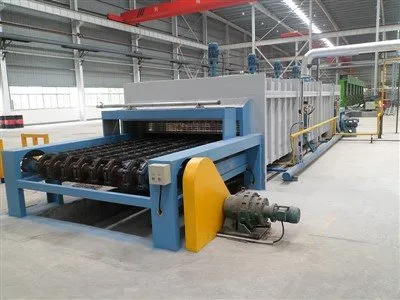
Hey there! As a supplier of tempering furnaces, I'm super stoked to chat with you about how these bad boys work in combination with other heat-treatment processes. Heat treatment is a crucial part of manufacturing, and understanding the synergy between different processes can really up your game.
Let's start by getting a quick handle on what tempering is all about. Tempering is a heat-treatment process that follows quenching. After quenching, a metal is usually really hard but also brittle. Tempering helps to reduce that brittleness and improve the metal's toughness and ductility. A tempering furnace is the key piece of equipment here. You can check out our top-notch Tempering Furnace on our website.
Now, let's talk about quenching. Quenching is the process of rapidly cooling a metal from a high temperature. This is usually done by immersing the hot metal in a quenching medium like oil, water, or a polymer solution. The rapid cooling causes the metal to transform into a hard, brittle structure. That's where a Quenching Machine comes in handy.
So, how do tempering furnaces and quenching machines work together? Well, it's a bit like a tag team. First, the quenching machine does its thing. It takes the metal to a high temperature and then rapidly cools it. This gives the metal its initial hardness. But as I mentioned earlier, the metal is now really brittle. That's when the tempering furnace steps in.
The tempering furnace heats the quenched metal to a specific temperature, usually below the critical point of the metal. This temperature is carefully chosen based on the type of metal and the desired properties. The metal is held at this temperature for a certain period of time, which allows the internal stresses in the metal to relax and the microstructure to change. This results in a metal that is still hard but also has improved toughness and ductility.
Let's take a look at an example in the manufacturing of leaf springs. Leaf springs are an important component in vehicles, providing suspension and support. The process starts with the Leaf Spring Forming Equipment, which shapes the metal into the desired leaf spring form.
After forming, the leaf springs are sent to the quenching machine. The quenching machine heats the leaf springs to a high temperature and then rapidly cools them. This gives the leaf springs the initial hardness they need to withstand the heavy loads they will encounter. But the quenched leaf springs are very brittle at this stage.
Next, the leaf springs are transferred to the tempering furnace. The tempering furnace heats the leaf springs to a specific temperature and holds them there for a set period of time. This tempering process reduces the brittleness of the leaf springs and improves their toughness and ductility. As a result, the leaf springs are able to flex and absorb shocks without breaking.
Another important aspect of using a tempering furnace in combination with other heat-treatment processes is the control of temperature and time. These two factors are crucial in determining the final properties of the metal. In a tempering furnace, we use advanced temperature control systems to ensure that the metal is heated to the exact temperature required. We also have precise timing mechanisms to make sure that the metal is held at that temperature for the right amount of time.
The type of atmosphere inside the tempering furnace also plays a role. Some tempering furnaces use a controlled atmosphere to prevent oxidation or decarburization of the metal. This is especially important for metals that are sensitive to these processes. By using a controlled atmosphere, we can ensure that the surface quality of the metal is maintained during the tempering process.
In addition to quenching and tempering, there are other heat-treatment processes that can be combined with tempering. For example, annealing is a process that involves heating the metal to a high temperature and then slowly cooling it. Annealing can be used before quenching to refine the grain structure of the metal and improve its machinability. After tempering, a process called stress relieving can be performed to further reduce any residual stresses in the metal.
When it comes to choosing the right tempering furnace for your needs, there are a few things to consider. The size of the furnace is important. You need to make sure that the furnace can accommodate the size and quantity of the parts you need to temper. The heating rate and temperature uniformity are also crucial. A good tempering furnace should be able to heat the parts quickly and evenly to ensure consistent results.
The energy efficiency of the furnace is another factor. A more energy-efficient furnace will not only save you money on energy costs but also reduce your environmental impact. At our company, we offer a range of tempering furnaces that are designed with energy efficiency in mind.
If you're in the market for a tempering furnace or any other heat-treatment equipment, I encourage you to get in touch with us. We have a team of experts who can help you choose the right equipment for your specific needs. Whether you're a small shop or a large manufacturing facility, we have the solutions to meet your requirements.
We understand that every customer is different, and we're committed to providing personalized service. We can work with you to develop a heat-treatment process that is tailored to your products and your production goals. So, don't hesitate to reach out and start a conversation with us.
In conclusion, a tempering furnace is a vital part of the heat-treatment process, especially when used in combination with other processes like quenching. By understanding how these processes work together, you can achieve the best possible properties in your metal products. Whether you're manufacturing leaf springs, automotive parts, or any other metal components, the right combination of heat-treatment equipment can make all the difference.
If you have any questions or would like to learn more about our tempering furnaces or other heat-treatment equipment, feel free to contact us. We're here to help you take your manufacturing to the next level.


References
- ASM Handbook, Volume 4: Heat Treating, ASM International
- Heat Treating Principles and Processes, by R. W. Heine, R. L. Bates, and H. E. Boyer