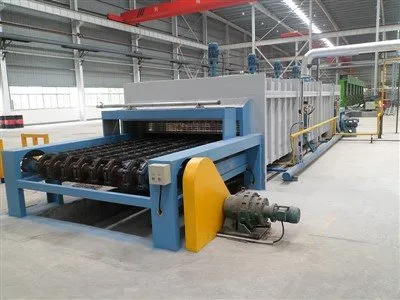
Can a trolley heating furnace be used for surface hardening? This is a question that often comes up in the industrial heat treatment sector. As a supplier of trolley heating furnaces, I've had numerous inquiries regarding the suitability of our equipment for surface hardening processes. In this blog, I'll delve into the technical aspects of trolley heating furnaces and explore their potential for surface hardening.
Understanding Trolley Heating Furnaces
Trolley heating furnaces are versatile pieces of equipment widely used in various industries for heat treatment processes. They are designed with a movable trolley that can be loaded with workpieces and then transported into the furnace chamber. This design allows for easy loading and unloading of large or heavy workpieces, making them ideal for batch processing.
The basic principle of a trolley heating furnace involves heating the workpieces to a specific temperature and holding them at that temperature for a predetermined period. This can be achieved through various heating methods, such as electric resistance heating, gas heating, or oil heating. The furnace is equipped with a temperature control system to ensure precise temperature regulation, which is crucial for achieving consistent heat treatment results.
Surface Hardening: An Overview
Surface hardening is a heat treatment process used to improve the wear resistance and durability of a material's surface while maintaining the toughness of the core. There are several methods of surface hardening, including induction hardening, flame hardening, and carburizing. Each method has its own advantages and is suitable for different types of materials and applications.
The main goal of surface hardening is to create a hardened layer on the surface of the workpiece by altering its microstructure. This is typically achieved by heating the surface to a high temperature and then rapidly cooling it, a process known as quenching. The hardened layer can significantly improve the material's resistance to abrasion, corrosion, and fatigue, making it more suitable for applications where high wear resistance is required.
Can a Trolley Heating Furnace be Used for Surface Hardening?
The short answer is yes, a trolley heating furnace can be used for surface hardening, but it depends on several factors. One of the key considerations is the type of surface hardening process you want to perform. For example, if you're looking to perform a simple case hardening process like carburizing, a trolley heating furnace can be a viable option.
Carburizing is a process where carbon is introduced into the surface of a low-carbon steel workpiece to increase its carbon content. This is typically done by heating the workpiece in a carbon-rich environment, such as a carburizing gas or a solid carburizing agent. A trolley heating furnace can be used to heat the workpiece to the appropriate carburizing temperature and hold it at that temperature for the required time.
However, when it comes to more advanced surface hardening processes like induction hardening or flame hardening, a trolley heating furnace may not be the best choice. These processes require precise control of the heating and cooling rates, as well as the ability to heat only a specific area of the workpiece. Induction hardening, for example, uses an electromagnetic field to heat the surface of the workpiece rapidly, which is difficult to achieve with a trolley heating furnace.
Another factor to consider is the size and shape of the workpiece. Trolley heating furnaces are generally better suited for large, heavy workpieces that can be easily loaded onto the trolley. If you're working with small, intricate parts, a different type of furnace or a specialized surface hardening equipment may be more appropriate.
Advantages of Using a Trolley Heating Furnace for Surface Hardening
Despite the limitations, there are several advantages to using a trolley heating furnace for surface hardening. One of the main advantages is its versatility. A trolley heating furnace can be used for a variety of heat treatment processes, not just surface hardening. This means that you can use the same equipment for different applications, which can save you money and space in your facility.
Another advantage is the ability to process large batches of workpieces at once. The movable trolley allows for easy loading and unloading of multiple workpieces, which can increase your production efficiency. This is particularly beneficial for industries that require high-volume production, such as automotive and aerospace.
In addition, trolley heating furnaces are generally more energy-efficient than some other types of furnaces. They are designed to minimize heat loss and can be equipped with insulation materials to further improve their energy efficiency. This can result in significant cost savings over the long term.


Other Types of Furnaces for Comparison
While trolley heating furnaces have their advantages, it's also worth considering other types of furnaces for surface hardening. For example, the Storing Heat Heating Furnace is designed to store heat and release it slowly, which can be beneficial for certain types of surface hardening processes. The Spitfire Furnace is known for its high heating rate and precise temperature control, making it suitable for more advanced surface hardening applications. And the Hot Air Drying Furnace can be used for drying and preheating workpieces before surface hardening.
Conclusion
In conclusion, a trolley heating furnace can be used for surface hardening, but its suitability depends on the specific requirements of your application. If you're looking for a versatile and cost-effective solution for batch processing of large workpieces, a trolley heating furnace may be a good choice. However, for more advanced surface hardening processes or small, intricate parts, you may need to consider other types of equipment.
As a supplier of trolley heating furnaces, we have the expertise and experience to help you determine the best solution for your surface hardening needs. If you're interested in learning more about our products or have any questions, please don't hesitate to contact us. We're here to assist you in making the right decision for your business.
References
- ASM Handbook, Volume 4: Heat Treating. ASM International.
- Heat Treating Principles and Processes. Richard A. Grange, David Kirkaldy, and George Krauss.
- Industrial Furnaces: Principles, Design, and Operation. A. Z. Al-Hadhrami and M. A. Al-Hinai.