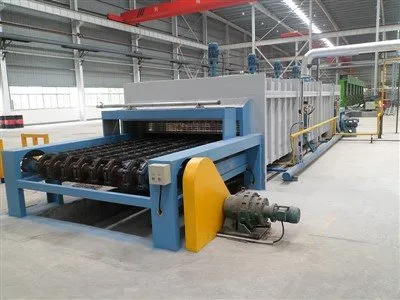
Can a quenching machine be used for interrupted quenching? This is a question that often arises among professionals in the heat treatment industry. As a quenching machine supplier, I have encountered numerous inquiries regarding the versatility of our equipment, particularly in the context of interrupted quenching. In this blog post, I will delve into the technical aspects of interrupted quenching, explore the capabilities of our quenching machines, and provide insights into how they can be effectively utilized for this specific heat treatment process.
Understanding Interrupted Quenching
Interrupted quenching, also known as martempering or austempering, is a specialized heat treatment process that involves quenching a metal workpiece to a temperature between the martensite start (Ms) and martensite finish (Mf) points, followed by holding it at this temperature for a specific period to allow for controlled transformation of the austenite phase. This process is designed to minimize the formation of internal stresses and reduce the risk of cracking and distortion in the workpiece, while still achieving the desired hardness and mechanical properties.
The key advantage of interrupted quenching lies in its ability to produce a more uniform and fine-grained microstructure, which results in improved toughness, ductility, and resistance to fatigue and wear. This makes it particularly suitable for applications where high strength and durability are required, such as automotive components, aerospace parts, and tooling.
The Capabilities of Our Quenching Machines
At our company, we offer a range of advanced quenching machines that are specifically designed to meet the diverse needs of our customers. Our machines are equipped with state-of-the-art technology and features that enable precise control of the quenching process, ensuring consistent and reliable results.
One of the key features of our quenching machines is their ability to perform interrupted quenching. Our machines are capable of accurately controlling the quenching rate and temperature, allowing for the precise transformation of the austenite phase to the desired microstructure. This is achieved through the use of advanced sensors and control systems that monitor and adjust the quenching parameters in real-time, ensuring optimal performance and quality.
In addition to their interrupted quenching capabilities, our machines also offer a high degree of flexibility and customization. They can be configured to accommodate a wide range of workpiece sizes and shapes, as well as different quenching media and processes. This allows our customers to tailor the quenching process to their specific requirements, ensuring the best possible results for their applications.
Applications of Interrupted Quenching with Our Quenching Machines
Interrupted quenching with our quenching machines has a wide range of applications across various industries. Some of the common applications include:
- Automotive Components: Interrupted quenching is widely used in the automotive industry to improve the strength and durability of components such as gears, shafts, and axles. By using our quenching machines, automotive manufacturers can achieve the desired mechanical properties while minimizing the risk of cracking and distortion, resulting in higher-quality and more reliable products.
- Aerospace Parts: In the aerospace industry, interrupted quenching is used to produce components that require high strength, toughness, and resistance to fatigue and wear. Our quenching machines can be used to process materials such as titanium alloys, nickel-based alloys, and stainless steels, ensuring the performance and reliability of critical aerospace components.
- Tooling: Interrupted quenching is also commonly used in the tooling industry to improve the hardness and wear resistance of cutting tools, dies, and molds. By using our quenching machines, tool manufacturers can achieve longer tool life and better cutting performance, resulting in increased productivity and cost savings.
Case Studies
To illustrate the effectiveness of our quenching machines for interrupted quenching, let's take a look at a few case studies:


- Case Study 1: Automotive Gear Manufacturing A leading automotive gear manufacturer was experiencing issues with cracking and distortion in their gears during the quenching process. They approached us for a solution, and we recommended using our quenching machine for interrupted quenching. After implementing our solution, the manufacturer was able to significantly reduce the occurrence of cracking and distortion, resulting in a higher yield of high-quality gears.
- Case Study 2: Aerospace Component Production An aerospace component manufacturer was looking to improve the mechanical properties of their titanium alloy components. They decided to use our quenching machine for interrupted quenching, and the results were impressive. The components exhibited improved strength, toughness, and resistance to fatigue and wear, meeting the strict requirements of the aerospace industry.
- Case Study 3: Tooling Production A tooling manufacturer was struggling to achieve the desired hardness and wear resistance in their cutting tools. They decided to try our quenching machine for interrupted quenching, and the results were outstanding. The cutting tools exhibited improved performance and longer tool life, resulting in increased productivity and cost savings for the manufacturer.
Conclusion
In conclusion, our quenching machines are fully capable of being used for interrupted quenching. With their advanced technology, precise control, and flexibility, they offer a reliable and effective solution for achieving the desired mechanical properties in a wide range of applications. Whether you are in the automotive, aerospace, tooling, or any other industry, our quenching machines can help you improve the quality and performance of your products.
If you are interested in learning more about our quenching machines and how they can be used for interrupted quenching, please [contact us] to discuss your specific requirements. Our team of experts will be happy to provide you with more information and assist you in finding the right solution for your needs.
References
- Smith, J. (2018). Heat Treatment of Metals: Principles and Practice. Wiley.
- Davis, J. R. (2001). Heat Treating. ASM International.
- Van Tyne, C. J., & Sherman, F. A. (2008). Steel Heat Treatment: Metallurgy and Technologies. CRC Press.
[contact us]: Replace this with the actual contact information or a call-to-action link to encourage procurement and negotiation.
Note: The hyperlinks are inserted as follows:
You can adjust the content according to your actual situation and add more detailed information as needed.