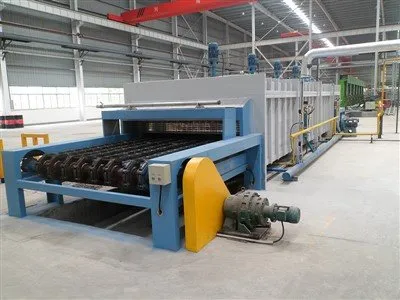
As a leading supplier of Continuous Tempering Furnaces, I'm often asked about the types of materials that can be processed in these versatile pieces of equipment. Continuous tempering furnaces play a crucial role in various industries, offering precise heat treatment processes that enhance the mechanical properties of different materials. In this blog post, I'll explore the diverse range of materials that can be effectively processed in a continuous tempering furnace.
Metals
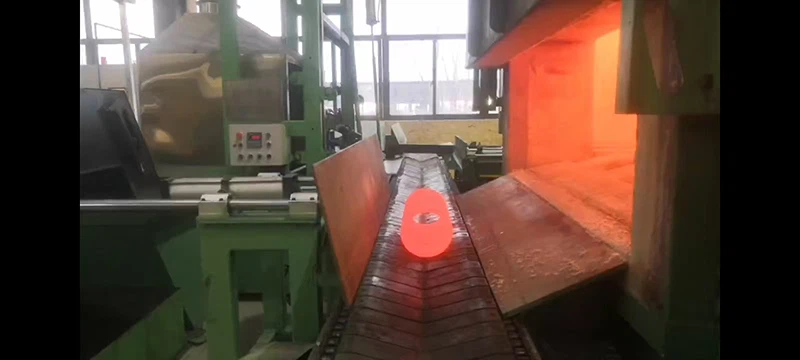
Metals are the most common materials processed in continuous tempering furnaces. The heat treatment process can significantly improve their hardness, toughness, and ductility, making them suitable for a wide range of applications.
Steel
Steel is one of the most widely used metals in the world, and continuous tempering furnaces are commonly employed to treat different grades of steel. Carbon steel, alloy steel, and stainless steel can all benefit from tempering. For example, carbon steel is often tempered to reduce its brittleness and increase its toughness after quenching. Alloy steels, which contain elements such as chromium, nickel, and molybdenum, can be tempered to achieve specific mechanical properties required for applications in the automotive, aerospace, and construction industries. Stainless steel, known for its corrosion resistance, can also be tempered to enhance its strength and hardness.
The tempering process for steel involves heating the quenched steel to a specific temperature below its critical point and holding it there for a certain period. This allows the internal stresses in the steel to be relieved and the microstructure to transform, resulting in improved mechanical properties. Continuous tempering furnaces provide a controlled environment for this process, ensuring uniform heating and cooling, which is essential for achieving consistent results.
Aluminum
Aluminum and its alloys are lightweight and have excellent corrosion resistance, making them popular in the automotive, aerospace, and electronics industries. Continuous tempering furnaces can be used to heat-treat aluminum alloys to improve their strength and hardness. The tempering process for aluminum typically involves solution heat treatment followed by aging. During solution heat treatment, the aluminum alloy is heated to a high temperature to dissolve the alloying elements in the aluminum matrix. After quenching, the alloy is aged at a lower temperature to precipitate the alloying elements, which strengthens the material.
Continuous tempering furnaces are ideal for aluminum heat treatment because they can provide precise temperature control and uniform heating, ensuring that the alloying elements are dissolved and precipitated evenly throughout the material. This results in consistent mechanical properties and improved performance of the aluminum components.
Copper
Copper and its alloys are known for their high electrical and thermal conductivity, as well as their good corrosion resistance. Continuous tempering furnaces can be used to heat-treat copper alloys to improve their mechanical properties. For example, brass, an alloy of copper and zinc, can be tempered to increase its hardness and strength. The tempering process for copper alloys typically involves heating the material to a specific temperature and holding it there for a certain period, followed by controlled cooling.
Continuous tempering furnaces can provide the necessary temperature control and heating uniformity for copper alloy heat treatment. This ensures that the mechanical properties of the copper alloys are improved without compromising their electrical and thermal conductivity.
Ceramics
Ceramics are another class of materials that can be processed in continuous tempering furnaces. Ceramics are known for their high hardness, wear resistance, and thermal stability, making them suitable for applications in the aerospace, automotive, and electronics industries.
Alumina
Alumina is one of the most widely used ceramics, and continuous tempering furnaces can be used to heat-treat alumina components to improve their mechanical properties. Alumina is often used in applications where high hardness and wear resistance are required, such as cutting tools, bearings, and electronic substrates. The tempering process for alumina typically involves heating the material to a high temperature and holding it there for a certain period, followed by controlled cooling.
Continuous tempering furnaces can provide the high temperatures and precise temperature control required for alumina heat treatment. This ensures that the alumina components have the desired mechanical properties and performance.
Zirconia
Zirconia is a ceramic material with excellent mechanical properties, including high strength, toughness, and wear resistance. Continuous tempering furnaces can be used to heat-treat zirconia components to further improve their mechanical properties. Zirconia is often used in applications such as dental implants, cutting tools, and aerospace components. The tempering process for zirconia typically involves heating the material to a specific temperature and holding it there for a certain period, followed by controlled cooling.
Continuous tempering furnaces can provide the necessary temperature control and heating uniformity for zirconia heat treatment. This ensures that the zirconia components have the desired mechanical properties and performance.
Glass
Glass is a non-crystalline material that can also be processed in continuous tempering furnaces. Tempered glass is widely used in applications such as automotive windshields, architectural glass, and household appliances because of its increased strength and safety compared to ordinary glass.
The tempering process for glass involves heating the glass to a high temperature and then rapidly cooling it using air jets. This creates a compressive stress on the surface of the glass, which increases its strength and makes it more resistant to breakage. Continuous tempering furnaces are designed to provide the precise temperature control and rapid cooling required for glass tempering.
The continuous tempering furnace ensures that the glass is heated uniformly and cooled rapidly in a controlled manner, resulting in tempered glass with consistent mechanical properties. The tempered glass produced in a continuous tempering furnace is stronger and safer than ordinary glass, making it suitable for a wide range of applications.
Composites
Composites are materials made by combining two or more different materials to achieve specific properties. Continuous tempering furnaces can be used to process composite materials to improve their mechanical properties and performance.
Carbon Fiber Composites
Carbon fiber composites are lightweight and have high strength and stiffness, making them popular in the aerospace, automotive, and sports industries. Continuous tempering furnaces can be used to heat-treat carbon fiber composites to improve their interfacial bonding and mechanical properties. The tempering process for carbon fiber composites typically involves heating the material to a specific temperature and holding it there for a certain period, followed by controlled cooling.
Continuous tempering furnaces can provide the necessary temperature control and heating uniformity for carbon fiber composite heat treatment. This ensures that the carbon fiber composites have the desired mechanical properties and performance.

Glass Fiber Composites
Glass fiber composites are also widely used in various industries because of their low cost, good mechanical properties, and ease of processing. Continuous tempering furnaces can be used to heat-treat glass fiber composites to improve their mechanical properties and performance. The tempering process for glass fiber composites is similar to that for carbon fiber composites, involving heating the material to a specific temperature and holding it there for a certain period, followed by controlled cooling.
Continuous tempering furnaces can provide the necessary temperature control and heating uniformity for glass fiber composite heat treatment. This ensures that the glass fiber composites have the desired mechanical properties and performance.
Conclusion
In conclusion, continuous tempering furnaces are versatile pieces of equipment that can process a wide range of materials, including metals, ceramics, glass, and composites. The heat treatment processes provided by continuous tempering furnaces can significantly improve the mechanical properties and performance of these materials, making them suitable for a wide range of applications in various industries.
As a [Your Company Type] of [Continuous Tempering Furnace], we offer high-quality [Continuous Tempering Furnace] that are designed to meet the specific needs of our customers. Our [Continuous Tempering Furnace] are equipped with advanced control systems that provide precise temperature control and uniform heating, ensuring consistent results and high-quality products.
If you are interested in learning more about our [Continuous Tempering Furnace] or have any questions about the materials that can be processed in these furnaces, please feel free to [Contact Method]. We are committed to providing our customers with the best products and services, and we look forward to the opportunity to work with you.
References
- ASM Handbook, Volume 4: Heat Treating, ASM International
- Fundamentals of Heat Treatment of Steels, ASM International
- Ceramics Processing and Sintering, Second Edition, by J. Reed
- Glass Science and Technology, Volume 1: Fundamentals, by D. R. Uhlmann and N. J. Kreidl
- Composite Materials: Science and Applications, Second Edition, by A. Kelly and C. Zweben