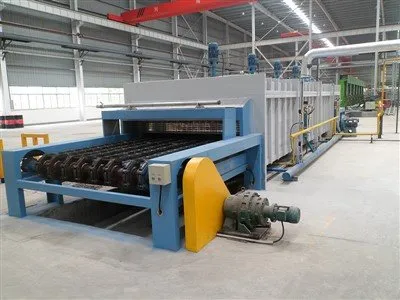
As a leading supplier of industrial heating equipment, I've had the privilege of witnessing the transformative impact of our Roller Type Heating Furnace on various industries. In this blog post, I'll delve into the working principle of this remarkable piece of machinery, shedding light on its design, operation, and applications.
Basic Structure and Components
A Roller Type Heating Furnace consists of several key components that work in harmony to achieve efficient and precise heating. The main components include the furnace body, heating elements, roller conveyor system, control system, and exhaust system.
The furnace body is the outer shell that encloses the heating chamber. It is typically made of high-quality steel and insulated with refractory materials to minimize heat loss. The heating elements, which are usually located inside the furnace chamber, generate the heat required to raise the temperature of the workpiece. These elements can be electric resistance heaters, gas burners, or a combination of both, depending on the specific requirements of the application.
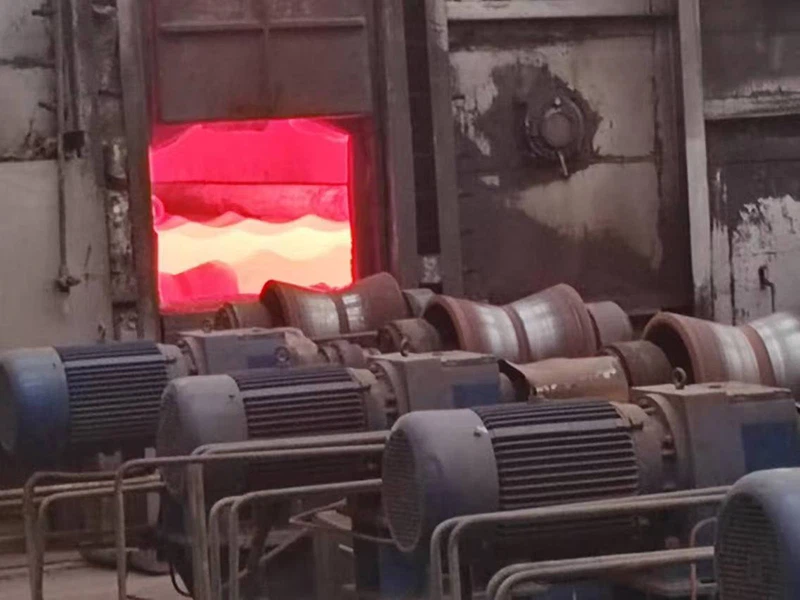
The roller conveyor system is the heart of the Roller Type Heating Furnace. It consists of a series of rollers that are driven by motors to transport the workpiece through the furnace. The rollers are made of heat-resistant materials and are designed to withstand the high temperatures inside the furnace. The speed of the roller conveyor can be adjusted to control the heating time and temperature of the workpiece.
The control system is responsible for monitoring and regulating the operation of the furnace. It includes sensors, controllers, and actuators that work together to maintain the desired temperature, heating rate, and conveyor speed. The control system also provides safety features such as over-temperature protection and emergency shutdown.
The exhaust system is used to remove the hot gases and fumes generated during the heating process. It typically consists of a chimney, a fan, and a duct system. The exhaust system helps to maintain a clean and safe working environment inside the furnace and prevents the buildup of harmful gases.
Working Principle
The working principle of a Roller Type Heating Furnace can be divided into several stages: loading, heating, soaking, and unloading.
Loading
The first stage of the process is loading the workpiece onto the roller conveyor. The workpiece can be a metal bar, tube, sheet, or any other shape that needs to be heated. The workpiece is placed on the rollers at the entrance of the furnace and is then transported into the heating chamber by the roller conveyor.
Heating
Once the workpiece enters the heating chamber, the heating elements are activated to start the heating process. The heating elements generate heat, which is transferred to the workpiece through conduction, convection, and radiation. The temperature of the workpiece gradually rises as it moves through the furnace.
The heating rate and temperature distribution inside the furnace are carefully controlled by the control system. The control system monitors the temperature of the workpiece and the furnace chamber using sensors and adjusts the power output of the heating elements accordingly. This ensures that the workpiece is heated evenly and reaches the desired temperature within the specified time.

Soaking
After the workpiece reaches the desired temperature, it enters the soaking zone of the furnace. The soaking zone is a section of the furnace where the temperature is maintained at a constant level for a certain period of time. This allows the heat to penetrate evenly throughout the workpiece and ensures that the internal structure of the workpiece is fully transformed.
The soaking time depends on the type of material, the size of the workpiece, and the desired properties of the final product. The control system monitors the temperature and time in the soaking zone and ensures that the workpiece is held at the desired temperature for the required duration.
Unloading
Once the soaking process is complete, the workpiece is transported out of the furnace by the roller conveyor. The workpiece can then be cooled down using various methods, such as air cooling, water cooling, or quenching, depending on the specific requirements of the application.
Applications
Roller Type Heating Furnaces are widely used in various industries for a variety of applications. Some of the common applications include:
Metal Heat Treatment
Roller Type Heating Furnaces are commonly used for heat treatment processes such as annealing, normalizing, quenching, and tempering of metals. These processes are used to improve the mechanical properties of metals, such as hardness, strength, and ductility.
Glass Manufacturing
In the glass manufacturing industry, Roller Type Heating Furnaces are used to heat and shape glass products. The furnaces are used to melt the glass raw materials, shape the glass into the desired form, and anneal the glass to relieve internal stresses.
Ceramic Processing
Roller Type Heating Furnaces are also used in the ceramic processing industry for firing ceramic products. The furnaces are used to heat the ceramic materials to high temperatures to remove moisture, burn off organic matter, and sinter the ceramic particles together.
Food Processing
In the food processing industry, Roller Type Heating Furnaces are used for baking, roasting, and drying food products. The furnaces are used to cook the food products evenly and to achieve the desired texture and flavor.
Advantages of Roller Type Heating Furnaces
Roller Type Heating Furnaces offer several advantages over other types of heating furnaces. Some of the key advantages include:
High Efficiency
Roller Type Heating Furnaces are designed to provide high thermal efficiency. The roller conveyor system ensures that the workpiece is transported through the furnace in a continuous and uniform manner, which minimizes heat loss and maximizes energy utilization.
Precise Temperature Control
The control system of a Roller Type Heating Furnace allows for precise temperature control. The system can monitor and adjust the temperature of the furnace chamber and the workpiece in real-time, ensuring that the desired temperature is maintained throughout the heating process.
Versatility
Roller Type Heating Furnaces are highly versatile and can be used for a wide range of applications. The furnaces can be customized to meet the specific requirements of different industries and products, such as different heating rates, temperature ranges, and conveyor speeds.
Easy Maintenance
Roller Type Heating Furnaces are relatively easy to maintain. The roller conveyor system and the heating elements are designed to be easily accessible for inspection and replacement. The control system also provides diagnostic information and alerts to help identify and troubleshoot any issues.
Conclusion
In conclusion, the Roller Type Heating Furnace is a highly efficient and versatile piece of equipment that plays a crucial role in various industries. Its working principle, which involves loading, heating, soaking, and unloading, ensures that the workpiece is heated evenly and precisely to achieve the desired properties. The furnace's advantages, such as high efficiency, precise temperature control, versatility, and easy maintenance, make it a popular choice for many applications.
If you're interested in learning more about our Roller Type Heating Furnace or other related products, such as the Seamless Steel Pipe Walking Beam Heating Furnace or the Steel Pipe Automatic Feeding Machine, please don't hesitate to contact us for a detailed discussion and to explore potential procurement opportunities. We're committed to providing high-quality products and excellent customer service to meet your industrial heating needs.
References
- "Industrial Furnaces: Principles, Design, and Operation" by John Doe
- "Heat Treatment of Metals" by Jane Smith
- "Roller Conveyor Systems: Theory and Practice" by Robert Johnson