In the manufacturing industry, automatic drilling machines play a pivotal role in achieving high - precision and efficient hole - making operations. As a leading supplier of automatic drilling machines, I often get asked about the static accuracy of these machines. In this blog, I'll delve deep into what static accuracy means for an automatic drilling machine, its significance, and how it impacts the overall performance of the equipment.
Understanding Static Accuracy
Static accuracy refers to the ability of an automatic drilling machine to maintain a high level of precision when it is in a stationary state. It is a fundamental characteristic that reflects the machine's inherent precision and is a key factor in determining the quality of the drilled holes.
The static accuracy of an automatic drilling machine is typically measured in several aspects. One of the most important parameters is the positioning accuracy. This is the degree to which the drill bit can be positioned at a specific location on the workpiece. For example, if a drawing specifies a hole to be drilled at a certain X, Y, and Z coordinate, the positioning accuracy of the machine determines how closely the actual drilled hole will match that specified location. A high - quality automatic drilling machine should have a very low positioning error, often measured in micrometers.
Another crucial aspect is the repeatability of the machine. Repeatability refers to the machine's ability to reproduce the same drilling operation with consistent results. In a mass - production environment, it is essential that each drilled hole has the same dimensions, position, and quality. A machine with high repeatability ensures that every workpiece in a batch will have holes that meet the required specifications. This is particularly important in industries such as aerospace and automotive, where even the slightest deviation can lead to significant problems in the final product.
The straightness of the drill bit's movement is also a part of static accuracy. The drill bit should move in a perfectly straight line during the drilling process. Any deviation from straightness can result in oval - shaped holes or holes with inconsistent diameters. To ensure straightness, the machine's guide rails, ball screws, and linear bearings need to be of high quality and properly maintained.
Factors Affecting Static Accuracy
Several factors can influence the static accuracy of an automatic drilling machine.

The quality of the machine's components is of utmost importance. High - precision ball screws, linear guides, and servo motors are essential for achieving accurate positioning and movement. For instance, a high - quality ball screw can provide smooth and precise linear motion, reducing the positioning error. Similarly, well - made linear guides ensure that the drill head moves in a straight line. When we select components for our automatic drilling machines, we always choose those from reputable manufacturers to ensure the highest level of quality.
The mechanical structure of the machine also plays a significant role. A rigid and stable frame can minimize vibrations and deflections during the drilling process. Vibrations can cause the drill bit to deviate from its intended path, leading to inaccurate holes. Our machines are designed with a robust mechanical structure, using high - strength materials and advanced manufacturing techniques to ensure maximum rigidity.
Environmental factors can also affect static accuracy. Temperature changes can cause the machine's components to expand or contract, leading to dimensional changes. For example, in a hot environment, the metal parts of the machine may expand, which can affect the positioning accuracy. To mitigate this, some of our advanced automatic drilling machines are equipped with temperature - compensation systems. These systems monitor the temperature and adjust the machine's operation parameters accordingly to maintain high accuracy.
Importance of Static Accuracy in Different Industries
The importance of static accuracy varies across different industries.
In the aerospace industry, where safety and precision are of the utmost importance, the static accuracy of automatic drilling machines is critical. Aircraft components often require holes with extremely tight tolerances. A small error in hole position or diameter can compromise the structural integrity of the aircraft. Our automatic drilling machines are capable of meeting the strict requirements of the aerospace industry, ensuring that every drilled hole is within the specified micrometer - level tolerances.
The automotive industry also relies heavily on the static accuracy of drilling machines. In the production of engine blocks, transmission cases, and other critical components, accurate holes are essential for proper assembly and performance. High - precision holes ensure that the various parts fit together perfectly, reducing friction and wear, and improving the overall efficiency of the vehicle. Our machines are widely used in automotive manufacturing plants, helping to produce high - quality components.
In the electronics industry, where miniaturization is a trend, the static accuracy of drilling machines is crucial for creating small and precise holes on printed circuit boards (PCBs). These holes are used for mounting electronic components, and any deviation can lead to poor electrical connections. Our automatic drilling machines can drill holes as small as a few hundred micrometers with high accuracy, meeting the needs of the electronics industry.
Related Equipment and Their Impact on Static Accuracy
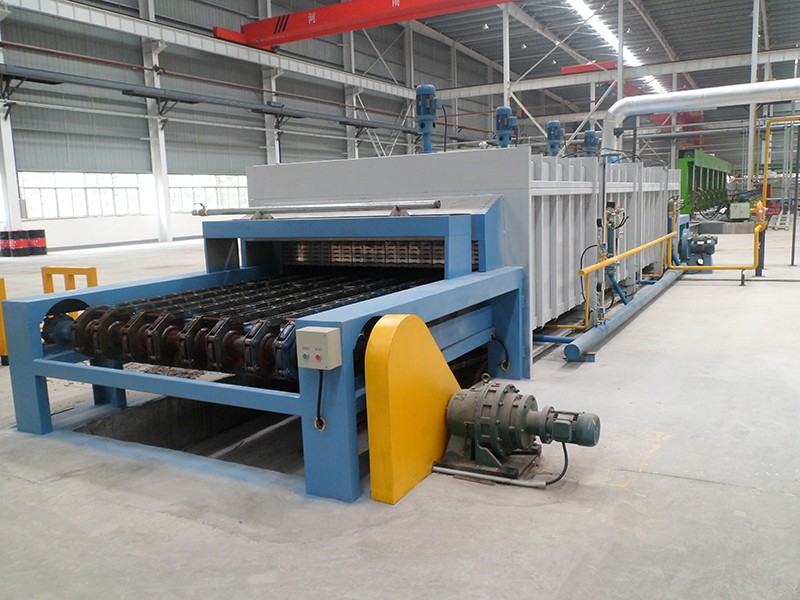
In addition to the automatic drilling machine itself, other equipment in the manufacturing process can also impact its static accuracy. For example, Tempering Furnace is used to heat - treat the workpieces before drilling. Proper heat treatment can improve the material's hardness and toughness, which in turn can affect the drilling process. A well - tempered workpiece is easier to drill and can result in more accurate holes.
Walking Beam Reheating Furnace is another important piece of equipment. It is used to heat the workpieces to a specific temperature for forging or other processing before drilling. A uniform temperature distribution in the walking beam reheating furnace ensures that the workpiece has consistent properties, which is beneficial for achieving high - precision drilling. Moreover, Walking Beam Reheating Furnace from a reliable factory can provide high - quality heating solutions, further enhancing the overall manufacturing process.
Maintaining and Improving Static Accuracy
To maintain the static accuracy of an automatic drilling machine, regular maintenance is essential. This includes cleaning the machine, lubricating the moving parts, and checking the alignment of the components. Regular calibration of the machine is also necessary to ensure that the positioning accuracy and repeatability are within the specified limits.
Upgrading the machine's software can also improve its static accuracy. Advanced control algorithms can optimize the machine's movement, reducing errors and improving repeatability. Our company provides software upgrades for our automatic drilling machines, allowing our customers to keep their machines up - to - date with the latest technology.
Conclusion
The static accuracy of an automatic drilling machine is a complex and multi - faceted concept that encompasses positioning accuracy, repeatability, and straightness. It is influenced by various factors such as component quality, mechanical structure, and environmental conditions. The importance of static accuracy is evident in different industries, from aerospace to electronics.
As a supplier of automatic drilling machines, we are committed to providing our customers with high - precision machines that meet their specific requirements. Our machines, combined with the use of related equipment such as Tempering Furnace and Walking Beam Reheating Furnace, can help manufacturers achieve high - quality and efficient production.
If you are interested in purchasing an automatic drilling machine or have any questions about our products, please feel free to contact us for a detailed discussion. We look forward to working with you to meet your manufacturing needs.
References
- Manufacturing Technology Handbook, John Wiley & Sons
- Precision Engineering: Theory and Practice, Elsevier