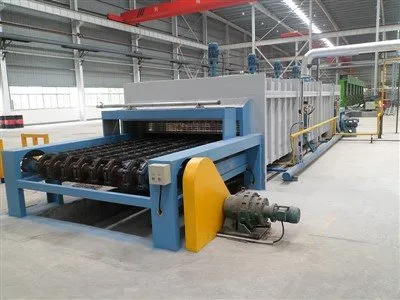
Hey there! As a supplier of Holding Furnaces, I often get asked about the radiation emission of these nifty pieces of equipment. So, let's dig into what exactly the radiation emission of a holding furnace is.
First off, what's a holding furnace? Well, it's a crucial part in many industrial processes. A holding furnace is designed to keep materials at a specific temperature for a set period. This is super important in industries like metalworking, where you need to maintain the right temperature of molten metal to ensure its quality and workability. You can check out more about Holding Furnace on our website.
Now, let's talk about radiation emission. Radiation is basically the emission of energy as electromagnetic waves or as moving sub - atomic particles. In the case of a holding furnace, there are mainly two types of radiation we need to consider: infrared radiation and a bit of ultraviolet radiation.
Infrared radiation is the most prominent type of radiation emitted by a holding furnace. When the furnace is heated, the high - temperature surfaces inside the furnace start to emit infrared waves. Infrared radiation is a form of heat transfer. It's what you feel when you stand near a hot object, like a fire. The hotter the furnace, the more intense the infrared radiation.
The amount of infrared radiation emitted by a holding furnace depends on several factors. One of the main factors is the temperature of the furnace. According to the Stefan - Boltzmann law, the power radiated per unit area of a black body (a theoretical perfect emitter) is proportional to the fourth power of its absolute temperature. In simple terms, if you double the temperature of the furnace, the amount of infrared radiation it emits increases by a factor of 16!

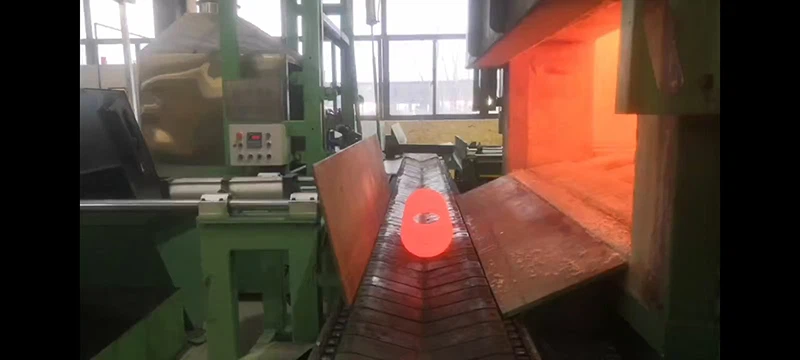
Another factor is the emissivity of the furnace's surfaces. Emissivity is a measure of how well a surface emits radiation compared to a black body. Different materials have different emissivities. For example, a shiny metal surface has a low emissivity, meaning it doesn't emit radiation as well as a black - painted surface. So, the design and the materials used in the construction of the holding furnace can have a big impact on the amount of infrared radiation it emits.
As for ultraviolet radiation, while a holding furnace does emit some ultraviolet radiation, it's usually a relatively small amount compared to infrared. Ultraviolet radiation is more energetic than infrared radiation and can be harmful to human health in large doses. However, in a well - designed holding furnace, the amount of ultraviolet radiation is kept to a minimum. Most modern holding furnaces are equipped with shielding and insulation to prevent excessive ultraviolet radiation from escaping.
So, why is it important to understand the radiation emission of a holding furnace? Well, from a safety perspective, it's crucial. Workers who are exposed to high levels of infrared and ultraviolet radiation can face health risks. Prolonged exposure to infrared radiation can cause skin burns and eye damage. Ultraviolet radiation can cause skin cancer, cataracts, and other eye problems. That's why proper safety measures, such as wearing protective clothing and goggles, are essential when working around a holding furnace.
From an efficiency perspective, understanding radiation emission can help in optimizing the furnace's performance. By reducing unnecessary radiation losses, we can save energy and reduce operating costs. For example, using materials with high emissivity in the right places and improving the insulation of the furnace can help minimize radiation losses.
In addition to infrared and ultraviolet radiation, a holding furnace may also emit some electromagnetic radiation in the radio - frequency range. This is usually due to the electrical components and the heating elements inside the furnace. However, the levels of radio - frequency radiation are typically very low and are not a major concern in most cases.
Now, let's talk about how our company's holding furnaces are designed to manage radiation emission. We use advanced insulation materials to reduce the amount of heat and radiation that escapes from the furnace. Our furnaces are also equipped with state - of - the - art shielding to block harmful ultraviolet and radio - frequency radiation.
We also offer a range of related products, such as Continuous Tempering Furnace and Helical Spring Stepping Quenching Furnace. These furnaces also have their own unique radiation emission characteristics, but we've applied the same principles of efficient design and safety to all our products.
If you're in the market for a holding furnace or any of our other industrial furnaces, we'd love to talk to you. Whether you're a small - scale metalworker or a large - scale manufacturing plant, we have the right furnace for your needs. Our team of experts can help you choose the best furnace based on your specific requirements, including the amount of radiation emission that's acceptable for your work environment.
Contact us today to start the conversation about your furnace needs. We can provide you with detailed information about the radiation emission of our holding furnaces and how they can fit into your production process. We're here to help you make the most informed decision and ensure that you get a high - quality, efficient, and safe holding furnace.
References
- Incropera, F. P., & DeWitt, D. P. (2002). Fundamentals of Heat and Mass Transfer. Wiley.
- Cengel, Y. A., & Ghajar, A. J. (2015). Heat and Mass Transfer: A Practical Approach. McGraw - Hill Education.