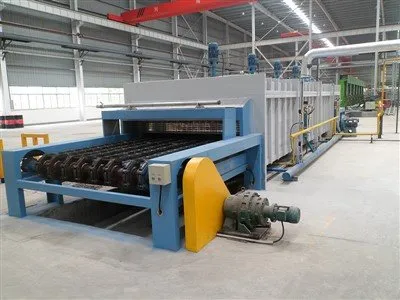
When it comes to industrial heating processes, a Storing Heat Heating Furnace is a crucial piece of equipment. As a supplier of Storing Heat Heating Furnaces, I understand that one of the most frequently asked questions by potential customers is about the installation space requirements for this type of furnace. In this blog post, I will delve into the various factors that determine the installation space for a Storing Heat Heating Furnace and provide you with a comprehensive understanding of what you need to consider.
1. Furnace Size and Dimensions
The first and most obvious factor influencing the installation space is the physical size of the Storing Heat Heating Furnace itself. Different models and capacities of furnaces come in various dimensions. For example, a small - scale Storing Heat Heating Furnace used for laboratory or small - batch production may have relatively compact dimensions, perhaps with a length of around 2 - 3 meters, a width of 1 - 2 meters, and a height of 1 - 2 meters. On the other hand, large - scale industrial furnaces designed for high - volume production can be significantly larger, with lengths exceeding 10 meters and widths and heights of several meters.
It is essential to obtain the exact dimensions of the specific Storing Heat Heating Furnace model you are interested in from the product specifications. These dimensions will serve as the basis for calculating the minimum floor area required for installation. In addition to the furnace's footprint, you also need to consider the vertical space. The furnace may require sufficient height for proper ventilation, access to the top for maintenance, and for the installation of any overhead equipment such as exhaust ducts.
2. Access and Maintenance Space
Beyond the physical size of the furnace, you must allocate additional space for access and maintenance. Technicians need to be able to reach all parts of the furnace easily for routine inspections, cleaning, and repairs. A general rule of thumb is to leave at least 1 - 2 meters of clearance around the furnace on all sides. This space allows for the movement of personnel, the use of tools, and the replacement of components if necessary.
For example, if there are control panels on the side of the furnace, there should be enough space for an operator to stand in front of them comfortably and make adjustments. Similarly, if there are doors or hatches for accessing the interior of the furnace, there should be no obstructions that prevent them from being fully opened. In some cases, you may also need to consider the space required for lifting equipment if heavy components need to be removed or installed during maintenance.
3. Ventilation and Exhaust Systems
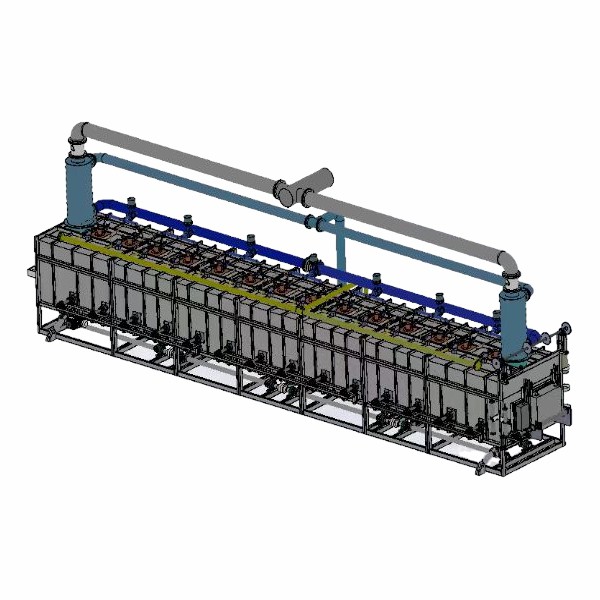
Proper ventilation is crucial for the safe and efficient operation of a Storing Heat Heating Furnace. The furnace generates heat and may produce exhaust gases during the heating process. Therefore, you need to install a ventilation and exhaust system. This system typically includes ducts, fans, and filters.
The installation of the ventilation and exhaust system requires additional space. The ducts need to be routed from the furnace to the outside of the building, which may involve passing through walls, ceilings, or floors. You need to ensure that there is enough space for the ducts to be installed without sharp bends or restrictions, as this can affect the efficiency of the exhaust system. The fans and filters also need to be located in a suitable area, which may require a separate enclosure or a dedicated space within the installation area.
4. Auxiliary Equipment
A Storing Heat Heating Furnace is often accompanied by various auxiliary equipment, such as fuel storage tanks, pumps, and control systems. The installation of these auxiliary equipment also needs to be considered when determining the overall installation space.
Fuel storage tanks, for example, need to be located in a safe area away from the furnace to prevent the risk of fire or explosion. They also require a certain amount of space for installation and maintenance. Pumps and control systems may be installed near the furnace, but they still need to be accessible for inspection and adjustment.
5. Safety Clearances
Safety is of utmost importance when installing a Storing Heat Heating Furnace. There are specific safety clearances that need to be maintained between the furnace and other objects in the installation area. These clearances are determined by local safety regulations and standards.
For example, there should be a certain distance between the furnace and combustible materials, such as wooden structures or flammable chemicals. The safety clearances also apply to electrical equipment, as the high - temperature environment around the furnace can pose a risk to electrical components. You need to ensure that all electrical wiring and equipment are installed at a safe distance from the furnace.

Comparison with Other Furnaces
To better understand the installation space requirements of a Storing Heat Heating Furnace, it can be helpful to compare it with other types of furnaces. For instance, a Melting Furnace is designed to melt metals and often requires a large amount of space due to the need for high - temperature melting chambers and large - capacity crucibles. The ventilation requirements for a melting furnace are also very high, as it produces a significant amount of heat and fumes.
On the other hand, a Trolley Heating Furnace is more flexible in terms of installation space. It can be designed to fit into relatively small areas, especially if it is a small - scale model. However, it still requires proper ventilation and access space for loading and unloading the trolleys.
In contrast, a Storing Heat Heating Furnace strikes a balance between the two. It is generally more compact than a melting furnace but may require more space than a trolley heating furnace, especially when considering the storage of heat - retaining materials and the associated ventilation systems.
Conclusion
In conclusion, the installation space requirement for a Storing Heat Heating Furnace is determined by multiple factors, including the furnace's size, access and maintenance space, ventilation and exhaust systems, auxiliary equipment, and safety clearances. As a supplier of Storing Heat Heating Furnaces, I highly recommend that you carefully assess your specific needs and the available space in your facility before making a purchase decision.
If you are interested in our Storing Heat Heating Furnaces or have any questions about the installation space requirements, please feel free to contact us for further information and to discuss your procurement needs. Our team of experts is ready to provide you with detailed guidance and support to ensure that you choose the right furnace for your application and that it is installed safely and efficiently.
References
- Industrial Furnace Design and Operation Handbook
- Safety Standards for Industrial Heating Equipment
- Ventilation and Exhaust System Design Guidelines