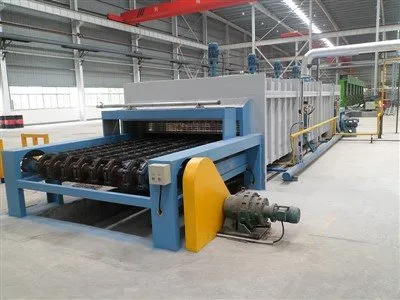
Heat treatment is a crucial process in the manufacturing industry, enhancing the physical and mechanical properties of materials such as metals. In this blog, as a quenching machine supplier, I will explore the differences between quenching machines and other heat treatment equipment, shedding light on their unique features, applications, and benefits.
Heat Treatment Basics
Before delving into the differences, let's briefly review the fundamentals of heat treatment. Heat treatment involves the controlled heating and cooling of materials to achieve desired properties. The primary goals of heat treatment include improving hardness, strength, toughness, and ductility, as well as relieving internal stresses and enhancing corrosion resistance.
Common heat treatment processes include annealing, normalizing, quenching, and tempering. Each process has its own specific heating and cooling parameters, which determine the final properties of the material.
Quenching Machines
Quenching is a rapid cooling process that involves immersing a heated material in a quenching medium, such as water, oil, or polymer solution. The purpose of quenching is to transform the material's microstructure into a harder and stronger phase, typically martensite.
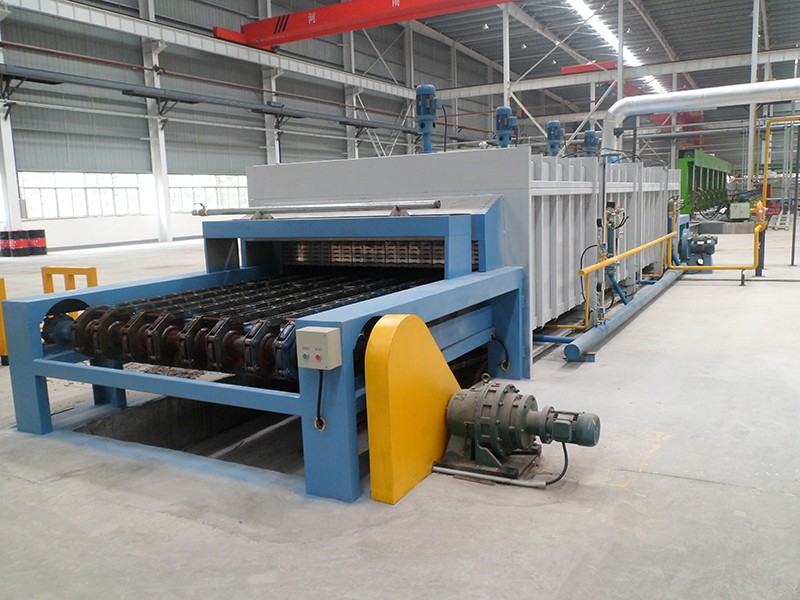
Quenching machines are designed to precisely control the heating and cooling processes, ensuring uniform quenching and minimizing distortion. These machines typically consist of a heating chamber, a quenching tank, and a control system. The heating chamber is used to heat the material to the desired temperature, while the quenching tank contains the quenching medium. The control system monitors and adjusts the temperature, time, and other parameters to ensure consistent results.
One of the key advantages of quenching machines is their ability to achieve high hardness and strength in a relatively short period. This makes them ideal for applications where high-performance materials are required, such as automotive, aerospace, and tooling industries.

Comparison with Other Heat Treatment Equipment
Walking Beam Reheating Furnace
A Walking Beam Reheating Furnace is a type of furnace used for heating large quantities of materials, such as steel billets or slabs, to a uniform temperature before further processing. Unlike quenching machines, which are designed for rapid cooling, walking beam reheating furnaces are used for slow and controlled heating.
The main difference between a quenching machine and a walking beam reheating furnace lies in their purpose and operation. While quenching machines are used to achieve high hardness and strength through rapid cooling, walking beam reheating furnaces are used to prepare materials for subsequent processing, such as rolling or forging.
Another difference is the heating and cooling rates. Quenching machines typically have high heating and cooling rates, while walking beam reheating furnaces have relatively low heating rates to ensure uniform heating.
Tempering Furnace
A Tempering Furnace is used to reduce the brittleness and internal stresses of quenched materials by heating them to a specific temperature below the critical point and then cooling them slowly. Tempering is often performed after quenching to improve the toughness and ductility of the material.
The main difference between a quenching machine and a tempering furnace is the purpose of the heat treatment. Quenching is used to achieve high hardness and strength, while tempering is used to improve the toughness and ductility of the quenched material.
Another difference is the temperature range and heating time. Quenching machines typically operate at high temperatures for a short period, while tempering furnaces operate at lower temperatures for a longer period.
Volume Ear Machine
A Volume Ear Machine is a specialized piece of equipment used for forming and shaping metal parts. While not strictly a heat treatment equipment, it is often used in conjunction with heat treatment processes to achieve the desired shape and dimensions.
The main difference between a quenching machine and a volume ear machine is their function. Quenching machines are used for heat treatment, while volume ear machines are used for mechanical processing. However, both types of equipment play important roles in the manufacturing process, and they are often used together to produce high-quality products.
Applications and Benefits
The choice of heat treatment equipment depends on the specific requirements of the application. Quenching machines are ideal for applications where high hardness and strength are required, such as automotive engine components, aerospace parts, and cutting tools. Walking beam reheating furnaces are suitable for large-scale production of steel products, such as bars, rods, and sheets. Tempering furnaces are used to improve the toughness and ductility of quenched materials, making them suitable for applications where impact resistance is important. Volume ear machines are used for forming and shaping metal parts, such as springs and brackets.
As a quenching machine supplier, we understand the importance of providing high-quality equipment and excellent customer service. Our quenching machines are designed to meet the most demanding requirements of our customers, and we offer a wide range of options to suit different applications and budgets.
In addition to our standard quenching machines, we also offer custom-designed solutions to meet specific customer needs. Our team of experienced engineers and technicians can work with you to develop a quenching machine that is tailored to your exact requirements.
Conclusion
In conclusion, quenching machines are a vital part of the heat treatment process, offering high hardness and strength in a relatively short period. While other heat treatment equipment, such as walking beam reheating furnaces, tempering furnaces, and volume ear machines, have their own unique applications and benefits, quenching machines are specifically designed for rapid cooling and achieving high-performance materials.
If you are in the market for a quenching machine or other heat treatment equipment, we encourage you to contact us to discuss your requirements. Our team of experts will be happy to provide you with more information and help you choose the right equipment for your application.
References
- ASM Handbook Volume 4: Heat Treating. ASM International.
- Heat Treatment Principles and Techniques. L. C. Smith.
- The Science and Engineering of Materials. Donald R. Askeland, Wendelin J. Wright.