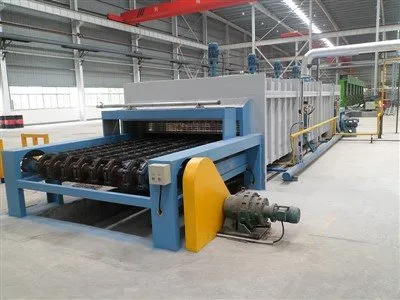
As a supplier of Automatic Quenching Furnaces, I am often asked about the automation level of these remarkable pieces of equipment. In this blog post, I will delve into the intricacies of the automation level of an Automatic Quenching Furnace, exploring its features, benefits, and the impact it has on the manufacturing process.
Understanding the Basics of Automatic Quenching Furnaces
Before we discuss the automation level, let's briefly understand what an Automatic Quenching Furnace is. An Automatic Quenching Furnace is a specialized industrial furnace used to heat metal components to a specific temperature and then rapidly cool them in a quenching medium, such as oil or water. This process is crucial for enhancing the hardness, strength, and durability of metals, making them suitable for a wide range of applications in industries like automotive, aerospace, and manufacturing.
Key Automation Features
Temperature Control
One of the most critical aspects of an Automatic Quenching Furnace is its ability to precisely control the temperature. Advanced automation systems use sophisticated sensors and controllers to monitor and adjust the temperature inside the furnace in real-time. This ensures that the metal components are heated to the exact temperature required for the quenching process, eliminating the risk of overheating or underheating. For example, modern furnaces can maintain a temperature accuracy of ±1°C, which is essential for achieving consistent and high-quality results.
Material Handling
Automation also plays a significant role in material handling within the furnace. Conveyor systems are commonly used to transport the metal components in and out of the furnace. These Conveyor Chains are designed to handle heavy loads and can be programmed to move at a specific speed, ensuring that the components spend the right amount of time in the furnace. Additionally, robotic arms can be integrated into the system to load and unload the components, further increasing the efficiency and accuracy of the process.
Quenching Process Control
The quenching process itself is highly automated in an Automatic Quenching Furnace. The system can precisely control the flow rate and temperature of the quenching medium, ensuring that the components are cooled at the optimal rate. This is crucial for achieving the desired metallurgical properties of the metal. For instance, some furnaces can adjust the quenching parameters based on the size and shape of the components, providing a customized quenching solution for each part.
Data Monitoring and Analysis
Another important aspect of automation is data monitoring and analysis. Modern furnaces are equipped with sensors that collect data on various parameters, such as temperature, pressure, and flow rate, during the quenching process. This data is then analyzed using advanced software to identify any potential issues or areas for improvement. For example, if the temperature inside the furnace deviates from the set point, the system can automatically adjust the heating elements to bring it back to the desired level. This not only improves the quality of the products but also helps in reducing downtime and maintenance costs.
Benefits of High Automation Level
Improved Product Quality
The high level of automation in an Automatic Quenching Furnace ensures that the quenching process is carried out consistently and accurately. This leads to improved product quality, with fewer defects and variations in the metallurgical properties of the metal components. As a result, manufacturers can produce high-quality products that meet the strictest industry standards.
Increased Productivity
Automation significantly reduces the time and labor required for the quenching process. With automated material handling and precise process control, the furnace can operate continuously, increasing the throughput of the manufacturing process. This allows manufacturers to produce more components in less time, improving their overall productivity and competitiveness in the market.
Cost Savings
By eliminating the need for manual labor and reducing the risk of errors, automation can lead to significant cost savings for manufacturers. The precise control of the quenching process also reduces the consumption of energy and quenching medium, further lowering the operating costs. Additionally, the data monitoring and analysis capabilities of the furnace help in identifying and addressing any issues early, reducing the maintenance costs and downtime.
Enhanced Safety
Automation also improves the safety of the quenching process. With automated material handling and process control, workers are less exposed to the high temperatures and hazardous quenching media. This reduces the risk of accidents and injuries in the workplace, creating a safer working environment for the employees.
Different Types of Automatic Quenching Furnaces and Their Automation Levels
Helical Spring Stepping Quenching Furnace
The Helical Spring Stepping Quenching Furnace is a specialized type of Automatic Quenching Furnace designed for the quenching of helical springs. This furnace typically has a high level of automation, with features such as automatic spring feeding, precise temperature control, and a programmable quenching process. The stepping mechanism ensures that the springs are heated and quenched in a sequential manner, allowing for efficient and consistent processing.
Continuous Quenching Furnace
Continuous quenching furnaces are designed for high-volume production. These furnaces use a continuous conveyor system to transport the metal components through the furnace, with automated temperature control and quenching process control. The continuous operation of the furnace allows for a high throughput, making it ideal for large-scale manufacturing.


Batch Quenching Furnace
Batch quenching furnaces are used for smaller production runs or when different types of components need to be processed. While these furnaces may have a lower level of automation compared to continuous furnaces, they still offer features such as temperature control and material handling automation. The batch process allows for more flexibility in terms of the size and type of components that can be processed.
The Future of Automation in Automatic Quenching Furnaces
The automation level of Automatic Quenching Furnaces is expected to continue to evolve in the future. With the advancements in technology, we can expect to see even more sophisticated automation features, such as artificial intelligence and machine learning. These technologies can be used to optimize the quenching process, predict potential issues, and improve the overall efficiency of the furnace.
For example, machine learning algorithms can analyze the data collected from the sensors to identify patterns and trends, allowing the furnace to automatically adjust its parameters for optimal performance. Additionally, artificial intelligence can be used to develop predictive maintenance models, which can help in preventing breakdowns and reducing downtime.
Conclusion
In conclusion, the automation level of an Automatic Quenching Furnace is a crucial factor in determining its performance, efficiency, and the quality of the products it produces. With features such as precise temperature control, automated material handling, and advanced data monitoring and analysis, modern furnaces offer a high level of automation that significantly improves the manufacturing process.
As a supplier of Automatic Quenching Furnaces, we are committed to providing our customers with the latest and most advanced automation technologies. Our furnaces are designed to meet the specific needs of different industries and applications, offering a reliable and efficient solution for the quenching process.
If you are interested in learning more about our Automatic Quenching Furnaces or would like to discuss your specific requirements, please feel free to contact us. We would be happy to assist you in finding the right solution for your manufacturing needs.
References
- ASM Handbook Volume 4: Heat Treating. ASM International.
- Metals Handbook: Properties and Selection: Irons, Steels, and High-Performance Alloys. ASM International.
- Industrial Furnaces: Principles, Design, and Operation. Butterworth-Heinemann.