Hey there! As a supplier of spiral round spring equipment, I've seen firsthand the wide variety of tools and machinery that fall under this category. In this blog post, I'm gonna break down the different types of spiral round spring equipment, give you the lowdown on what they do, and why they're essential in various industries.
1. Spring Coiling Machines
Spring coiling machines are the workhorses of the spiral round spring manufacturing process. These machines are designed to wind wire into the desired spiral shape. There are two main types:
CNC Spring Coiling Machines
CNC (Computer Numerical Control) spring coiling machines are super advanced. They use computer programs to control the coiling process with extreme precision. You can input specific dimensions, such as the diameter of the spring, the pitch (distance between coils), and the number of coils, and the machine will do the rest. This type of machine is great for producing high - volume, consistent springs with complex shapes. It's commonly used in industries like automotive, where precision is key for parts like suspension springs.
Manual Spring Coiling Machines
On the other hand, manual spring coiling machines are more basic. They're operated by hand, which means they're a bit slower and less precise than CNC machines. However, they're also more affordable and easier to set up. Manual machines are perfect for small - scale production or for making custom - made springs. If you're a hobbyist or a small business just starting out, a manual spring coiling machine might be the way to go.
2. Heat Treatment Equipment
Heat treatment is a crucial step in the production of spiral round springs. It helps to improve the strength, durability, and elasticity of the springs. Here are some common types of heat treatment equipment:
Automatic Quenching Furnace
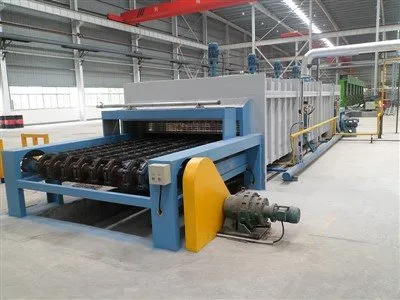
An automatic quenching furnace is a high - tech piece of equipment that heats the springs to a specific temperature and then rapidly cools them. This process, called quenching, hardens the metal and gives the spring its desired mechanical properties. The automatic feature means that the furnace can control the heating and cooling cycles precisely, ensuring consistent results. It's widely used in large - scale manufacturing operations where quality control is essential.
Helical Spring Stepping Quenching Furnace
The Helical Spring Stepping Quenching Furnace is designed specifically for helical springs. It uses a stepping mechanism to move the springs through different heating and cooling zones. This allows for a more uniform heat treatment, which is especially important for helical springs that have a complex shape. The stepping process ensures that each part of the spring is heated and cooled evenly, resulting in a stronger and more reliable spring.
3. Testing and Inspection Equipment
Before the spiral round springs are shipped out, they need to be tested and inspected to make sure they meet the required standards. Here are some common types of testing and inspection equipment:
Spring Tester
A spring tester is used to measure the force required to compress or extend a spring. This helps to determine the spring's stiffness, which is an important property. By testing the springs, manufacturers can ensure that they're within the specified tolerance range. Spring testers can be either manual or automated, depending on the volume of production.

Visual Inspection Equipment
Visual inspection equipment, such as microscopes and cameras, is used to check the surface quality of the springs. It can detect any cracks, scratches, or other defects that might affect the performance of the spring. This type of inspection is usually done in conjunction with other tests to ensure the overall quality of the product.
4. Material Handling Equipment
Moving the springs around the manufacturing facility is an important part of the production process. Here are some types of material handling equipment used in spiral round spring production:
Conveyor Chain
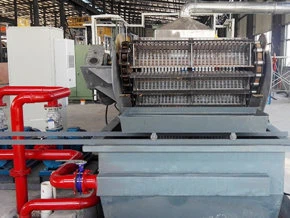
A conveyor chain is a simple yet effective way to move the springs from one workstation to another. It consists of a series of interconnected links that form a continuous loop. The springs can be placed on the conveyor chain and transported to different parts of the factory, such as the coiling machine, the heat treatment furnace, or the testing area. Conveyor chains are available in different sizes and configurations to suit the specific needs of the production line.
Why Choose Our Spiral Round Spring Equipment?
As a supplier, we offer a wide range of high - quality spiral round spring equipment. Our machines are built to last, with the latest technology and the highest standards of craftsmanship. We understand that every customer has different needs, so we provide customized solutions to meet your specific requirements. Whether you're a large - scale manufacturer or a small business, we have the equipment that's right for you.
If you're in the market for spiral round spring equipment, I encourage you to get in touch with us. We'd be happy to discuss your needs and provide you with a free quote. Our team of experts is always on hand to answer any questions you might have and to help you make the best decision for your business.
References
- "Spring Manufacturing Handbook" by Spring Manufacturers Institute
- "Materials Science and Engineering: An Introduction" by William D. Callister, Jr. and David G. Rethwisch