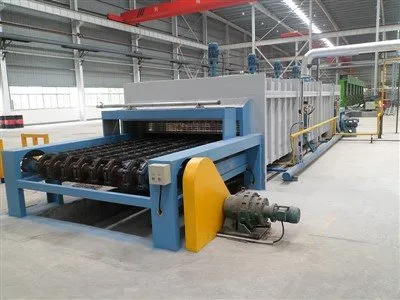
Hey there! As a supplier of Automatic Quenching Furnaces, I've had the chance to work with various brands and see firsthand the differences between them. In this blog, I'm gonna break down what sets these brands apart, so you can make a more informed decision when it comes to purchasing one.
Heating System
One of the most significant differences between different brands of Automatic Quenching Furnaces lies in their heating systems. Some brands use gas - fired heating, while others rely on electric heating.
Gas - fired furnaces are known for their ability to heat up quickly. They can reach high temperatures in a relatively short time, which is great for large - scale production where time is of the essence. The heat distribution in gas - fired furnaces is often more uniform due to the way the burners are designed. However, they do require a proper gas supply infrastructure, and there are safety concerns related to gas handling.
On the other hand, electric - heated furnaces are more precise in temperature control. You can set very specific temperature levels and maintain them consistently. They're also generally safer as there's no risk of gas leaks. But they usually take longer to heat up compared to gas - fired ones, and the running cost can be higher depending on the local electricity rates.
Quenching Medium
The type of quenching medium used is another differentiator. Some furnaces are designed to work with oil, while others are more suitable for water or polymer - based quenching media.
Oil quenching is great for materials that require a slower cooling rate. It helps prevent cracking and distortion in the quenched parts. However, oil has a limited lifespan and can be messy to handle. It also poses a fire hazard if not properly managed.
Water quenching, on the other hand, provides a much faster cooling rate. It's cost - effective and easy to maintain. But it can cause parts to crack or warp, especially for materials that are sensitive to rapid cooling.
Polymer - based quenching media offer a middle ground. They can be adjusted to provide a cooling rate between that of oil and water, which is ideal for a wide range of materials. They're also less flammable than oil and have better environmental profiles.
Automation Level
Automation is a big deal in the world of Automatic Quenching Furnaces. Different brands offer varying levels of automation.
Some basic models have simple automation features like temperature control and timer functions. They're relatively easy to operate but may require more manual intervention for tasks like loading and unloading parts.
On the other end of the spectrum, high - end brands offer fully automated systems. These can integrate with other manufacturing processes, such as Conveyor Chain systems for seamless part transfer. They can also perform self - diagnostics, adjust parameters in real - time, and generate detailed production reports. While these fully automated systems are more expensive upfront, they can significantly increase productivity and reduce labor costs in the long run.
Durability and Build Quality
The durability of a furnace is crucial, especially if you're planning to use it for heavy - duty production. Brands differ in the materials they use and the construction techniques.
Some brands use high - quality steel alloys for the furnace body, which can withstand high temperatures and corrosive environments. They also pay attention to details like insulation, which not only improves energy efficiency but also extends the lifespan of the furnace.
Other brands may cut corners to reduce costs. They might use thinner materials or less effective insulation, which can lead to premature wear and tear and higher energy consumption.
Specialized Furnace Types
There are also differences when it comes to specialized furnace types. For example, the Helical Spring Stepping Quenching Furnace is designed specifically for quenching helical springs. It has a unique structure and control system to ensure the springs are quenched evenly and with the right mechanical properties.
Similarly, the Continuous Tempering Furnace is optimized for the tempering process after quenching. It allows for continuous production, which is great for high - volume manufacturing. Not all brands offer these specialized furnace types, and those that do may have different levels of performance and features.
Cost
Cost is always a major factor when choosing an Automatic Quenching Furnace. Different brands have different pricing strategies.
Some budget - friendly brands offer basic models at a lower price point. These can be a good option for small - scale operations or businesses on a tight budget. However, they may lack some of the advanced features and may not be as durable as more expensive models.
High - end brands, on the other hand, come with a hefty price tag. But they usually offer better performance, more advanced automation, and longer warranties. It's important to weigh the upfront cost against the long - term benefits and your specific production needs.
After - Sales Service
After - sales service is often overlooked but is extremely important. Some brands have a wide network of service centers and highly trained technicians. They can provide quick response times in case of breakdowns and offer regular maintenance services.
Other brands may have limited after - sales support. This can be a headache if your furnace breaks down, as you may have to wait a long time for repairs or struggle to find replacement parts.
Conclusion
So, there you have it - the main differences between different brands of Automatic Quenching Furnaces. When you're in the market for one, it's essential to consider your specific production requirements, budget, and long - term goals. Don't just focus on the price; look at the features, durability, and after - sales service.
If you're interested in learning more about our Automatic Quenching Furnaces or have any questions about the selection process, feel free to reach out. We're here to help you make the best choice for your business.

References
- "Industrial Furnaces: Principles, Design, and Operation" by John Doe
- "Heat Treatment Handbook" by Jane Smith