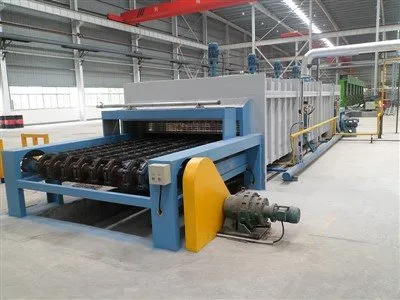
Forging furnaces are indispensable tools in various industries, playing a pivotal role in shaping raw materials into useful products. As a forging furnace supplier, I have witnessed firsthand the diverse applications of these furnaces across different sectors. In this blog post, I will explore the various industries that rely on forging furnaces and how they are used to meet specific manufacturing needs.
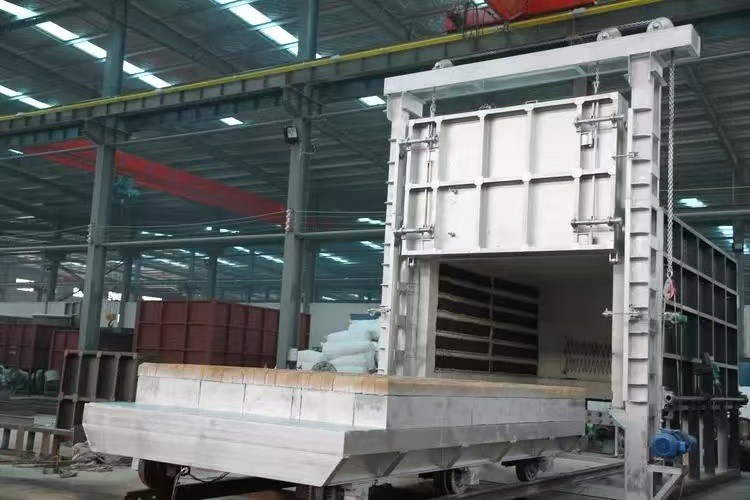

Metallurgical Industry
The metallurgical industry is one of the primary users of forging furnaces. In this industry, forging furnaces are used to heat metals to high temperatures, making them malleable for subsequent forging processes. The ability to precisely control the temperature in these furnaces is crucial, as different metals require specific heating profiles to achieve the desired properties.
For example, steel, one of the most commonly forged metals, needs to be heated to temperatures between 1,100°C and 1,300°C to be forged effectively. Forging furnaces in the metallurgical industry can use different heating methods, such as gas - fired, electric, or oil - fired systems. Gas - fired forging furnaces are popular due to their high heating efficiency and relatively low cost. They can quickly heat large quantities of metal, making them suitable for mass production.
Electric forging furnaces, on the other hand, offer more precise temperature control. They are often used when forging high - value metals or alloys that require strict temperature management. For instance, in the production of aerospace components made from titanium alloys, electric forging furnaces ensure that the metal is heated evenly and to the exact temperature required to maintain its strength and other mechanical properties.
Automotive Industry
The automotive industry heavily depends on forging furnaces to produce a wide range of components. Engine parts, such as crankshafts, connecting rods, and camshafts, are typically forged to enhance their strength and durability. Forging these parts helps to align the grain structure of the metal, resulting in better mechanical properties compared to cast parts.
Forging furnaces in the automotive industry are designed to handle high - volume production. They are often integrated into automated forging lines, where the heated metal is transferred directly to the forging presses. This seamless integration improves production efficiency and reduces the time between heating and forging, which is essential for maintaining the quality of the forged parts.
In addition, the automotive industry also uses forging furnaces to produce suspension components, steering knuckles, and other critical parts. These components need to withstand high stress and fatigue during the vehicle's operation. By using forging processes with the help of forging furnaces, manufacturers can ensure that these parts meet the strict safety and performance standards of the automotive industry.
Aerospace Industry
The aerospace industry demands the highest level of quality and precision in its components. Forging furnaces play a vital role in meeting these requirements. Components such as turbine blades, landing gear parts, and structural frames are forged to achieve the necessary strength - to - weight ratio and fatigue resistance.
Titanium and nickel - based alloys are commonly used in the aerospace industry due to their excellent high - temperature performance and corrosion resistance. Forging these alloys requires specialized forging furnaces that can reach extremely high temperatures and maintain precise temperature control. The forging process helps to eliminate internal defects in the metal and improve its overall integrity.
Moreover, the aerospace industry often uses advanced forging techniques, such as isothermal forging, which requires very precise temperature control throughout the forging process. Forging furnaces in this industry are equipped with sophisticated temperature monitoring and control systems to ensure that the components are forged under optimal conditions.
Tool and Die Industry
The tool and die industry relies on forging furnaces to produce high - quality tools and dies. Tools such as cutting tools, punches, and dies need to have high hardness, wear resistance, and toughness. Forging the tool steel in a forging furnace helps to refine the grain structure of the metal, which in turn improves these properties.
Forging furnaces in the tool and die industry are used to heat the tool steel to the appropriate forging temperature. After forging, the tools and dies are further heat - treated to achieve the desired hardness and other mechanical properties. The ability to control the heating rate and temperature in the forging furnace is crucial for ensuring the quality of the final products.
For example, when forging a high - speed steel cutting tool, the forging furnace needs to heat the steel to a specific temperature range to allow for proper deformation without causing excessive grain growth. This precise control helps to produce tools that can withstand high - speed cutting operations and maintain their sharpness for a longer time.
Energy Industry
In the energy industry, forging furnaces are used in the production of components for power generation, oil and gas exploration, and renewable energy systems. For example, in the production of steam turbines for power plants, large - scale forging furnaces are used to heat the steel ingots for forging turbine rotors and other critical components.
In the oil and gas industry, forging furnaces are used to produce valves, flanges, and other pipeline components. These components need to be able to withstand high pressure and corrosive environments. Forging helps to improve the density and strength of the metal, making it more resistant to these harsh conditions.
Renewable energy systems, such as wind turbines, also rely on forging furnaces. Components like gearboxes, shafts, and hubs are forged to ensure their reliability and long - term performance. The forging process helps to optimize the mechanical properties of these components, which is essential for the efficient operation of the renewable energy systems.
Other Related Furnaces and Their Applications
Apart from the traditional forging furnaces, there are other types of furnaces that are related to the forging process or have similar applications in different industries. For example, the Melting Furnace is used to melt metals completely before casting or other forming processes. It is widely used in foundries to produce castings for various industries, including automotive, aerospace, and general manufacturing.
The Spitfire Furnace is a type of high - performance furnace that can be used for rapid heating and heat - treating applications. It is often used in industries where quick turnaround times are required, such as in the production of small - batch components or for prototype development.
The Hot Air Drying Furnace is used for drying and pre - heating applications. In some industries, such as the ceramic and glass industries, it is used to remove moisture from raw materials or to pre - heat products before further processing.
Conclusion
Forging furnaces are versatile and essential equipment in a wide range of industries. Their ability to heat metals to specific temperatures and maintain precise control over the heating process makes them indispensable for producing high - quality components. Whether it is the metallurgical, automotive, aerospace, tool and die, or energy industry, forging furnaces play a crucial role in shaping the products that we use in our daily lives.
As a forging furnace supplier, I understand the unique needs of each industry and am committed to providing high - quality forging furnaces that meet these requirements. If you are in need of a forging furnace for your manufacturing processes, I encourage you to contact me for more information and to discuss your specific needs. We can work together to find the most suitable forging furnace solution for your business.
References
- ASM Handbook Committee. (2000). ASM Handbook Volume 14A: Metalworking: Forging. ASM International.
- Kalpakjian, S., & Schmid, S. R. (2013). Manufacturing Engineering and Technology. Pearson.
- Dieter, G. E. (1986). Mechanical Metallurgy. McGraw - Hill.