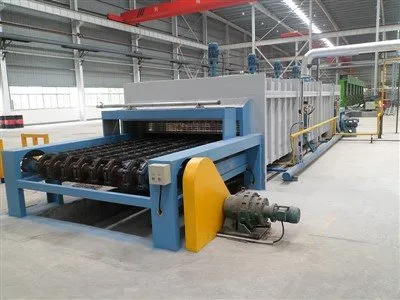
Hey there! I'm a supplier of quenching pools, and I know how crucial it is to control the flow rate in a quenching pool. In this blog, I'll share some tips and tricks on how to do just that.
Why Controlling Flow Rate Matters
First off, let's talk about why controlling the flow rate in a quenching pool is so important. The flow rate affects how quickly the quenching medium (usually water or oil) cools the metal. If the flow rate is too slow, the metal might not cool evenly, which can lead to uneven hardness and potentially weak spots. On the other hand, if the flow rate is too fast, it can cause excessive turbulence, which might also affect the quality of the quenched metal. So, finding the right flow rate is key to getting high - quality quenched products.


Factors Affecting Flow Rate
There are several factors that can influence the flow rate in a quenching pool.
Pump Capacity
The pump is responsible for circulating the quenching medium. A pump with a higher capacity can move more of the medium through the pool in a given time, increasing the flow rate. When choosing a pump for your quenching pool, you need to consider the size of the pool and the type of quenching operations you'll be doing. For larger pools or high - volume quenching, you'll likely need a more powerful pump. You can check out our Volume Ear Furnace which works in tandem with well - designed quenching systems.
Pipe Diameter
The diameter of the pipes used to circulate the quenching medium also plays a role. Larger diameter pipes offer less resistance to the flow of the medium, allowing for a higher flow rate. However, you also need to balance this with cost and space requirements. Sometimes, using larger pipes might not be practical due to installation constraints.
Medium Viscosity
The viscosity of the quenching medium affects how easily it can flow. For example, oil is more viscous than water, so it will flow more slowly through the same system compared to water. When using a more viscous medium, you might need to adjust the pump speed or pipe diameter to achieve the desired flow rate.
Methods to Control Flow Rate
Adjusting Pump Speed
One of the simplest ways to control the flow rate is by adjusting the speed of the pump. Most modern pumps come with variable speed drives, which allow you to increase or decrease the pump's rotational speed. By increasing the speed, you can boost the flow rate, and by decreasing it, you can slow down the flow. This method is quite flexible as you can make real - time adjustments based on the specific quenching requirements of each batch of metal.
Using Flow Control Valves
Flow control valves are another effective way to manage the flow rate. These valves can be placed in the pipes and are designed to restrict or allow more of the quenching medium to pass through. There are different types of flow control valves, such as gate valves, globe valves, and ball valves. Each type has its own advantages and is suitable for different applications. For example, ball valves are known for their quick - opening and closing capabilities, which can be useful for rapid flow rate adjustments.
Optimizing Pipe Layout
The layout of the pipes in the quenching pool system can also impact the flow rate. A well - designed pipe layout minimizes bends and turns, which can cause resistance to the flow of the medium. By keeping the pipes as straight as possible and using smooth - walled pipes, you can reduce frictional losses and improve the overall flow rate.
Monitoring the Flow Rate
It's not enough to just control the flow rate; you also need to monitor it to ensure that it stays within the desired range. Flow meters are commonly used for this purpose. There are different types of flow meters, such as electromagnetic flow meters, ultrasonic flow meters, and turbine flow meters. These devices measure the volume or mass of the quenching medium flowing through the pipes and provide real - time data. This data can be used to make adjustments to the pump speed or valve settings as needed.
The Role of Automation
Automation can greatly simplify the process of controlling the flow rate in a quenching pool. An automated system can be programmed to maintain a specific flow rate based on pre - set parameters. For example, you can set the system to adjust the pump speed and valve openings according to the type of metal being quenched and its size. Our Automatic Drilling Machine is part of an automated setup that can work in harmony with a well - controlled quenching system.
Automated Quenching Machines
Investing in an Automatic Quenching Machine can be a game - changer. These machines are designed to precisely control all aspects of the quenching process, including the flow rate of the quenching medium. They use sensors and advanced control algorithms to ensure that the flow rate is optimized for each individual quenching operation.
Troubleshooting Flow Rate Issues
Sometimes, you might encounter problems with the flow rate in your quenching pool. Here are some common issues and how to fix them.
Low Flow Rate
If you're experiencing a low flow rate, the first thing to check is the pump. Make sure it's running at the correct speed and there are no blockages in the pump or the pipes. You should also check the viscosity of the quenching medium. If it's too high, it might need to be changed or heated to reduce its viscosity.
High Flow Rate
A high flow rate can be just as problematic as a low one. If you notice excessive turbulence or the flow rate is beyond the desired range, check the pump speed and the settings of the flow control valves. You might need to reduce the pump speed or close the valves slightly to bring the flow rate back under control.
Conclusion
Controlling the flow rate in a quenching pool is a critical aspect of the quenching process. By understanding the factors that affect flow rate and using the right methods to control and monitor it, you can ensure high - quality quenched products. Whether it's adjusting pump speed, using flow control valves, or optimizing pipe layout, each method plays an important role in achieving the ideal flow rate.
If you're in the market for a quenching pool or need help with flow rate control in your existing system, don't hesitate to get in touch. We're here to offer you the best solutions and expert advice to meet your quenching needs. Contact us today to start a conversation about your requirements and let's work together to improve your quenching operations!
References
- "Heat Treating Principles and Practices" by ASM International
- "Pump Handbook" by Igor Karassik et al.
- Industry publications on metal quenching and fluid flow control.