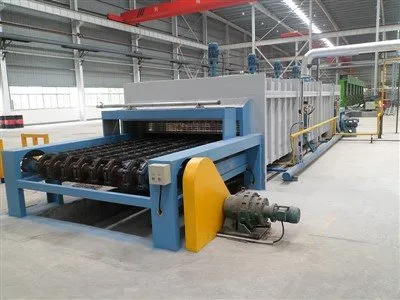
As a seasoned provider of holding furnaces, I understand the critical role thermal expansion plays in the performance and longevity of these essential industrial appliances. Thermal expansion occurs when materials expand or contract due to temperature changes, and if not properly managed, it can lead to a host of issues in a holding furnace, including structural damage, leaks, and reduced efficiency. In this blog post, I'll share some effective strategies on how to compensate for thermal expansion in a holding furnace, drawing on my extensive experience in the field.
Understanding Thermal Expansion in Holding Furnaces
Before delving into compensation methods, it's important to understand the nature of thermal expansion in holding furnaces. Holding furnaces are designed to maintain a consistent temperature for various processes, such as melting, heat treatment, and metal casting. As the furnace heats up, the materials used in its construction, including the furnace walls, refractory lining, and metal components, expand. Conversely, when the furnace cools down, these materials contract. This continuous cycle of expansion and contraction can cause stress on the furnace structure, leading to cracks, warping, and other forms of damage.
The rate of thermal expansion depends on several factors, including the type of material, the temperature range, and the duration of exposure to high temperatures. Different materials have different coefficients of thermal expansion (CTE), which is a measure of how much a material expands or contracts per unit length per degree of temperature change. For example, metals generally have higher CTEs than ceramics, which means they expand and contract more significantly with temperature changes.
Strategies for Compensating Thermal Expansion
1. Designing with Expansion Joints
One of the most common ways to compensate for thermal expansion in a holding furnace is by incorporating expansion joints into the design. Expansion joints are flexible connectors that allow the furnace components to expand and contract without causing damage to the structure. They are typically made of materials with high flexibility and resistance to high temperatures, such as metal bellows or graphite seals.
Expansion joints can be installed in various parts of the furnace, including the walls, roof, and piping systems. For example, in the furnace walls, expansion joints can be placed at regular intervals to accommodate the expansion and contraction of the refractory lining. In the piping systems, expansion joints can be used to absorb the thermal stress caused by the expansion and contraction of the pipes.
2. Using Flexible Refractory Materials
Another effective strategy is to use flexible refractory materials in the furnace lining. Flexible refractories are designed to have a certain degree of elasticity, which allows them to expand and contract with temperature changes without cracking or spalling. These materials are typically made of ceramic fibers or other high-temperature-resistant materials that can withstand the harsh conditions inside the furnace.
Flexible refractory materials can be installed in different forms, such as blankets, boards, or modules. They can be used to line the furnace walls, roof, and other areas where thermal expansion is a concern. By using flexible refractories, the furnace can better accommodate the thermal stress caused by temperature changes, reducing the risk of damage to the lining and the overall structure.
3. Implementing Thermal Insulation
Proper thermal insulation is essential for reducing the thermal stress on the furnace structure and compensating for thermal expansion. Insulation materials can help to maintain a more uniform temperature distribution inside the furnace, reducing the temperature gradient between the hot and cold areas. This, in turn, reduces the amount of thermal expansion and contraction that occurs in the furnace components.
There are various types of insulation materials available for holding furnaces, including ceramic fiber insulation, refractory bricks, and insulating castables. The choice of insulation material depends on several factors, such as the temperature range, the type of furnace, and the specific application. For example, ceramic fiber insulation is a popular choice for high-temperature applications due to its low thermal conductivity and high flexibility.
4. Regular Maintenance and Inspection
Regular maintenance and inspection are crucial for ensuring the proper functioning of a holding furnace and compensating for thermal expansion. During maintenance, it's important to check the condition of the expansion joints, refractory lining, and insulation materials. Any signs of damage or wear should be addressed promptly to prevent further problems.
Inspection should also include monitoring the temperature distribution inside the furnace to ensure that it is within the specified range. If the temperature gradient is too large, it may indicate a problem with the insulation or the heating system, which can lead to excessive thermal expansion and contraction. By addressing these issues early on, the furnace can be kept in good working condition and the risk of damage can be minimized.
The Importance of Compensating Thermal Expansion
Compensating for thermal expansion in a holding furnace is not only important for preventing damage to the furnace structure but also for ensuring the quality and efficiency of the processes carried out in the furnace. For example, in metal casting applications, thermal expansion can affect the dimensional accuracy of the castings. If the furnace components expand or contract too much, it can cause the molds to deform, resulting in defective castings.


In addition, thermal expansion can also affect the energy efficiency of the furnace. When the furnace components expand and contract, it can create gaps and leaks in the insulation, allowing heat to escape. This not only increases the energy consumption of the furnace but also reduces its overall efficiency. By compensating for thermal expansion, these issues can be minimized, resulting in improved product quality and reduced operating costs.
Related Equipment
In addition to holding furnaces, we also offer a range of related equipment that can enhance the performance and efficiency of your industrial processes. For example, our Conveyor Chain is designed to provide reliable and efficient material handling in various industries. It is made of high-quality materials and is built to withstand the harsh conditions of industrial environments.
Our Continuous Tempering Furnace is another essential piece of equipment for heat treatment processes. It is designed to provide precise temperature control and uniform heating, ensuring the quality and consistency of the tempered products.
Finally, our Automatic Quenching Furnace is a state-of-the-art equipment that can significantly improve the efficiency and productivity of your quenching processes. It is equipped with advanced automation systems and can be customized to meet your specific requirements.
Contact Us for Purchase and Consultation
If you are interested in learning more about our holding furnaces or any of our other products, please don't hesitate to contact us. Our team of experts is always ready to provide you with detailed information and assistance. We can help you choose the right equipment for your specific needs and provide you with professional installation and after-sales service.
Whether you are looking to upgrade your existing furnace or install a new one, we have the expertise and experience to help you achieve your goals. Contact us today to start a conversation about how we can support your industrial processes.
References
- Incropera, F. P., & DeWitt, D. P. (2002). Fundamentals of Heat and Mass Transfer. John Wiley & Sons.
- Ozisik, M. N. (1993). Heat Transfer - A Basic Approach. McGraw-Hill.
- Touloukian, Y. S., & Ho, C. Y. (Eds.). (1970). Thermophysical Properties of Matter. Plenum Press.