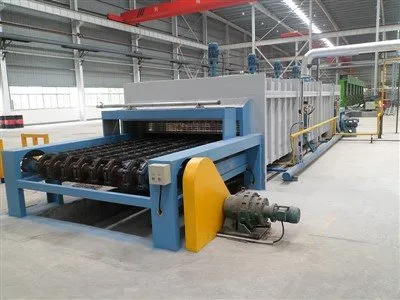
Gas flow patterns play a crucial role in the waste treatment process within a Plasma Solid Waste Furnace. As a supplier of Plasma Solid Waste Furnaces, I have witnessed firsthand how these patterns can significantly impact the efficiency, effectiveness, and environmental performance of the waste treatment system. In this blog, I will delve into the ways in which gas flow patterns influence the waste treatment process and highlight the importance of optimizing these patterns for optimal results.
Understanding the Plasma Solid Waste Furnace
Before we explore the influence of gas flow patterns, let's briefly understand the Plasma Solid Waste Furnace. This advanced technology uses high - energy plasma arcs to break down solid waste at extremely high temperatures. The plasma torch generates temperatures in excess of 10,000 degrees Celsius, which can decompose complex organic and inorganic materials into simpler components. The waste is fed into the furnace chamber, where it is rapidly heated and vaporized. The resulting gases and molten materials are then further processed for recovery or safe disposal.
The Plasma Solid Waste Furnace is designed to handle a wide range of solid waste types, including municipal solid waste, industrial waste, and hazardous waste. It offers several advantages over traditional waste treatment methods, such as high - volume reduction, minimal residue generation, and the ability to destroy persistent organic pollutants.
Impact of Gas Flow Patterns on Waste Decomposition
One of the primary ways gas flow patterns influence the waste treatment process is through their effect on waste decomposition. The gas flow in the furnace chamber determines how the waste is exposed to the high - temperature plasma region. A well - designed gas flow pattern ensures that the waste particles are evenly distributed and continuously brought into contact with the plasma arc.
When the gas flow is uniform, it promotes efficient heat transfer from the plasma to the waste. This allows for rapid heating and decomposition of the waste materials. On the other hand, a non - uniform gas flow can lead to uneven heating, where some waste particles may not reach the required temperature for complete decomposition. This can result in the formation of unburned residues, which not only reduce the overall efficiency of the waste treatment process but also pose potential environmental risks.
For example, if there are stagnant zones in the furnace chamber due to poor gas flow, waste particles may accumulate in these areas. These particles will not receive sufficient heat and may only undergo partial decomposition. As a result, they may contain harmful substances that could be released into the environment during subsequent processing or disposal.
Influence on Gas - Phase Reactions
Gas flow patterns also have a significant impact on gas - phase reactions within the Plasma Solid Waste Furnace. After the waste is decomposed, the resulting gases undergo a series of chemical reactions. These reactions are crucial for converting harmful pollutants into less harmful substances and for recovering valuable resources.
A proper gas flow pattern can enhance the mixing of the gases, which is essential for promoting chemical reactions. When the gases are well - mixed, the reactants have a higher chance of colliding with each other, increasing the reaction rate. For instance, in the case of reducing nitrogen oxides (NOx) emissions, a good gas flow pattern can ensure that the reducing agents are evenly distributed and react effectively with the NOx in the gas stream.
Moreover, the gas flow can affect the residence time of the gases in the reaction zone. A longer residence time allows for more complete reactions to occur. By optimizing the gas flow pattern, we can control the residence time of the gases, ensuring that all the necessary reactions are completed before the gases exit the furnace. This is particularly important for meeting strict environmental regulations regarding pollutant emissions.
Impact on Particulate Removal
In addition to gas - phase reactions, gas flow patterns are also important for particulate removal. During the waste treatment process, fine particulate matter is generated. These particulates need to be removed from the gas stream to prevent environmental pollution and equipment damage.
A well - designed gas flow pattern can facilitate the separation of particulates from the gas. For example, by creating a cyclonic flow in the furnace chamber, the centrifugal force can be used to separate the heavier particulates from the gas. The particulates are then collected at the bottom of the chamber for further treatment or disposal.
If the gas flow is not properly designed, the particulates may not be effectively separated, and they may be carried out of the furnace along with the gas stream. This can lead to increased emissions of particulate matter and can also cause problems for downstream equipment, such as clogging of filters and corrosion of pipes.


Role in Energy Recovery
Energy recovery is an important aspect of the waste treatment process in a Plasma Solid Waste Furnace. The high - temperature gases generated during waste decomposition contain a significant amount of energy that can be recovered and reused.
Gas flow patterns can influence the efficiency of energy recovery. A proper gas flow can direct the high - temperature gases to the heat exchanger, where the heat can be transferred to a working fluid, such as water or steam. This working fluid can then be used to generate electricity or for other heating applications.
If the gas flow is not optimized, the heat transfer efficiency may be reduced. For example, if the gases do not flow evenly through the heat exchanger, some areas of the heat exchanger may not receive sufficient heat, resulting in lower overall energy recovery.
Optimizing Gas Flow Patterns
As a supplier of Plasma Solid Waste Furnaces, we understand the importance of optimizing gas flow patterns. We use advanced computational fluid dynamics (CFD) simulations to model the gas flow in the furnace chamber. These simulations allow us to predict the gas flow behavior under different operating conditions and to design the furnace geometry and gas inlet/outlet configurations accordingly.
We also conduct experimental studies to validate the CFD results and to fine - tune the gas flow patterns. By adjusting parameters such as the gas flow rate, the angle of the gas inlets, and the shape of the furnace chamber, we can achieve a more uniform and efficient gas flow.
In addition to the design of the furnace itself, we also offer Desulfurization and Denitrification Tower and Storing Heat To Burn Exhaust Gas Furnace as part of our waste treatment system. These additional components can work in conjunction with the Plasma Solid Waste Furnace to further optimize the gas flow and to improve the overall performance of the waste treatment process.
Conclusion
In conclusion, gas flow patterns have a profound influence on the waste treatment process in a Plasma Solid Waste Furnace. They affect waste decomposition, gas - phase reactions, particulate removal, and energy recovery. By optimizing the gas flow patterns, we can improve the efficiency, effectiveness, and environmental performance of the waste treatment system.
As a supplier of Plasma Solid Waste Furnaces, we are committed to providing our customers with high - quality equipment and solutions that are designed to optimize gas flow patterns. If you are interested in learning more about our Plasma Solid Waste Furnaces or other waste treatment equipment, or if you have any questions regarding the waste treatment process, please feel free to contact us for a procurement negotiation. We look forward to working with you to find the best waste treatment solution for your needs.
References
- Brown, R. C. (2014). Handbook of Thermal and Chemical Waste Treatment. John Wiley & Sons.
- Li, X., & Yang, X. (2018). Plasma waste treatment technology: A review. Journal of Analytical and Applied Pyrolysis, 132, 162 - 174.
- Zhang, X., & Wang, Y. (2020). Numerical simulation of gas flow and heat transfer in a plasma waste - to - energy furnace. Energy Conversion and Management, 207, 112414.