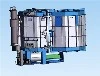
Detailed Explanation of the Spring Tempering Furnace Process
I. Overview
The spring tempering furnace is an industrial furnace specifically designed for the heat treatment of metal springs. Its main function is to temper springs after quenching to eliminate internal stress, improve the elastic limit and fatigue strength, and ultimately achieve the desired comprehensive mechanical properties. This equipment is widely used in automotive manufacturing, construction machinery, rail transportation, agricultural machinery, and other industries. It is a key process in the spring production line.
II. Purpose and Significance of Tempering
After quenching, the spring's microstructure becomes martensitic, which has high hardness but also high brittleness, making it prone to cracking or deformation. Tempering serves the following purposes:
Reduces internal stress and prevents cracking;
Stabilizes the microstructure and improves material toughness;
Enhances elasticity and fatigue resistance;
Adjusts hardness to a suitable range to meet practical application requirements.
III. Process Flow
The process flow of the spring tempering furnace mainly includes the following steps:
Charging: Place the quenched springs evenly in the furnace to avoid stacking and deformation.
Heating: Set an appropriate tempering temperature based on the spring steel grade (such as 60Si2Mn, 55CrSi, etc.), generally between 350°C and 550°C.
Soaking: Maintain the set temperature for a certain period (usually 30 to 120 minutes) to ensure uniform heat penetration throughout the workpieces.
Cooling: After soaking, cool the springs either slowly (natural air cooling) or through forced air cooling. In some processes, oil or water cooling is used to ensure microstructural stability.
IV. Equipment Types
Spring tempering furnaces can be classified according to their structural form as follows:
Box-type tempering furnace: Suitable for small to medium batches and various types of springs; offers flexible operation.
Mesh belt tempering furnace: Supports continuous production; ideal for mass production of standardized small springs.
Pit-type tempering furnace: Suitable for long springs or large workpieces; provides good thermal insulation.
Roller hearth tempering furnace: Compatible with automated production lines; improves the level of automation.
V. Control of Key Process Parameters
To ensure the quality of spring tempering, the following parameters must be strictly controlled:
Temperature uniformity: Keep the furnace temperature deviation within ±5°C.
Heating rate: Avoid excessively rapid heating that could induce thermal stress.
Soaking time: Adjust based on material thickness and workpiece size.
Atmosphere control: Use air or a protective atmosphere (such as nitrogen) during tempering to prevent oxidation.
VI. Quality Inspection and Optimization Direction
After tempering, the springs must undergo the following quality inspections:
Hardness testing (e.g., Rockwell hardness);
Elastic recovery rate and residual deformation evaluation;
Microstructure analysis;
Fatigue life testing.
To further enhance the tempering process, the following optimization measures can be considered:
Implement advanced temperature control systems and intelligent programming;
Use energy-efficient furnace designs and high-performance insulation materials;
Integrate with quenching furnaces and forming equipment to improve automation levels;
Apply MES systems for process traceability and data analysis.