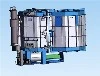
Choosing the right heat treatment equipment is an important decision for stabilizer bar manufacturers. The production line directly affects heating consistency, product quality, manufacturing efficiency, and operating costs.
For manufacturers planning to build a new facility or upgrade an existing production process, selecting equipment based on actual production requirements is more important than simply comparing machine prices.
So, what should you consider before purchasing a stabilizer bar heat treatment production line? Here are several key factors to help you make a practical decision.
1. Understand Your Stabilizer Bar Production Requirements
Before selecting equipment, manufacturers should first evaluate the stabilizer bars they intend to produce.
Different products may require different heating conditions, processing arrangements, and production capacities.
Important factors include:
Product specifications: Stabilizer bar diameter, length, material, and product design.
Production capacity: Expected output per shift or per day.
Product variety: Whether the factory produces multiple stabilizer bar models.
Production layout: Available workshop space and existing equipment connections.
Future expansion: Whether production capacity needs to increase in the future.
These details help determine the suitable equipment configuration and automation level.
A production line designed around actual product dimensions and output requirements is generally more practical than a standard configuration that does not match the manufacturer's production conditions.
2. Identify the Main Equipment Required
A complete heat treatment solution may include several types of equipment. The actual configuration depends on the manufacturing process and technical requirements of the stabilizer bars.
Heating Equipment
Heating equipment provides the required temperature conditions before subsequent forming or heat treatment operations.
When evaluating a heating furnace, manufacturers should consider temperature uniformity, heating capacity, energy consumption, and compatibility with the production process.
Quenching Equipment
Quenching is an important stage in stabilizer bar heat treatment. The equipment configuration should match the required cooling conditions and product specifications.
Manufacturers should evaluate the quenching method, cooling system, workpiece transfer, and process control requirements.
Tempering Equipment
After quenching, tempering is used to obtain the required mechanical properties of the processed stabilizer bars.
A suitable tempering furnace should provide stable temperature control and consistent heating conditions throughout production.
The heating, quenching, and tempering stages should be considered as parts of one coordinated production system rather than independent machines.
3. Choose Between Automatic and Semi-Automatic Production Lines
The appropriate automation level depends on production volume, labor availability, product variety, and investment plans.
Semi-Automatic Production Line
A semi-automatic arrangement may be suitable for manufacturers with relatively small production volumes or multiple product specifications.
It offers greater flexibility in certain production operations and can be a practical option when the factory does not require a fully automated material handling system.
Automatic Production Line
An automatic arrangement is more suitable for manufacturers seeking higher production efficiency and reduced manual handling.
Depending on the project requirements, automatic feeding, conveying, heating, workpiece transfer, and temperature control systems can be integrated into the production line.
When making a decision, manufacturers should consider not only the initial equipment investment but also long-term labor costs, production stability, and maintenance requirements.
4. Key Factors to Consider Before Purchasing
Selecting suitable equipment requires more than checking the furnace temperature or machine dimensions. Several factors should be evaluated together.
Temperature Control and Uniformity
Stable heating conditions are important for maintaining consistent product quality. Ask the equipment manufacturer about temperature control methods, furnace zones, and temperature uniformity requirements.
Production Capacity
The equipment should match the expected production output. Insufficient capacity may create production bottlenecks, while excessive capacity may increase unnecessary investment and operating costs.
Energy Consumption
Heating equipment operates continuously or frequently in many manufacturing facilities. Energy consumption should therefore be considered during equipment selection.
Compare the expected operating costs under similar production conditions rather than relying only on the furnace's rated power or fuel consumption.
Automation and Material Handling
A well-planned material handling system can improve production continuity and reduce unnecessary manual operations.
The layout should also allow convenient access for equipment inspection and maintenance.
After-Sales Support
Technical support, spare parts availability, installation guidance, and maintenance services are important considerations when purchasing industrial heat treatment equipment.
5. Why Consider a Customized Production Line?
Not every stabilizer bar manufacturer has the same production requirements.
Product dimensions, output targets, workshop layouts, and existing manufacturing processes can vary considerably between factories.
For this reason, a customized solution may be more suitable than purchasing several independent standard machines.
A customized project can be planned according to:
Stabilizer bar dimensions and product specifications.
Required production capacity.
Heating and heat treatment requirements.
Automatic or semi-automatic operation.
Existing workshop layout and equipment.
Future production expansion plans.
The purpose is to ensure that each piece of equipment works together within a practical production arrangement.
6. Choosing the Right Heat Treatment Equipment Manufacturer
The equipment manufacturer plays an important role in the success of a production line project.
Before making a purchase, manufacturers should evaluate the supplier's engineering capabilities, manufacturing experience, equipment quality, and technical support.
Here are several questions worth asking:
Can the supplier design equipment according to our product specifications?
Can the manufacturer provide a complete production line solution?
Does the supplier have its own manufacturing and technical teams?
Can the equipment be integrated with our existing production process?
What installation, commissioning, and after-sales services are available?
A manufacturer with design, production, and engineering capabilities can provide better coordination throughout the equipment supply process.
7. JIMENG – Heat Treatment Equipment and Customized Production Solutions
JIMENG specializes in the design and manufacturing of industrial heating and heat treatment equipment.
We provide equipment solutions for automotive spring and stabilizer bar manufacturers, with configurations developed according to individual project requirements.
Our capabilities include heating furnaces, quenching equipment, tempering furnaces, and related production line equipment.
For stabilizer bar manufacturers planning a new production line or upgrading existing equipment, JIMENG can evaluate product specifications, production capacity, and workshop conditions to develop a suitable equipment configuration.
Looking for a stabilizer bar heat treatment solution?
Contact JIMENG to discuss your product dimensions, production requirements, and equipment configuration. Our technical team can help evaluate a suitable solution for your manufacturing project.