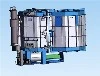
1. Introduction to Steel Leaf Spring Manufacturing
Steel leaf springs are essential components in commercial vehicles, trucks, trailers, agricultural machinery, and various industrial applications. Their primary function is to absorb road shocks, support vehicle loads, and maintain stable suspension performance under different operating conditions.
As demand for durable suspension components continues to grow, manufacturers are paying increasing attention to production efficiency, dimensional accuracy, and consistent product quality. Traditional manual processing methods are gradually being supplemented or replaced by automated manufacturing systems.
A modern steel leaf spring production line typically involves several important stages, including raw material preparation, cutting, heating, forming, heat treatment, surface processing, and final inspection. Each stage requires suitable machinery to ensure that the finished springs meet the required mechanical and dimensional specifications.
Choosing the right manufacturing machinery is therefore an important investment for companies planning to establish a new production facility or upgrade an existing factory.
2. What Machines Are Required for Steel Leaf Spring Production?
The manufacturing process involves multiple operations, and different machines are responsible for specific production tasks. Understanding the function of each machine helps manufacturers design a more efficient production line.
2.1 Steel Plate Cutting Machine
Raw steel materials must first be cut into the required lengths according to the spring design.
A steel plate cutting machine provides accurate cutting dimensions and helps reduce material waste. Depending on production requirements, manufacturers can select hydraulic shearing machines, CNC cutting systems, or other suitable cutting solutions.
Cutting accuracy directly affects subsequent forming operations. Consistent material dimensions also help improve production stability when manufacturing large batches of leaf springs.
2.2 Heating Furnace
Heating is an important operation in the manufacturing of hot-formed leaf springs.
Before forming, steel materials are heated to an appropriate temperature according to their material grade, thickness, and manufacturing specifications. A suitable industrial heating furnace provides controlled and relatively uniform heating conditions.
Temperature consistency is particularly important because excessive or insufficient heating may affect material deformation behavior and the final mechanical properties.
For manufacturers with high production volumes, selecting an appropriately sized heating system can help improve workflow coordination and reduce unnecessary production delays.
2.3 Leaf Spring Forming Machine
The forming stage determines the required curvature and shape of the spring.
A leaf spring forming machine is used to process heated steel materials into the designed shape. Depending on the product structure, manufacturers may require specialized bending, rolling, pressing, or forming equipment.
The machine should provide stable forming performance, repeatable processing accuracy, and sufficient capacity for the intended material dimensions.
For factories producing different spring specifications, flexible machine configurations can also help reduce production changeover time.
2.4 Heat Treatment Equipment
Heat treatment is essential for achieving the required strength, hardness, toughness, and fatigue performance of finished leaf springs.
The process commonly includes quenching and tempering, with temperatures and processing parameters determined by the steel grade and product requirements.
A well-designed heat treatment system helps maintain consistent material properties throughout the production batch.
Manufacturers should pay attention to furnace temperature control, heating uniformity, cooling conditions, and process monitoring when evaluating this type of equipment.
2.5 Shot Blasting and Shot Peening Equipment
Surface treatment is another important part of leaf spring manufacturing.
Shot blasting is commonly used to remove scale, rust, and surface contaminants before subsequent processing or coating.
Shot peening, on the other hand, is used to introduce beneficial compressive residual stresses on the spring surface. When properly controlled, this process can improve fatigue resistance and extend the service life of spring components.
Although these two processes may use similar equipment principles, their purposes and process requirements are different. Manufacturers should select the appropriate system according to the intended application.
3. How Does the Leaf Spring Manufacturing Process Work?
Understanding the complete manufacturing workflow is essential when planning an efficient production facility.
Although specific processes vary according to spring design and material specifications, a typical manufacturing sequence includes the following stages:
Step 1: Raw Material Preparation
Steel plates or strips are inspected for material quality, thickness, width, and surface condition. Qualified materials are then cut into the required dimensions.
Step 2: Heating and Temperature Control
The prepared steel materials are heated according to the specified forming process. Proper temperature management helps ensure stable material deformation.
Step 3: Hot Forming
Heated materials are processed through suitable forming machinery to achieve the required curvature and geometry.
Step 4: Quenching and Tempering
The formed components undergo heat treatment to obtain the required mechanical properties. Process parameters should be established according to the material specifications and applicable technical standards.
Step 5: Surface Treatment
Depending on the product requirements, shot blasting, shot peening, and other surface finishing operations are performed.
Step 6: Assembly and Quality Inspection
For multi-leaf spring assemblies, individual leaves are assembled with the necessary components. Final inspection checks dimensions, hardness, surface condition, and other specified performance indicators.
A properly coordinated production line helps reduce unnecessary handling between operations and improves overall manufacturing consistency.
4. Automatic vs. Semi-Automatic Leaf Spring Production Lines
When investing in new machinery, manufacturers often need to decide between automatic and semi-automatic production solutions.
Both options have advantages, and the right choice depends on production volume, labor availability, product variety, and investment budget.
Semi-Automatic Production Lines
Semi-automatic systems combine mechanical processing with manual handling or operator-controlled operations.
Their main advantages include:
Lower initial equipment investment.
Flexible production arrangements.
Easier adaptation to different product specifications.
Suitable for small and medium-sized production volumes.
However, manual material handling and machine coordination may increase labor requirements and create variations in production efficiency.
Fully Automatic Production Lines
Automatic production systems integrate multiple operations through coordinated machinery, material handling systems, and control technologies.
Their advantages include:
Higher potential production efficiency.
Reduced manual handling requirements.
More consistent processing conditions.
Better coordination between production stages.
Improved production management and process monitoring.
The initial investment is generally higher, and automatic systems require more careful planning, installation, and maintenance.
For manufacturers planning long-term production expansion, an automated solution may offer better operational value when production volume justifies the investment.
5. Key Factors to Consider When Choosing Manufacturing Machinery
Selecting suitable machinery involves more than comparing equipment prices. Manufacturers should evaluate several technical and operational factors before making a purchasing decision.
5.1 Material Specifications
The machine must be compatible with the steel grades, material thicknesses, widths, and lengths used in production.
Different material specifications may require different heating capacities, forming forces, and processing configurations.
5.2 Production Capacity
Production capacity should match the factory's actual and expected manufacturing requirements.
Manufacturers should consider the number of products processed per shift, machine cycle time, equipment availability, and coordination between individual production stages.
An oversized production system may increase unnecessary investment, while insufficient capacity can create bottlenecks.
5.3 Processing Accuracy
Dimensional consistency is particularly important for suspension components.
Equipment should provide stable forming performance and repeatable processing results. Reliable temperature control and appropriate process monitoring are also important for maintaining product quality.
5.4 Automation and Control Systems
Modern industrial machinery increasingly uses PLC control systems, automated material handling, and digital monitoring technologies.
These features can improve operating convenience, reduce certain manual operations, and help manufacturers monitor production parameters more effectively.
5.5 Maintenance and After-Sales Support
Equipment maintenance directly affects long-term production stability.
Before purchasing machinery, manufacturers should evaluate spare parts availability, maintenance accessibility, technical documentation, operator training, and the supplier's after-sales service capabilities.
A reliable equipment supplier should provide technical support throughout installation, commissioning, and subsequent operation.
6. How Modern Manufacturing Equipment Improves Production Efficiency
Investing in appropriate industrial machinery can improve manufacturing performance in several ways.
First, automated material handling and coordinated machine operations can reduce unnecessary transportation and waiting time between processes.
Second, stable heating and forming conditions help minimize variations in product dimensions and processing quality.
Third, integrated production systems can make it easier to organize manufacturing schedules and monitor equipment operating conditions.
Finally, properly selected machinery can reduce repetitive manual operations and help factories make better use of their available workforce.
However, equipment performance depends not only on the machines themselves but also on production planning, operator skills, maintenance procedures, and process control.
Manufacturers should therefore consider the entire production workflow rather than evaluating individual machines in isolation.
7. The Importance of Choosing an Experienced Industrial Equipment Supplier
For manufacturers planning to establish or expand a spring production facility, selecting the right machinery supplier is an important part of the investment process.
An experienced supplier should understand the relationship between material specifications, forming requirements, heating conditions, production capacity, and finished product quality.
Before placing an order, buyers should communicate their production requirements clearly, including:
Product types and drawings.
Raw material specifications.
Required production capacity.
Desired automation level.
Factory layout and available installation space.
Local voltage and power supply requirements.
Based on this information, equipment suppliers can recommend suitable machine configurations and provide more accurate technical proposals.
It is also advisable to confirm equipment specifications, delivery schedules, installation arrangements, commissioning procedures, and warranty conditions before finalizing a purchase.
8. Conclusion: Build a More Efficient Spring Manufacturing Production Line
The quality and efficiency of steel leaf spring manufacturing depend on the coordination of multiple production processes, from raw material preparation and hot forming to heat treatment and final inspection.
Selecting suitable machinery for each stage can help manufacturers improve production consistency, optimize operational efficiency, and support long-term factory development.
Whether you are establishing a new manufacturing facility or upgrading existing production capabilities, evaluating equipment configuration, automation level, processing requirements, and supplier experience is essential.
Looking for reliable industrial spring manufacturing machinery?
Our team specializes in hot coiling spring production equipment and industrial spring manufacturing solutions. We understand the importance of production efficiency, equipment stability, and customized machine configurations.
Contact us today to discuss your manufacturing requirements. Send us your product specifications, technical drawings, or expected production capacity, and our team will help you explore a suitable equipment solution for your factory.