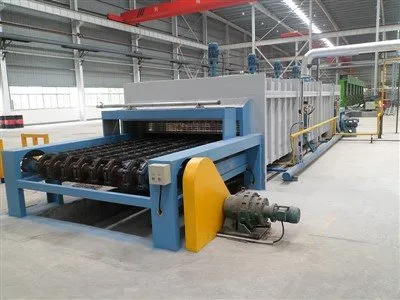
What defines the quenching precision of an Automatic Quenching Furnace? Well, I'm here as a supplier of these bad - boys to break it down for you.
First off, let's understand what quenching precision is all about. Quenching is a heat - treatment process where a metal is heated to a high temperature and then rapidly cooled. The precision of this process refers to how accurately the furnace can control the heating, holding, and cooling stages to achieve the desired material properties.
Factors Affecting Quenching Precision
Temperature Control
One of the most crucial aspects of quenching precision is temperature control. An Automatic Quenching Furnace needs to heat the metal to the exact temperature required for the specific alloy. Different metals and alloys have different critical temperatures at which their crystal structures change. For example, steel has a specific austenitizing temperature range. If the furnace can't heat the metal to this exact range, the resulting quenched material won't have the desired hardness, strength, or ductility.
Our furnaces are equipped with high - precision temperature sensors and advanced control systems. These sensors constantly monitor the temperature inside the furnace and send feedback to the control unit. The control unit then adjusts the heating elements to maintain the set temperature within a very narrow margin of error. This kind of precise temperature control is what sets our Automatic Quenching Furnaces apart from the competition.
Heating Uniformity
It's not just about reaching the right temperature; the heat also needs to be evenly distributed throughout the metal. Uneven heating can lead to inconsistent material properties. For instance, if one part of a metal component is hotter than another during quenching, it may result in different hardness levels across the part.
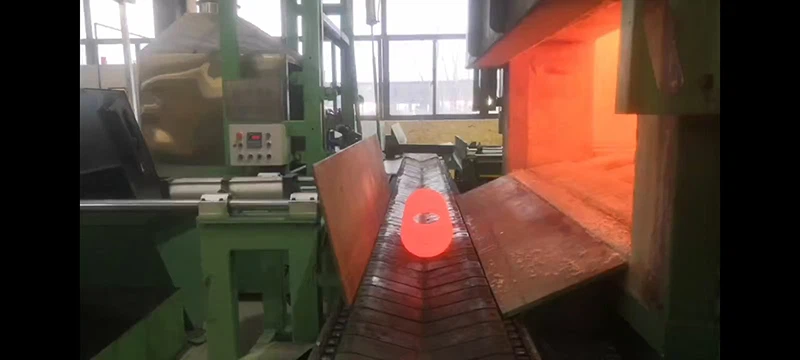

Our furnaces use advanced heating element designs and airflow systems to ensure uniform heating. The heating elements are strategically placed to provide an even heat source, and the airflow is carefully regulated to circulate the hot air around the metal. This combination helps to eliminate hot and cold spots, ensuring that every part of the metal reaches the same temperature at the same time.
Cooling Rate
The cooling rate during quenching is another critical factor in determining the final properties of the metal. Different cooling rates can result in different microstructures and mechanical properties. For example, a very rapid cooling rate can produce a hard and brittle martensitic structure, while a slower cooling rate may result in a softer and more ductile structure.
Our Automatic Quenching Furnaces offer precise control over the cooling rate. We have a variety of cooling methods available, such as water quenching, oil quenching, and polymer quenching. The furnace can be programmed to control the flow rate and temperature of the quenching medium, allowing us to achieve the exact cooling rate required for the specific application.
Applications and the Need for Precision
Conveyor Chain
In the case of Conveyor Chain, quenching precision is of utmost importance. Conveyor chains are used in a wide range of industries, from manufacturing to food processing. They need to have high strength, wear resistance, and fatigue resistance. Our Automatic Quenching Furnaces can precisely control the quenching process to ensure that the conveyor chain links have the right combination of hardness and toughness. This helps to extend the lifespan of the conveyor chain and reduce maintenance costs.
Helical Spring Stepping Quenching Furnace
The Helical Spring Stepping Quenching Furnace is designed to quench helical springs. Springs need to have a specific spring rate and fatigue life. Our furnaces can accurately control the quenching process to achieve the desired spring properties. By precisely controlling the temperature, heating uniformity, and cooling rate, we can ensure that the helical springs have consistent performance and meet the strict quality requirements of various applications.
Holding Furnace
A Holding Furnace is often used in conjunction with an Automatic Quenching Furnace. It is used to hold the metal at a specific temperature for a certain period before quenching. This is important for ensuring that the metal has a uniform microstructure and is ready for the quenching process. Our holding furnaces also offer high - precision temperature control, which complements the precision of our Automatic Quenching Furnaces.
Quality Assurance and Testing
We understand that our customers rely on the precision of our Automatic Quenching Furnaces to produce high - quality metal components. That's why we have a rigorous quality assurance program in place. Before a furnace leaves our factory, it undergoes a series of tests to ensure that it meets our strict quality standards.
We use advanced testing equipment to measure the temperature accuracy, heating uniformity, and cooling rate of the furnace. We also conduct real - world simulations to test the furnace's performance under different operating conditions. This helps us to identify and correct any potential issues before the furnace is delivered to the customer.
Why Choose Our Automatic Quenching Furnaces?
There are several reasons why you should choose our Automatic Quenching Furnaces. Firstly, our furnaces offer unmatched quenching precision. Our advanced technology and strict quality control ensure that you get the most accurate and consistent quenching results.
Secondly, our furnaces are highly customizable. We can design and build a furnace to meet your specific requirements, whether you need a small - scale furnace for a laboratory or a large - scale industrial furnace.
Finally, we offer excellent after - sales service. Our team of experts is always available to provide technical support and maintenance services. We want to make sure that your furnace operates at its best for years to come.
If you're in the market for an Automatic Quenching Furnace and are looking for high - precision, reliable equipment, we'd love to hear from you. Contact us today to discuss your needs and find out how our furnaces can help you improve your production process and product quality. Let's start a conversation about how we can work together to meet your quenching requirements.
References
- ASM Handbook Volume 4: Heat Treating. ASM International.
- Heat Treatment Principles and Techniques. Wiley - VCH.