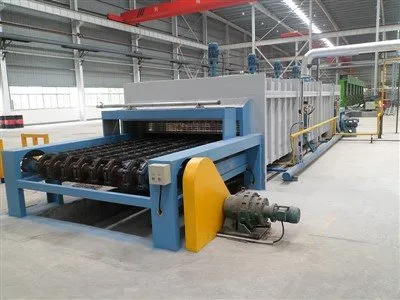
Hey there! As a supplier of Continuous Tempering Furnaces, I often get asked about the precision of temperature control in these bad boys. So, I thought I'd take a deep dive into this topic and share what I know.
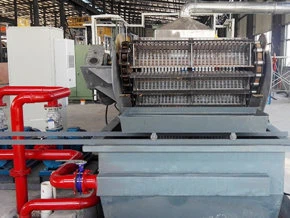

First off, why is temperature control precision such a big deal in a continuous tempering furnace? Well, tempering is a heat treatment process that's crucial for improving the mechanical properties of metals. It involves heating the metal to a specific temperature and then cooling it at a controlled rate. If the temperature isn't controlled precisely, you can end up with inconsistent results. The metal might not achieve the desired hardness, toughness, or other properties, which can be a huge problem, especially in industries where quality and consistency are non - negotiable, like automotive, aerospace, and manufacturing.
So, how do we achieve high - precision temperature control in a continuous tempering furnace? There are several key factors at play.
Heating Elements
The heating elements are the heart of the furnace. They're responsible for generating the heat needed for the tempering process. We use high - quality heating elements that are designed to provide uniform heat distribution. For example, some of our furnaces use electric resistance heating elements. These elements are made from materials like nichrome, which have excellent electrical resistance properties. They can convert electrical energy into heat very efficiently. And the design of these elements is optimized to ensure that the heat is evenly spread throughout the furnace chamber. This way, every part of the metal being tempered is exposed to the same temperature, which is essential for achieving consistent results.
Temperature Sensors
Temperature sensors are like the eyes of the furnace. They constantly monitor the temperature inside the chamber and send this information to the control system. We use highly accurate thermocouples and RTDs (Resistance Temperature Detectors) as our temperature sensors. Thermocouples work based on the principle of the Seebeck effect, where a voltage is generated at the junction of two different metals when there's a temperature difference. RTDs, on the other hand, change their electrical resistance with temperature. These sensors are calibrated to provide very precise temperature readings, often with an accuracy of ±0.1°C to ±1°C, depending on the type and application.
Control Systems
The control system is the brain of the continuous tempering furnace. It takes the temperature readings from the sensors and adjusts the power supplied to the heating elements accordingly. Our control systems are state - of - the - art. They use advanced PID (Proportional - Integral - Derivative) controllers. These controllers analyze the difference between the setpoint temperature (the desired temperature for the tempering process) and the actual temperature inside the furnace. Based on this analysis, they calculate the appropriate amount of power to send to the heating elements. The PID controllers are constantly making these adjustments in real - time, ensuring that the temperature stays as close to the setpoint as possible.
Insulation
Good insulation is also crucial for maintaining temperature control precision. Our furnaces are equipped with high - quality insulation materials. These materials help to reduce heat loss from the furnace chamber. When there's less heat loss, it's easier for the control system to maintain a stable temperature. For example, we use ceramic fiber insulation, which has excellent thermal insulation properties. It can withstand high temperatures and prevent heat from escaping to the surroundings. This not only improves the temperature control precision but also makes the furnace more energy - efficient.
Now, let's talk about some real - world applications and how the precision of temperature control in our continuous tempering furnaces benefits our customers.
In the automotive industry, components like gears, shafts, and springs need to have very specific mechanical properties. For instance, a Helical Spring Stepping Quenching Furnace might be used in the production of springs. Precise temperature control during the tempering process ensures that these springs have the right amount of elasticity and strength. This is essential for the safe and reliable operation of vehicles. If the temperature isn't controlled accurately, the springs might be too brittle or too soft, which can lead to premature failure.
In the aerospace industry, the requirements for precision are even more stringent. Components used in aircraft engines, landing gear, and other critical systems need to be manufactured to extremely high standards. Our continuous tempering furnaces with precise temperature control can help ensure that these components meet these standards. For example, an Automatic Quenching Furnace might be used in the production of aerospace parts. The ability to control the temperature precisely during tempering helps to improve the fatigue resistance and corrosion resistance of these parts, which is crucial for the safety and performance of aircraft.
In the manufacturing industry, conveyor chains are often used in production lines. A Conveyor Chain needs to be strong and durable. Precise temperature control in the tempering process of the chain links can enhance their mechanical properties, making them more resistant to wear and tear. This can increase the lifespan of the conveyor chain and reduce maintenance costs for manufacturers.
So, if you're in an industry that requires high - quality heat - treated components, our continuous tempering furnaces with precise temperature control are the way to go. Whether you're looking to improve the quality of your products, increase production efficiency, or reduce costs, our furnaces can help you achieve your goals.
If you're interested in learning more about our continuous tempering furnaces or want to discuss your specific requirements, don't hesitate to reach out. We're always happy to have a chat and see how we can help you with your heat - treatment needs.
References
- ASM Handbook Volume 4: Heat Treating. ASM International.
- Fundamentals of Heat Treating of Steels. The Association for Iron & Steel Technology (AIST).