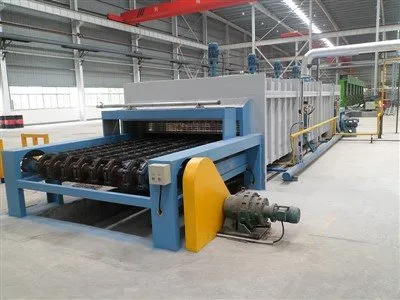
Hey there! As a supplier of Continuous Tempering Furnaces, I often get asked about the certification standards in different countries. It's a pretty important topic, especially if you're in the market for a high - quality tempering furnace. So, let's dive right in and explore what these standards look like around the globe.
North America
In the United States and Canada, the main certification bodies we're looking at are ASTM (American Society for Testing and Materials) and CSA (Canadian Standards Association). ASTM sets a wide range of standards for materials, products, systems, and services. When it comes to continuous tempering furnaces, ASTM standards cover things like temperature uniformity, energy efficiency, and safety features.
For example, ASTM has strict rules about how evenly the temperature should be distributed inside the furnace. A well - tempered product requires a consistent temperature throughout the process. If the temperature varies too much, the quality of the tempered material can be seriously affected. Energy efficiency is also a big deal these days. With rising energy costs and a growing focus on sustainability, ASTM standards encourage the development of furnaces that use less energy without sacrificing performance.
The CSA, on the other hand, is more focused on safety and compliance with Canadian regulations. Their certification ensures that the continuous tempering furnace meets all the necessary safety requirements, such as proper insulation to prevent burns, and reliable control systems to avoid overheating. When you're looking for a furnace in North America, make sure it has both ASTM and CSA certifications if you want to operate smoothly and legally.
Europe
In Europe, the CE marking is the gold standard for product certification. The CE (Conformité Européene) marking indicates that a product meets all the relevant EU health, safety, and environmental protection requirements. For continuous tempering furnaces, this means adhering to a set of directives related to machinery safety, electromagnetic compatibility, and low - voltage electrical equipment.
The Machinery Directive is particularly important. It sets out the essential health and safety requirements for machinery, including continuous tempering furnaces. This includes things like proper guarding to prevent access to dangerous parts, and safety interlocks that shut down the furnace if something goes wrong. The Electromagnetic Compatibility Directive ensures that the furnace doesn't interfere with other electronic devices in the vicinity, and vice versa. The Low - Voltage Directive makes sure that the electrical components of the furnace are safe and reliable.
If you're selling a continuous tempering furnace in Europe, having the CE marking is non - negotiable. It's a sign that your product is up to par with European standards and can be sold freely within the EU market.

Asia
Asia is a big and diverse continent, and different countries have their own certification standards. In Japan, the JIS (Japanese Industrial Standards) is the main body responsible for setting standards for industrial products, including continuous tempering furnaces. JIS standards are known for their high - quality requirements and strict testing procedures. They cover aspects such as the durability of the furnace materials, the accuracy of temperature control, and the overall performance of the furnace.
In China, the GB (Guobiao, or National Standard) system is in place. The GB standards for continuous tempering furnaces focus on a variety of factors, including energy efficiency, environmental protection, and product quality. China has been making great strides in recent years to improve its industrial standards, and the GB standards reflect this commitment. For example, there are now strict regulations on the emissions of pollutants from industrial furnaces, which is an important consideration for both environmental and public health reasons.
Other Regions
In Australia and New Zealand, the AS/NZS (Australian/New Zealand Standards) are used. These standards are designed to ensure the safety, quality, and performance of industrial products. For continuous tempering furnaces, they cover similar aspects as other standards around the world, such as temperature control, safety features, and energy efficiency.
In South America, different countries may have their own local standards, but there is also a growing trend towards adopting international standards such as ISO (International Organization for Standardization). ISO standards are recognized globally and provide a common framework for quality management. An ISO - certified continuous tempering furnace can give you an edge in the market, as it shows that your product meets high - quality and consistent standards.
Why Certification Matters
You might be wondering, why all these certifications are so important? Well, first of all, they ensure the safety of the operators and the people working around the furnace. A certified furnace is less likely to cause accidents, such as fires or explosions, which can have serious consequences for both human lives and property.
Secondly, certifications are a sign of quality. When a furnace is certified, it means that it has been tested and meets certain performance criteria. This gives you peace of mind knowing that you're getting a reliable and efficient product.
Finally, certifications are often required by law. If you're selling a continuous tempering furnace in a particular country or region, you need to comply with the local certification standards. Otherwise, you may face legal issues and be unable to sell your product in that market.
Our Products and Certifications
At our company, we take certification very seriously. Our continuous tempering furnaces are designed and manufactured to meet the highest international standards. We have products that are certified to ASTM, CSA, CE, JIS, GB, and other relevant standards, depending on the target market.
We also offer a range of related products, such as Automatic Quenching Furnace, Holding Furnace, and Conveyor Chain. These products are also built to the same high - quality standards as our continuous tempering furnaces, ensuring that you can get a complete solution for your heat - treatment needs.
Let's Connect
If you're in the market for a continuous tempering furnace or any of our related products, we'd love to hear from you. Whether you're in North America, Europe, Asia, or anywhere else in the world, we can provide you with a product that meets your local certification standards. Don't hesitate to reach out to us for more information or to start a purchase negotiation. We're here to help you find the perfect solution for your business.
References
- ASTM International. (n.d.). Standards for industrial furnaces. Retrieved from the official ASTM website.
- Canadian Standards Association (CSA). (n.d.). Safety standards for industrial machinery.
- European Commission. (n.d.). Machinery Directive and related directives.
- Japanese Industrial Standards Committee (JIS). (n.d.). Industrial standards for heat - treatment equipment.
- Standardization Administration of China. (n.d.). National standards for industrial furnaces.
- Standards Australia/New Zealand (AS/NZS). (n.d.). Standards for industrial products.
- International Organization for Standardization (ISO). (n.d.). Quality management standards.