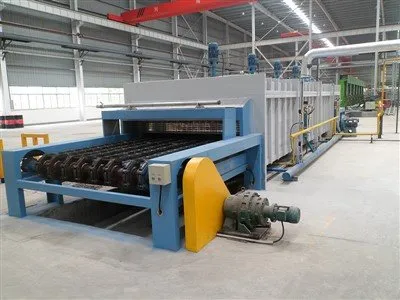
In the manufacturing industry, the automatic quenching furnace is a critical piece of equipment, especially in the production of spiral round springs and other metal components. As a leading supplier of automatic quenching furnaces, I understand the importance of thermal insulation materials in ensuring the efficiency, performance, and longevity of these furnaces. In this blog, I will delve into the various thermal insulation materials used in automatic quenching furnaces.
The Role of Thermal Insulation in Automatic Quenching Furnaces
Before discussing the specific materials, it's essential to understand why thermal insulation is so crucial in automatic quenching furnaces. Quenching is a heat treatment process where a metal is heated to a specific temperature and then rapidly cooled. This process requires precise temperature control to achieve the desired material properties. Thermal insulation helps to maintain a stable temperature inside the furnace, reduces heat loss to the surroundings, and improves energy efficiency. It also protects the external environment and operators from high temperatures, enhancing safety in the workplace.

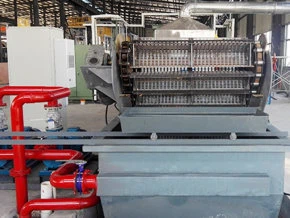
Common Thermal Insulation Materials
Fibrous Insulation Materials
- Ceramic Fiber Blankets: Ceramic fiber blankets are widely used in automatic quenching furnaces due to their excellent thermal insulation properties. They are made from alumina - silica fibers, which can withstand high temperatures up to 1400°C or even higher. These blankets have low thermal conductivity, which means they can effectively reduce heat transfer from the furnace interior to the outside. They are also lightweight, flexible, and easy to install, making them a popular choice for lining the furnace walls. For example, in our Automatic Quenching Furnace, we often use high - quality ceramic fiber blankets to ensure optimal thermal insulation.
- Mineral Wool: Mineral wool is another type of fibrous insulation material. It is typically made from natural minerals such as basalt or diabase. Mineral wool has good thermal insulation performance and is relatively inexpensive. It can resist temperatures up to around 700 - 900°C, which is suitable for some medium - temperature automatic quenching furnaces. However, compared to ceramic fiber blankets, mineral wool has a higher density and may not be as flexible.
Refractory Bricks
- Fireclay Bricks: Fireclay bricks are traditional refractory materials commonly used in furnace construction. They are made from fireclay, a type of clay with high alumina content. Fireclay bricks can withstand temperatures in the range of 1200 - 1600°C. They have good mechanical strength and thermal shock resistance, which is important for the harsh operating conditions in automatic quenching furnaces. These bricks are often used to build the furnace lining, especially in areas where there is a need for high - temperature resistance and structural support.
- High - Alumina Bricks: High - alumina bricks contain a higher percentage of alumina than fireclay bricks, usually above 48%. This gives them better high - temperature performance, with a maximum service temperature of up to 1800°C. High - alumina bricks have lower thermal conductivity and better corrosion resistance compared to fireclay bricks. They are suitable for use in the hottest parts of the automatic quenching furnace, such as the heating chamber.
Insulating Castables
- Lightweight Insulating Castables: Lightweight insulating castables are made by mixing lightweight aggregates, binders, and additives. They can be poured or cast into the desired shape during furnace construction or repair. These castables have low density and excellent thermal insulation properties. They can fill irregular spaces in the furnace, providing a seamless insulation layer. Lightweight insulating castables are often used in combination with other insulation materials to improve the overall insulation performance of the furnace.
- Refractory Castables: Refractory castables are similar to insulating castables but are designed for higher - temperature applications. They are made from refractory aggregates and binders and can withstand very high temperatures. Refractory castables are used to line the critical areas of the automatic quenching furnace, such as the hearth and the burner areas, where they need to resist the intense heat and chemical attack.
Factors Affecting the Choice of Thermal Insulation Materials
- Temperature Requirements: The maximum operating temperature of the automatic quenching furnace is a key factor in selecting the insulation material. For high - temperature furnaces, materials like ceramic fiber blankets and high - alumina bricks are more suitable, while for medium - temperature furnaces, mineral wool or fireclay bricks may be sufficient.
- Energy Efficiency: In today's manufacturing environment, energy efficiency is a major concern. Materials with low thermal conductivity, such as ceramic fiber blankets and lightweight insulating castables, can help reduce energy consumption by minimizing heat loss.
- Mechanical Strength: The insulation material needs to have sufficient mechanical strength to withstand the mechanical stresses inside the furnace, such as the impact of the workpiece during loading and unloading. Refractory bricks and castables generally have better mechanical strength compared to fibrous insulation materials.
- Cost: Cost is also an important consideration. Some high - performance insulation materials may be more expensive, but they can provide long - term savings in energy costs and maintenance. A balance needs to be struck between the initial investment and the long - term benefits.
Our Solutions
As a supplier of automatic quenching furnaces, we have extensive experience in selecting and using the appropriate thermal insulation materials. We offer customized solutions based on the specific requirements of our customers. For example, in our Helical Spring Stepping Quenching Furnace, we carefully choose the insulation materials to ensure precise temperature control and high - quality heat treatment for helical springs.
We also provide continuous tempering furnaces, such as our Continuous Tempering Furnace, where the selection of thermal insulation materials is equally important to achieve efficient and consistent tempering processes.
Contact Us for Procurement
If you are in the market for an automatic quenching furnace or need to upgrade your existing furnace with better thermal insulation, we are here to help. Our team of experts can provide you with detailed information about the thermal insulation materials used in our furnaces, as well as offer customized solutions to meet your specific needs. Contact us today to start the procurement and negotiation process, and take your manufacturing operations to the next level.
References
- "Refractories Handbook" by John Wiley & Sons.
- "Thermal Insulation Materials: Properties and Applications" by CRC Press.