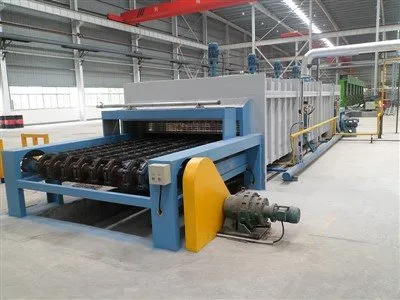
Hey there! I'm a supplier of Automatic Quenching Furnaces, and today I wanna chat about the limitations of these nifty pieces of equipment. Automatic quenching furnaces are super useful in various industries, but they're not without their drawbacks. Knowing these limitations helps us find ways around them and make the most out of our furnaces.
Temperature Uniformity Issues
One of the biggest challenges with automatic quenching furnaces is achieving uniform temperatures. Inside the furnace, there can be hotspots and cold spots. This uneven heating can have a significant impact on the quenching process. For example, if some parts of the metal being quenched are exposed to higher temperatures than others, it can lead to inconsistent hardness and microstructure.
Metals are pretty sensitive to temperature changes during quenching. When the temperature is not uniform, different areas of the metal will cool at different rates. This variation in cooling rates can cause issues like warping, cracking, and reduced mechanical properties. In industrial applications, these defects can render the finished products useless.
Limited Workpiece Size and Shape
Another drawback is the limitation on the size and shape of workpieces that can be processed. Automatic quenching furnaces are designed with specific dimensions in mind. If you have a really large or oddly shaped workpiece, it might not fit properly inside the furnace.


This can be a real headache for industries that work with large components. For instance, in the aerospace industry, they need to quench massive turbine blades and engine parts. If the furnace can't accommodate these large pieces, it becomes a bottleneck in the production process.
Even for oddly shaped workpieces, the problem is the same. The furnace's design might not allow for proper heat transfer around complex shapes. This means that parts of the workpiece might not be quenched effectively, leading to sub - standard quality.
High Energy Consumption
Automatic quenching furnaces are energy hogs. They need a lot of power to heat up to the required temperatures and maintain those temperatures during the quenching process. This high energy consumption not only drives up the operational costs but also has environmental implications.
In today's world, where we're all trying to be more energy - efficient and environmentally friendly, this is a major concern. A facility running multiple automatic quenching furnaces can see a huge spike in its electricity bills. Also, the large amount of energy used often comes from non - renewable sources, which contributes to carbon emissions.
Maintenance and Downtime
Maintenance is a necessary evil when it comes to automatic quenching furnaces. These machines have a lot of moving parts, and they operate in harsh conditions with high temperatures. Over time, components like heating elements, fans, and Conveyor Chain can wear out.
When maintenance is required, the furnace has to be shut down. This downtime can disrupt production schedules. For businesses that rely on continuous production, every hour of downtime can mean lost revenue. Moreover, maintenance can be expensive. Replacing worn - out parts, recalibrating sensors, and ensuring the furnace is in top - notch condition all add to the cost.
Complexity of Operation
Operating an automatic quenching furnace is not a walk in the park. It requires a high level of skill and knowledge. Workers need to understand the different parameters involved in the quenching process, such as temperature, time, and cooling rate.
A small mistake in setting these parameters can lead to significant quality issues. For example, if the quenching time is too short, the metal might not harden properly. On the other hand, if it's too long, the metal can become brittle.
Training workers to operate these furnaces properly takes time and resources. And even then, human error is still a possibility, which can cause problems in the production process.
Limited Flexibility in Quenching Media
Most automatic quenching furnaces are designed to work with specific quenching media. These media play a crucial role in the cooling process. However, having a limited choice of quenching media can be a limitation.
Different metals and applications require different quenching media to achieve the desired properties. For example, some metals might need a fast - cooling media like water, while others might require a slower - cooling oil. If the furnace can only accommodate one type of quenching media, it limits the range of metals and products that can be processed.
Incompatibility with Some Materials
There are certain materials that are not suitable for automatic quenching furnaces. Some exotic metals and composites have unique properties that make them difficult to quench in these furnaces.
These materials might react differently to the high temperatures and fast cooling rates in the quenching process. For instance, they could develop cracks or lose their desirable properties. As a result, industries dealing with these special materials have to look for alternative quenching methods.
Despite the Limitations...
Even with all these limitations, automatic quenching furnaces are still an essential part of many industries. At our company, we're constantly working on solutions to overcome these drawbacks. We're investing in research and development to improve temperature uniformity, increase energy efficiency, and enhance the flexibility of our furnaces.
If you're in the market for an automatic quenching furnace or are looking to upgrade your current one, we'd love to have a chat. We understand the challenges you face and are committed to providing you with the best possible solution. Whether it's finding a way to process larger workpieces or reducing your energy costs, we're here to help. Contact us for a free consultation, and let's discuss how we can meet your specific needs.
References
- Smith, J. (2019). Industrial Heat Treatment Processes. New York: Industrial Press.
- Brown, A. (2020). Advances in Quenching Technology. London: Elsevier.
- Johnson, T. (2021). Energy Efficiency in Furnace Operations. Chicago: Energy Press.