As a supplier of spiral round spring equipment, I am often asked about the heat-treatment processes that are crucial for ensuring the quality and performance of these springs. Heat treatment is a set of industrial and metalworking processes used to alter the physical, and sometimes chemical, properties of a material. In the case of spiral round springs, heat treatment can significantly enhance their strength, durability, and elasticity. In this blog post, I will delve into the various heat-treatment processes for spiral round spring equipment, providing insights into how each process works and its benefits.
Annealing
Annealing is a heat-treatment process that involves heating the spiral round spring to a specific temperature and then slowly cooling it. This process is used to relieve internal stresses, improve machinability, and increase ductility. There are different types of annealing, including full annealing, process annealing, and stress relief annealing.
Full annealing is typically used for new springs or those that have been cold-worked. The spring is heated to a temperature above its critical point, held at that temperature for a specific time to allow the internal structure to become homogeneous, and then slowly cooled. This results in a soft, ductile spring with reduced hardness and increased toughness.
Process annealing, on the other hand, is used to relieve stresses in springs that have been cold-formed. The spring is heated to a temperature below its critical point and then cooled. This process helps to prevent cracking and distortion during further processing.


Stress relief annealing is performed to reduce residual stresses in the spring. It is usually carried out at a relatively low temperature, and the spring is held at that temperature for a period of time before being cooled. This process can improve the dimensional stability of the spring and reduce the risk of stress corrosion cracking.
Normalizing
Normalizing is a heat-treatment process similar to annealing, but with a faster cooling rate. The spiral round spring is heated to a temperature above its critical point and then cooled in air. This process refines the grain structure of the spring, resulting in improved strength and hardness compared to annealing. Normalizing is often used as a pre-treatment before other heat-treatment processes or as a final treatment for springs that require moderate strength and toughness.
The benefits of normalizing include improved machinability, reduced internal stresses, and enhanced mechanical properties. It can also help to eliminate any inhomogeneities in the spring's structure, making it more suitable for further processing or use in demanding applications.
Quenching
Quenching is a rapid cooling process that involves heating the spiral round spring to a high temperature and then quickly cooling it in a quenching medium, such as oil, water, or a polymer solution. This process is used to harden the spring by transforming its microstructure into a martensitic or bainitic structure.
The choice of quenching medium depends on the material of the spring and the desired properties. Oil quenching is commonly used for alloy steels, as it provides a slower cooling rate compared to water quenching, reducing the risk of cracking. Water quenching, on the other hand, is used for carbon steels and provides a faster cooling rate, resulting in higher hardness.
Quenching can significantly increase the strength and hardness of the spiral round spring, but it also introduces internal stresses. Therefore, it is usually followed by a tempering process to relieve these stresses and improve the spring's toughness.
Tempering
Tempering is a heat-treatment process that follows quenching. It involves heating the quenched spring to a temperature below its critical point and holding it at that temperature for a specific time before cooling it. Tempering reduces the brittleness of the quenched spring and improves its toughness and ductility.
There are different types of tempering, including low-temperature tempering, medium-temperature tempering, and high-temperature tempering. Low-temperature tempering is typically used for springs that require high hardness and wear resistance. The spring is heated to a temperature between 150°C and 250°C. Medium-temperature tempering is used to improve the spring's strength and toughness, and the spring is heated to a temperature between 350°C and 500°C. High-temperature tempering is used for springs that require high ductility and toughness, and the spring is heated to a temperature above 500°C.
Tempering is an essential step in the heat-treatment process for spiral round springs, as it helps to balance the hardness and toughness of the spring, ensuring its optimal performance in various applications.
Induction Hardening
Induction hardening is a surface hardening process that uses electromagnetic induction to heat the surface of the spiral round spring to a high temperature and then rapidly cool it. This process is used to increase the hardness and wear resistance of the spring's surface while maintaining the toughness of the core.
During induction hardening, an alternating current is passed through a coil, creating a magnetic field. The spring is placed inside the coil, and the magnetic field induces an electric current in the surface of the spring, heating it rapidly. The heated surface is then quenched to harden it.
Induction hardening offers several advantages, including precise control of the hardening depth, high productivity, and minimal distortion. It is particularly suitable for springs that are subjected to high surface stresses and wear, such as those used in automotive and industrial applications.
Equipment for Heat Treatment
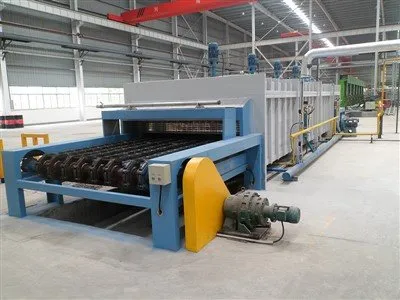
To carry out these heat-treatment processes effectively, specialized equipment is required. As a supplier of spiral round spring equipment, we offer a range of high-quality heat-treatment equipment, including Conveyor Chain, Continuous Tempering Furnace, and Helical Spring Stepping Quenching Furnace.
The conveyor chain is used to transport the springs through the heat-treatment process, ensuring a continuous and efficient operation. The continuous tempering furnace provides a uniform heat treatment environment, allowing for precise control of the tempering temperature and time. The helical spring stepping quenching furnace is designed specifically for quenching spiral round springs, providing a rapid and consistent cooling rate.
Conclusion
In conclusion, heat treatment is a critical process for ensuring the quality and performance of spiral round springs. Each heat-treatment process, including annealing, normalizing, quenching, tempering, and induction hardening, offers unique benefits and is used to achieve specific properties in the spring. By choosing the appropriate heat-treatment process and using high-quality equipment, we can produce spiral round springs that meet the demanding requirements of various industries.
If you are interested in purchasing spiral round spring equipment or have any questions about heat treatment processes, please feel free to contact us. We are committed to providing you with the best products and services to meet your needs.
References
- ASM Handbook Volume 4: Heat Treating. ASM International.
- Metals Handbook Desk Edition, 3rd Edition. ASM International.
- Heat Treatment Principles and Techniques. George E. Totten, David Scott MacKenzie.