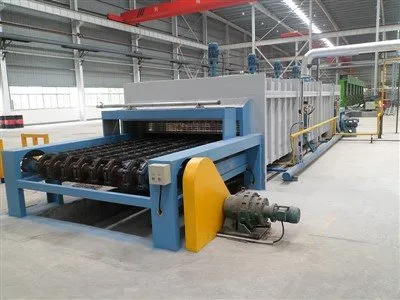
As a supplier of Continuous Tempering Furnaces, I've witnessed firsthand the critical role these furnaces play in various industrial processes. Optimizing the performance of a continuous tempering furnace is not just about achieving better product quality; it's also about enhancing efficiency, reducing costs, and ensuring long - term reliability. In this blog, I'll share some key strategies and insights on how to optimize the performance of a continuous tempering furnace.
1. Proper Furnace Design and Installation
The foundation of a high - performing continuous tempering furnace starts with its design and installation. A well - designed furnace should be able to maintain uniform temperature distribution throughout the heating chamber. This is crucial because uneven temperatures can lead to inconsistent tempering results, affecting the mechanical properties of the treated materials.
When selecting a continuous tempering furnace, consider factors such as the size and shape of the workpieces to be processed. The furnace should have sufficient capacity to handle the production volume without overcrowding, which can disrupt the airflow and heat transfer. Additionally, the furnace should be installed on a stable foundation to prevent vibrations that could potentially damage the internal components.
Our Continuous Tempering Furnace is designed with advanced features to ensure uniform temperature distribution. It uses high - quality insulation materials to minimize heat loss, and its heating elements are strategically placed to provide consistent heating across the entire chamber.
2. Temperature Control and Monitoring
Accurate temperature control is one of the most important aspects of optimizing the performance of a continuous tempering furnace. The tempering process requires precise temperature settings to achieve the desired material properties. Deviations from the target temperature can result in under - tempered or over - tempered products, which may not meet the required quality standards.
Invest in a reliable temperature control system that can accurately measure and adjust the temperature inside the furnace. Modern temperature control systems use advanced sensors and algorithms to maintain the set temperature within a narrow range. Regularly calibrate these sensors to ensure their accuracy.
In addition to real - time temperature control, continuous monitoring of the furnace temperature is essential. Install a data logging system that records the temperature over time. This data can be used for quality control purposes, as well as for identifying any potential issues with the furnace's heating system. Our continuous tempering furnaces are equipped with state - of the - art temperature control and monitoring systems to ensure precise and reliable operation.
3. Airflow Management
Proper airflow management is crucial for efficient heat transfer within the furnace. Adequate airflow helps to distribute the heat evenly, reducing temperature gradients and ensuring consistent tempering results.
The design of the furnace should allow for smooth and uniform airflow. This can be achieved through the use of fans, ducts, and baffles. The fans should be sized appropriately to provide the necessary air circulation without causing excessive turbulence.
Regularly clean and inspect the airflow components, such as the fans and ducts, to remove any debris or obstructions. Blocked airflow can lead to hot spots and uneven heating, which can compromise the quality of the tempered products.
4. Conveyor System Optimization
The conveyor system in a continuous tempering furnace is responsible for transporting the workpieces through the heating chamber at a consistent speed. A well - optimized conveyor system ensures that each workpiece spends the correct amount of time in the furnace, which is essential for achieving uniform tempering.
Choose a high - quality Conveyor Chain that is suitable for the weight and size of the workpieces. The conveyor chain should be properly tensioned to prevent slipping or misalignment. Regularly lubricate the conveyor chain to reduce friction and wear, which can extend its service life.
The speed of the conveyor system should be carefully calibrated according to the tempering requirements. A too - fast conveyor speed may result in under - tempered products, while a too - slow speed can lead to over - tempered products and reduced productivity.
5. Maintenance and Inspection
Regular maintenance and inspection are essential for keeping a continuous tempering furnace in optimal condition. A well - maintained furnace not only performs better but also has a longer service life.


Develop a comprehensive maintenance schedule that includes tasks such as cleaning the furnace chamber, inspecting the heating elements, and checking the electrical connections. Replace any worn - out or damaged components promptly to prevent further damage to the furnace.
In addition to scheduled maintenance, conduct regular inspections to identify any potential issues before they become major problems. Look for signs of wear, corrosion, or abnormal behavior, such as unusual noises or temperature fluctuations.
6. Process Optimization
Optimizing the tempering process itself can also improve the performance of the continuous tempering furnace. This involves analyzing the process parameters, such as the heating rate, holding time, and cooling rate, and making adjustments to achieve the best results.
The heating rate should be carefully controlled to avoid thermal shock to the workpieces. A sudden increase in temperature can cause cracking or other defects in the materials. The holding time at the tempering temperature should be sufficient to allow for proper diffusion and precipitation of the alloying elements, which is crucial for achieving the desired mechanical properties.
The cooling rate after tempering also affects the material properties. Different materials may require different cooling rates to achieve the best results. Experiment with different process parameters to find the optimal settings for your specific application.
7. Training and Operator Skills
The skills and knowledge of the operators can have a significant impact on the performance of the continuous tempering furnace. Provide comprehensive training to the operators on how to operate the furnace properly, including temperature control, conveyor system operation, and maintenance procedures.
Operators should be familiar with the safety protocols and emergency procedures associated with the continuous tempering furnace. They should also be able to recognize and respond to any abnormal situations, such as equipment malfunctions or temperature deviations.
Encourage operators to provide feedback on the furnace's performance. They may have valuable insights based on their daily experience, which can be used to further optimize the furnace's operation.
Conclusion
Optimizing the performance of a continuous tempering furnace requires a comprehensive approach that includes proper design, accurate temperature control, efficient airflow management, conveyor system optimization, regular maintenance, process optimization, and well - trained operators. By implementing these strategies, you can improve the quality of the tempered products, enhance productivity, and reduce operating costs.
If you're interested in learning more about our Continuous Tempering Furnace or need help with optimizing your existing furnace, we're here to assist you. Our team of experts has extensive experience in the field of heat treatment equipment and can provide you with customized solutions to meet your specific needs. Contact us for more information and to start a procurement discussion.
References
- ASM Handbook, Volume 4: Heat Treating, ASM International
- Metals Handbook: Heat Treating, American Society for Metals
- "Principles of Heat Treatment of Steel" by George E. Totten and Michael A. Howes