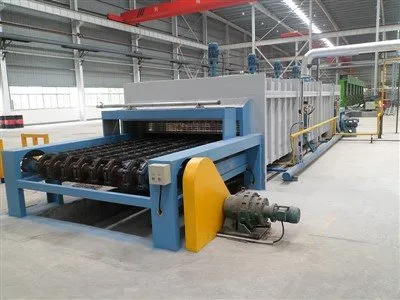
Hey there! As a supplier of Trolley Heating Furnaces, I've seen firsthand how crucial it is to control the temperature in these bad boys. Whether you're using them for heat treatment, annealing, or any other industrial process, getting the temperature just right can make all the difference. So, let's dive into how you can effectively control the temperature in a trolley heating furnace.
Understanding the Basics
First things first, you need to understand how a trolley heating furnace works. These furnaces are designed to heat materials placed on a trolley that can be moved in and out of the furnace chamber. The heating elements, usually located on the walls or floor of the furnace, generate heat, which is then transferred to the materials inside.
The temperature control system in a trolley heating furnace typically consists of a temperature sensor, a controller, and a power source. The temperature sensor measures the actual temperature inside the furnace, and the controller compares this value to the setpoint temperature. Based on this comparison, the controller adjusts the power supplied to the heating elements to maintain the desired temperature.
Choosing the Right Temperature Sensor
The temperature sensor is the heart of the temperature control system. It's responsible for providing accurate temperature readings, so choosing the right one is essential. There are several types of temperature sensors available, each with its own advantages and disadvantages.
- Thermocouples: These are the most commonly used temperature sensors in industrial furnaces. They're relatively inexpensive, have a wide temperature range, and are durable. However, they can be less accurate than other types of sensors, especially at high temperatures.
- Resistance Temperature Detectors (RTDs): RTDs are more accurate than thermocouples, especially at lower temperatures. They're also more stable over time. However, they're more expensive and have a narrower temperature range.
- Infrared Sensors: These sensors measure the temperature of an object without making contact with it. They're ideal for measuring the temperature of moving objects or objects in hard-to-reach places. However, they can be affected by factors such as emissivity and distance.
When choosing a temperature sensor, consider the temperature range, accuracy, durability, and cost. You may also want to consult with a professional to determine the best sensor for your specific application.
Setting the Setpoint Temperature
Once you've chosen the right temperature sensor, it's time to set the setpoint temperature. The setpoint temperature is the temperature you want to maintain inside the furnace. It's important to set the setpoint temperature accurately, as even a small deviation can have a significant impact on the quality of the heat treatment process.


To set the setpoint temperature, you'll need to use the controller. Most controllers have a digital display that allows you to enter the desired temperature. Some controllers also have a programming function that allows you to set multiple setpoint temperatures and ramp rates.
When setting the setpoint temperature, consider the type of material you're heating, the desired heat treatment process, and the specifications of your furnace. You may also want to consult with a metallurgist or other expert to determine the optimal setpoint temperature for your application.
Controlling the Heating Elements
The heating elements are responsible for generating the heat inside the furnace. To control the temperature, you'll need to adjust the power supplied to the heating elements. This can be done using a variety of methods, including:
- On/Off Control: This is the simplest method of temperature control. The heating elements are either turned on or off, depending on whether the actual temperature is below or above the setpoint temperature. While this method is easy to implement, it can result in temperature fluctuations and uneven heating.
- Proportional Control: This method adjusts the power supplied to the heating elements based on the difference between the actual temperature and the setpoint temperature. The closer the actual temperature is to the setpoint temperature, the less power is supplied to the heating elements. This method provides more precise temperature control than on/off control, but it can still result in some temperature fluctuations.
- Proportional-Integral-Derivative (PID) Control: This is the most advanced method of temperature control. It uses a mathematical algorithm to calculate the optimal power output based on the current temperature, the rate of change of the temperature, and the past temperature history. PID control provides the most precise temperature control and can minimize temperature fluctuations and overshoot.
When choosing a control method, consider the accuracy requirements of your application, the complexity of the control system, and the cost. You may also want to consult with a professional to determine the best control method for your specific application.
Monitoring and Adjusting the Temperature
Once the temperature control system is set up and running, it's important to monitor the temperature regularly to ensure that it's within the desired range. You can do this using the digital display on the controller or by using a separate temperature monitoring device.
If you notice any temperature fluctuations or deviations from the setpoint temperature, you'll need to adjust the control settings accordingly. This may involve adjusting the setpoint temperature, changing the control method, or replacing the temperature sensor.
It's also a good idea to keep a record of the temperature readings and any adjustments you make. This can help you identify any trends or issues and make more informed decisions about the operation of your furnace.
Other Factors Affecting Temperature Control
In addition to the temperature sensor, controller, and heating elements, there are several other factors that can affect the temperature control in a trolley heating furnace. These include:
- Insulation: The insulation in the furnace chamber helps to reduce heat loss and maintain a consistent temperature. Make sure the insulation is in good condition and that there are no gaps or holes that could allow heat to escape.
- Airflow: Proper airflow is essential for ensuring uniform heating inside the furnace. Make sure the furnace is properly ventilated and that there are no obstructions that could block the airflow.
- Load Size and Placement: The size and placement of the load can affect the temperature distribution inside the furnace. Make sure the load is evenly distributed and that there is enough space between the load and the heating elements.
- Furnace Maintenance: Regular maintenance is essential for ensuring the proper operation of the furnace and the temperature control system. Make sure to clean the furnace regularly, check the heating elements for damage, and replace any worn or damaged parts.
Conclusion
Controlling the temperature in a trolley heating furnace is a complex process that requires careful planning, selection of the right equipment, and regular monitoring and adjustment. By understanding the basics of temperature control, choosing the right temperature sensor and control method, and considering the other factors that can affect temperature control, you can ensure that your furnace operates efficiently and produces high-quality heat-treated products.
If you're in the market for a Trolley Heating Furnace or need help with temperature control, don't hesitate to contact us for a consultation. We're a leading supplier of Melting Furnace, Spitfire Furnace, and Hot Air Drying Furnace, and we have the expertise and experience to help you find the right solution for your needs.
References
- "Industrial Furnace Handbook: Principles, Design, and Operation" by O.P. Gupta
- "Temperature Measurement and Control" by John R. Cimbala
- "Furnace Technology and Heat Treatment" by Y. Avitzur