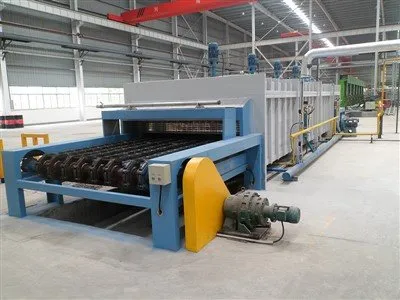
How to adjust the depth of the molding in a Stabilizer Bar Molding Machine
As a supplier of Stabilizer Bar Molding Machines, I understand the critical role that accurate molding depth plays in the production of high - quality stabilizer bars. In this blog, I will share some professional insights on how to adjust the depth of the molding in a Stabilizer Bar Molding Machine.
First of all, it's important to have a clear understanding of why the molding depth adjustment is so crucial. The stabilizer bar is a key component in an automobile's suspension system. It helps to reduce body roll during cornering, improving the vehicle's stability and handling. If the molding depth is not set correctly, the stabilizer bar may not have the proper shape and dimensions, which can lead to performance issues and even safety risks.
Pre - adjustment Checks
Before attempting any adjustment, a series of pre - adjustment checks should be carried out. Inspect the machine thoroughly for any signs of wear and tear. Check the molds for damage, such as cracks or excessive wear on the contact surfaces. Any damaged parts should be replaced in a timely manner to ensure accurate molding. Also, make sure that all the mechanical components of the machine are properly lubricated. This includes the guide rails, gears, and bearings. Adequate lubrication reduces friction and ensures smooth operation during the molding process.
Measuring the Current Molding Depth
To start the adjustment process, you need to measure the current molding depth. This can be done using a precision measuring tool such as a caliper or a depth gauge. Take multiple measurements at different points along the stabilizer bar to get an accurate average. Compare these measurements with the desired specifications. If there is a significant deviation, it's time to make the necessary adjustments.
Manual Adjustment Methods
Most Stabilizer Bar Molding Machines are equipped with manual adjustment mechanisms. These are usually in the form of hand - wheels or screws that can be turned to change the position of the molds. Before making any adjustments, refer to the machine's operation manual. The manual will provide detailed instructions on how to access and operate the adjustment mechanisms.
When using the hand - wheel or screw to adjust the molding depth, turn it slowly and in small increments. After each adjustment, take new measurements to monitor the change in depth. This step - by - step approach helps to prevent over - adjustment, which can be just as problematic as under - adjustment.
Hydraulic Adjustment
Some advanced Stabilizer Bar Molding Machines are equipped with hydraulic adjustment systems. These systems offer more precise and efficient depth adjustments. To use the hydraulic adjustment, first, you need to understand the control panel of the hydraulic system. The panel typically has controls for increasing or decreasing the pressure, which in turn affects the position of the molds.
When making hydraulic adjustments, it's important to operate the controls carefully. Start with a small pressure change and wait for the system to stabilize. Then, measure the molding depth and make further adjustments if necessary. Hydraulic systems often require a certain level of pressure to maintain the correct position, so make sure to set the pressure according to the machine's specifications.
Electronic Control Systems
In modern Stabilizer Bar Molding Machines, electronic control systems are becoming increasingly popular. These systems use sensors and actuators to precisely control the molding depth. To adjust the depth using an electronic control system, you need to access the control interface. This can usually be done through a touch - screen panel or a computer connected to the machine.
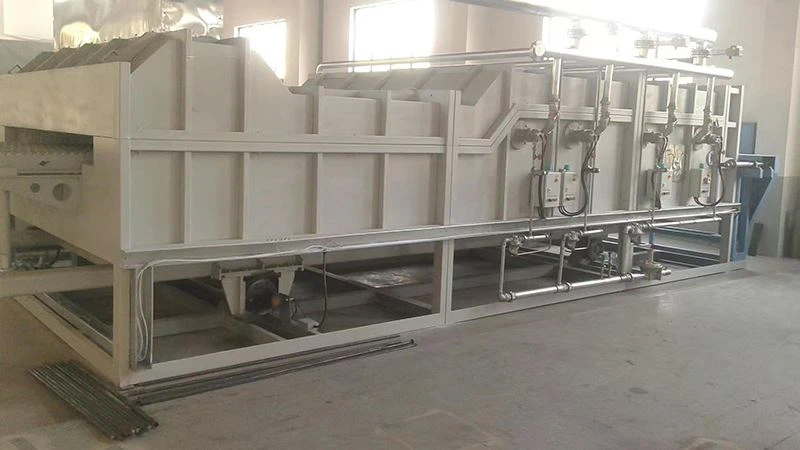

On the control interface, you can enter the desired molding depth value. The system will then automatically adjust the position of the molds to reach the set value. However, it's still important to monitor the process and take measurements to ensure the accuracy of the adjustment. Some electronic control systems also have feedback loops that can detect any deviations from the set value and make automatic corrections.
Factors Affecting Molding Depth Adjustment
There are several factors that can affect the molding depth adjustment. One of the most important factors is the material of the stabilizer bar. Different materials have different mechanical properties, such as hardness and elasticity. Softer materials may require a different molding depth compared to harder ones. Therefore, when adjusting the depth, it's necessary to consider the material characteristics and make corresponding adjustments.
Another factor is the temperature of the molding process. Temperature can affect the flow and deformation of the material. Higher temperatures may cause the material to flow more easily, which can result in a deeper molding. On the other hand, lower temperatures may make the material more difficult to deform. So, it's essential to maintain a stable temperature during the molding process and adjust the depth accordingly.
Quality Control after Adjustment
After making the molding depth adjustment, it's crucial to conduct quality control checks. Take a sample of the molded stabilizer bars and measure their dimensions using precision measuring tools. Check the shape, size, and surface finish of the bars. Compare the measured values with the design specifications. If any non - conformities are found, further adjustments may be required.
In addition to dimensional checks, it's also important to perform functional tests on the stabilizer bars. Install the bars on a test rig and simulate the actual operating conditions of an automobile. Check for any abnormal noises, vibrations, or performance issues. This will help to ensure that the adjusted molding depth results in high - quality stabilizer bars that meet the performance requirements.
Related Equipment for Stabilizer Bar Production
If you are in the business of stabilizer bar production, you may also be interested in some related equipment. For example, the Automobile Stabilizer Bar Step Quenching Furnace is used for the quenching process, which can improve the hardness and strength of the stabilizer bars. The Automobile Stabilizer Bar Continuous Tempering Furnace is essential for the tempering process, which helps to relieve internal stress and improve the toughness of the bars. And the Stabilizer Bar Automatic Supply Machine can improve the efficiency of the production line by automatically supplying the raw materials.
Conclusion
Adjusting the depth of the molding in a Stabilizer Bar Molding Machine is a complex but essential process. By following the steps outlined in this blog and considering the various factors that can affect the molding depth, you can ensure the production of high - quality stabilizer bars. Whether you are using manual, hydraulic, or electronic adjustment methods, accuracy and precision are the keys to success.
If you are interested in our Stabilizer Bar Molding Machines or any of the related equipment, we welcome you to contact us for further procurement discussions. We are committed to providing you with the best solutions for your stabilizer bar production needs.
References
- "Handbook of Automotive Suspension Design and Analysis", Smith, J., 2018
- "Modern Manufacturing Technologies for Automobile Components", Johnson, A., 2020
- Machine operation manuals of our Stabilizer Bar Molding Machines.