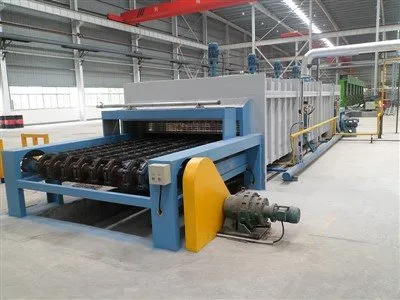
Hey there! As a supplier of Automatic Quenching Furnaces, I've seen firsthand how crucial it is to control the flow rate of the quenching medium. In this blog post, I'll break down the ins and outs of how an Automatic Quenching Furnace manages this vital aspect.
First off, let's talk about why controlling the flow rate of the quenching medium is so important. The quenching process is all about rapidly cooling a heated metal to achieve specific mechanical properties. The flow rate of the quenching medium directly affects the cooling rate, which in turn determines the final characteristics of the metal, like hardness, toughness, and microstructure. If the flow rate is too low, the metal might not cool fast enough, leading to inconsistent properties. On the other hand, if it's too high, it could cause excessive stress and cracking in the metal.
So, how does an Automatic Quenching Furnace actually control this flow rate? Well, there are a few key methods and components involved.
Pump Systems
One of the most common ways to control the flow rate is through pump systems. These pumps are responsible for circulating the quenching medium through the furnace and around the metal being quenched. Most Automatic Quenching Furnaces are equipped with variable - speed pumps. This means that the speed of the pump can be adjusted according to the specific requirements of the quenching process.

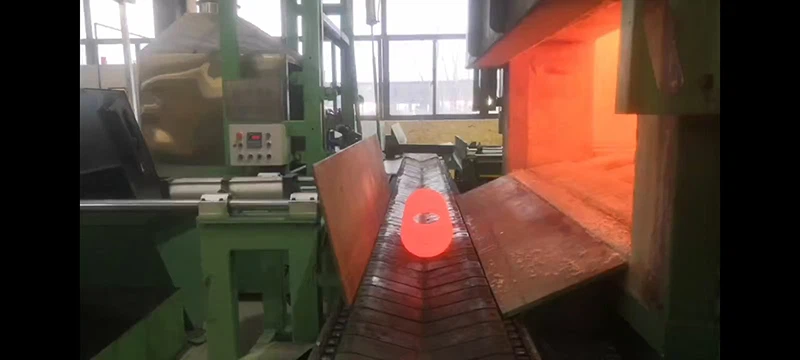
For example, if you're quenching a small, delicate part, you might want a lower flow rate to prevent any damage. You can simply dial down the speed of the pump. Conversely, when quenching a large, thick - walled piece, a higher flow rate is needed to ensure rapid and uniform cooling. By increasing the pump speed, you can achieve this. The control of the pump speed is usually done through a control panel, which allows operators to input the desired flow rate based on the type of metal and the part being quenched.
Flow Control Valves
Flow control valves are another essential component in managing the flow rate of the quenching medium. These valves are installed in the piping system that transports the quenching medium. They work by restricting or allowing more of the medium to pass through, depending on the needs of the process.
There are different types of flow control valves, such as gate valves, globe valves, and needle valves. Gate valves are often used for on - off control, while globe valves and needle valves are better for precise flow rate adjustment. For instance, a needle valve can be used when you need to make very fine adjustments to the flow rate, like when quenching a high - precision component. The valves can be manually adjusted by operators, or in more advanced Automatic Quenching Furnaces, they can be controlled automatically through a programmable logic controller (PLC).
Sensors and Feedback Systems
To ensure that the flow rate is maintained at the desired level, Automatic Quenching Furnaces are often equipped with sensors and feedback systems. Flow sensors are used to measure the actual flow rate of the quenching medium in real - time. These sensors send signals to the control system, which then compares the measured flow rate with the setpoint.
If there's a difference between the two, the control system can make adjustments to the pump speed or the position of the flow control valves. For example, if the flow sensor detects that the flow rate is lower than the setpoint, the control system will increase the pump speed or open the flow control valve further to bring the flow rate back up. This closed - loop feedback system helps to maintain a stable and accurate flow rate throughout the quenching process.
Impact of Quenching Medium Properties
The properties of the quenching medium also play a role in flow rate control. Different quenching media, such as water, oil, or polymer solutions, have different viscosities and densities. These properties can affect how easily the medium can flow through the furnace and around the metal.
For example, water has a relatively low viscosity, which means it can flow more easily compared to oil. So, when using water as a quenching medium, you might need to adjust the pump speed and valve settings differently than when using oil. Additionally, the temperature of the quenching medium can also change its properties. As the temperature increases, the viscosity of most quenching media decreases, which can affect the flow rate. The control system in an Automatic Quenching Furnace needs to take these factors into account and make appropriate adjustments.
Real - World Applications
Let's take a look at some real - world applications where precise flow rate control in an Automatic Quenching Furnace is crucial. In the automotive industry, components like gears, shafts, and springs need to have specific mechanical properties to ensure the safety and performance of vehicles. For example, a Helical Spring Stepping Quenching Furnace is used to quench helical springs. Precise flow rate control is essential to ensure that the springs have the right hardness and elasticity.
In the aerospace industry, high - strength and lightweight materials are used to build aircraft components. Parts like turbine blades and landing gear components require very precise quenching to achieve the desired mechanical properties. An Automatic Quenching Furnace with accurate flow rate control can help to meet the strict quality standards in this industry.
Related Furnaces in the Process
It's also worth mentioning that an Automatic Quenching Furnace is often part of a larger heat - treatment process. Before quenching, the metal might be heated in a Holding Furnace to ensure a uniform temperature. After quenching, the metal might go through a tempering process in a Continuous Tempering Furnace to relieve stress and improve toughness. The flow rate control in the quenching furnace is just one piece of the puzzle, but it's a very important one.
Conclusion
In conclusion, controlling the flow rate of the quenching medium in an Automatic Quenching Furnace is a complex but essential process. Through the use of pump systems, flow control valves, sensors, and feedback systems, along with considering the properties of the quenching medium, we can achieve precise and stable flow rates. This, in turn, helps to produce high - quality metal components with the desired mechanical properties.
If you're in the market for an Automatic Quenching Furnace or have any questions about flow rate control in the quenching process, don't hesitate to reach out. We're here to help you find the best solution for your specific needs. Whether you're in the automotive, aerospace, or any other industry that requires heat - treated components, our Automatic Quenching Furnaces can provide the reliable and precise performance you're looking for. Let's start a conversation and see how we can work together to improve your manufacturing process.
References
- Smith, J. (2018). Heat Treatment Handbook. New York: Industrial Press.
- Jones, R. (2019). Quenching Technology: Principles and Applications. London: Elsevier.