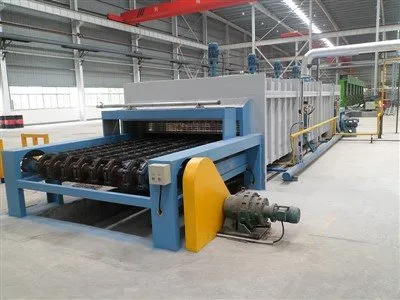
In modern industrial production, the pursuit of efficiency, precision, and consistency has led to the widespread adoption of automated production lines. As a supplier of Both Ends Heating Furnaces, I often encounter the question: Can a Both Ends Heating Furnace be integrated into an automated production line? In this blog post, I will explore this topic in detail, discussing the feasibility, benefits, challenges, and key considerations of integrating a Both Ends Heating Furnace into an automated production line.


Feasibility of Integration
The integration of a Both Ends Heating Furnace into an automated production line is not only feasible but also increasingly common in various industries. These furnaces are designed to heat both ends of a workpiece simultaneously, which is particularly useful in applications such as the manufacturing of automobile stabilizer bars. With the advancement of automation technology, it is possible to connect the furnace with other equipment in the production line, such as material handling systems, sensors, and control units, to achieve seamless operation.
One of the key factors contributing to the feasibility of integration is the flexibility of modern Both Ends Heating Furnaces. They can be customized to meet the specific requirements of different production processes, including the size, shape, and heating parameters of the workpieces. This flexibility allows them to be easily incorporated into existing or new automated production lines.
Benefits of Integration
1. Increased Efficiency
Automated production lines are known for their high efficiency, and integrating a Both Ends Heating Furnace can further enhance this advantage. By automating the loading, heating, and unloading processes, the furnace can operate continuously without the need for manual intervention, reducing production time and increasing throughput. For example, in the production of automobile stabilizer bars, the integrated furnace can heat multiple bars simultaneously, significantly improving the overall production efficiency.
2. Improved Quality
Automation ensures consistent heating parameters, such as temperature and heating time, which are crucial for the quality of the heat-treated workpieces. In a Both Ends Heating Furnace integrated into an automated production line, the heating process is precisely controlled by sensors and control systems, minimizing the risk of overheating or underheating. This results in more uniform hardness and microstructure across the workpieces, improving their mechanical properties and performance.
3. Reduced Labor Costs
Manual operation of a heating furnace requires skilled workers, and labor costs can be a significant expense in the production process. By integrating the furnace into an automated production line, the need for manual labor is greatly reduced. Workers can be redeployed to other value-added tasks, such as quality control and equipment maintenance, while the automated system takes care of the repetitive heating operations.
4. Enhanced Safety
Heating furnaces can be dangerous if not operated properly. Automated production lines are equipped with safety features such as emergency stop buttons, protective barriers, and sensors to detect abnormal conditions. Integrating the Both Ends Heating Furnace into an automated system ensures that the heating process is carried out in a safe environment, reducing the risk of accidents and injuries.
Challenges of Integration
1. Technical Compatibility
Integrating a Both Ends Heating Furnace into an automated production line requires careful consideration of technical compatibility. The furnace must be able to communicate with other equipment in the line, such as the material handling system and the control unit. This may involve the use of standardized communication protocols and interfaces, as well as the development of custom software to ensure seamless operation.
2. Initial Investment
The initial investment required for integrating a Both Ends Heating Furnace into an automated production line can be substantial. In addition to the cost of the furnace itself, there are expenses associated with the automation equipment, software development, and system integration. However, it is important to note that the long-term benefits, such as increased efficiency and reduced labor costs, often outweigh the initial investment.
3. Maintenance and Training
Automated production lines require regular maintenance to ensure their reliable operation. The integrated Both Ends Heating Furnace also needs to be maintained properly, including the inspection and replacement of heating elements, sensors, and other components. Moreover, workers need to be trained to operate and maintain the automated system effectively. This may require additional time and resources.
Key Considerations for Integration
1. Production Requirements
Before integrating a Both Ends Heating Furnace into an automated production line, it is essential to understand the specific production requirements. This includes the type, size, and quantity of workpieces to be heated, as well as the required heating parameters. Based on these requirements, the appropriate furnace model and automation configuration can be selected.
2. Equipment Selection
Choosing the right equipment is crucial for the successful integration of the furnace. The material handling system, sensors, and control unit should be compatible with the furnace and each other. For example, the material handling system should be able to handle the workpieces safely and accurately, while the sensors should provide reliable feedback for the control system.
3. System Design
A well-designed system is essential for the efficient operation of the integrated production line. The layout of the equipment, the flow of workpieces, and the communication between different components should be carefully planned. This may involve the use of simulation software to optimize the system design before implementation.
4. Supplier Support
Selecting a reliable supplier is important when integrating a Both Ends Heating Furnace into an automated production line. The supplier should have experience in automation and be able to provide technical support, including system installation, commissioning, and after-sales service. They should also be able to offer training programs for the operators and maintenance personnel.
Related Equipment in the Production Line
In addition to the Both Ends Heating Furnace, there are other important equipment in the production line of automobile stabilizer bars. For example, the Hardening Machine(oil Tank) is used for quenching the heated bars to achieve the desired hardness. The Stabilizer Bar Molding Machine is responsible for shaping the bars into the required form. And the Automobile Stabilizer Bar Step Quenching Furnace can provide a more precise quenching process. These equipment can also be integrated into the automated production line to further improve the production efficiency and quality.
Conclusion
In conclusion, a Both Ends Heating Furnace can be successfully integrated into an automated production line, offering numerous benefits such as increased efficiency, improved quality, reduced labor costs, and enhanced safety. Although there are challenges associated with integration, such as technical compatibility, initial investment, and maintenance, these can be overcome with careful planning and the right approach. When considering integrating a Both Ends Heating Furnace into an automated production line, it is important to take into account the production requirements, equipment selection, system design, and supplier support.
If you are interested in learning more about our Both Ends Heating Furnaces and how they can be integrated into your automated production line, please feel free to contact us for a detailed discussion and procurement negotiation. We are committed to providing high-quality products and professional services to meet your specific needs.
References
- Smith, J. (2020). Automation in Industrial Heating Processes. Industrial Heating Journal, 45(2), 32-38.
- Johnson, R. (2019). Integration of Furnaces in Automated Production Lines. Manufacturing Technology Review, 32(4), 45-52.
- Brown, A. (2021). Advances in Both Ends Heating Furnace Technology. Heat Treatment Engineering, 50(3), 21-27.