Heating uniformity is an important factor in stabilizer bar heat treatment manufacturing. During heat treatment, inconsistent heating conditions may affect the mechanical properties and quality consistency of finished products.
For manufacturers producing automotive stabilizer bars, maintaining stable heating conditions requires more than selecting a furnace with sufficient heating capacity. Furnace design, workpiece positioning, heating time, temperature monitoring, and production management all play important roles.
So, what causes uneven heating, and how can manufacturers improve it? This article discusses several practical factors to consider when optimizing industrial heating equipment and production conditions.
1. Why Is Heating Uniformity Important for Stabilizer Bars?
Automotive stabilizer bars require heat treatment to meet specific mechanical performance and dimensional requirements. Their heat treatment conditions must therefore be controlled according to the material grade, product dimensions, and manufacturing process.
When different areas of a workpiece experience inconsistent heating conditions, the resulting heat treatment may become less consistent.
Potential consequences include:
Variations in mechanical properties between different sections.
Inconsistent hardness after subsequent heat treatment.
Differences in product performance between production batches.
Increased difficulty in maintaining stable production quality.
Additional inspection and process adjustment requirements.
It is important to understand that furnace temperature and actual workpiece temperature are not always the same. A furnace may reach its target temperature while different parts of the workpieces still experience different heating conditions.
For this reason, manufacturers should evaluate the temperature conditions of the workpieces, not just the temperature displayed on the control panel.
2. Common Causes of Uneven stabilizer bar heat treatment
Several factors can contribute to inconsistent heating during industrial production.
Uneven Furnace Temperature Distribution
Temperature differences may occur in different areas of a furnace because of burner arrangement, heating element distribution, airflow conditions, insulation performance, or furnace structure.
If some areas receive more heat than others, workpieces positioned in those locations may experience different heating conditions.
A properly designed heating system should consider the temperature distribution throughout the effective working area.
Improper Workpiece Loading
The arrangement of stabilizer bars inside a furnace can influence heat transfer.
If workpieces are placed too closely together, certain areas may receive less effective heat exposure. Inconsistent spacing and loading arrangements can also create differences between individual workpieces.
Manufacturers should establish suitable loading methods based on product dimensions, furnace structure, and production requirements.
Inappropriate Heating Time
Different stabilizer bar diameters and material specifications may require different heating conditions.
If the heating time is too short, the workpiece may not reach the required temperature throughout its section. Excessive heating may also create undesirable metallurgical effects, depending on the material and process conditions.
Heating time should therefore be determined through process validation rather than using one setting for every product.
Inaccurate Temperature Measurement
Temperature measurement is another important consideration.
An incorrectly positioned or poorly calibrated temperature sensor may not accurately represent the actual temperature conditions inside the furnace or within the workpiece.
Regular inspection and calibration of temperature monitoring equipment help manufacturers maintain more reliable process control.
3. How Furnace Design Affects Heating Uniformity
The structure and heating system of an industrial furnace have a direct influence on its temperature distribution.
When selecting or designing a furnace, manufacturers should pay attention to several aspects.
Heating System Arrangement
The distribution of burners or heating elements should be designed according to the furnace dimensions and required working temperature.
An appropriate heating arrangement helps reduce excessive temperature differences between different working areas.
For gas-fired furnaces, burner positioning, combustion control, and heat circulation should be considered together.
Furnace Insulation
The insulation structure affects heat loss and the stability of furnace operation.
Suitable refractory and insulation materials can help reduce heat loss through the furnace walls and roof, supporting more stable operating conditions.
The insulation design should also consider the furnace operating temperature and working environment.
Furnace Temperature Zones
For certain production applications, a multi-zone heating arrangement can provide more flexible temperature control.
Different heating zones can be adjusted according to the production requirements and furnace design.
However, the number of zones alone does not guarantee better temperature uniformity. Their arrangement, control strategy, and actual furnace performance are equally important.
Workpiece Conveying and Positioning
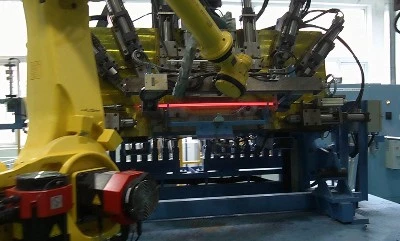
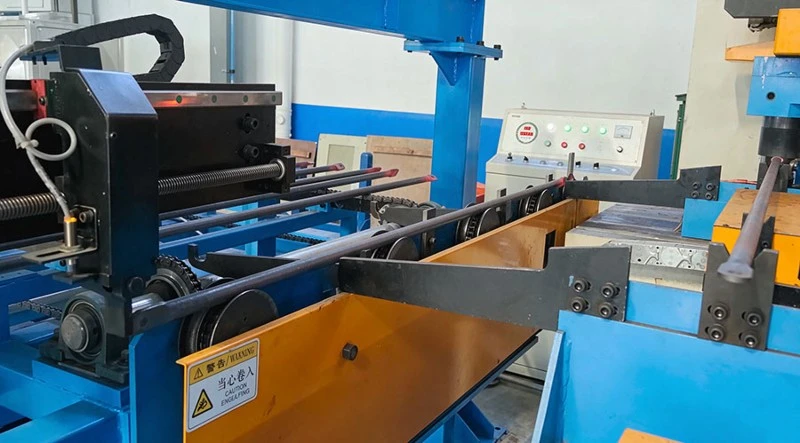
In continuous production systems, conveying speed and workpiece positioning influence the time and conditions under which products are exposed to heat.
A suitable conveying arrangement helps maintain consistent workpiece movement through the effective heating area.
For different product dimensions, the conveying and loading system should be evaluated according to the actual production layout.
4. The Role of Temperature Monitoring and Control
Temperature monitoring is essential for maintaining stable furnace operation.
Manufacturers should consider the following measures:
Use Appropriate Temperature Sensors
Temperature sensors should be selected according to the operating environment and measurement requirements. Their installation positions should represent the areas that need to be monitored.
Establish Suitable Temperature Control Zones
Where required, independent control zones can help operators adjust different furnace areas according to measured temperature conditions.
Calibrate Monitoring Equipment Regularly
Temperature sensors and control instruments should be inspected and calibrated according to an appropriate maintenance schedule.
Monitor Actual Workpiece Temperature
For process validation, workpiece temperature measurements can provide more useful information than relying exclusively on furnace atmosphere readings.
This is particularly important when changing product dimensions, loading arrangements, or production parameters.
5. Practical Ways to Improve Heating Consistency
In addition to furnace design and temperature control, manufacturers can improve production consistency through better operating practices.
Here are several practical recommendations:
Standardize workpiece loading: Maintain consistent spacing and positioning according to the validated loading arrangement.
Classify products by specifications: Avoid using identical heating settings for products with significantly different dimensions or material requirements without process verification.
Control conveying speed: For continuous furnaces, maintain a suitable and stable workpiece transfer speed.
Inspect furnace conditions: Regularly check burners, heating elements, refractory materials, insulation, and other important components.
Record operating data: Keep records of furnace temperature, production settings, and inspection results to identify possible variations.
Validate process changes: When changing product specifications or production arrangements, verify that the new conditions meet the required process standards.
These measures can help manufacturers identify potential problems and maintain more consistent heating conditions.
6. How to Select a Suitable Industrial Heating Furnace
When purchasing a new furnace or upgrading existing equipment, manufacturers should evaluate more than the rated heating temperature.
Important considerations include:
Required operating temperature and temperature uniformity.
Stabilizer bar dimensions and material specifications.
Expected production capacity.
Furnace working dimensions and loading arrangements.
Heating method and fuel consumption.
Temperature monitoring and control system.
Material handling and automation requirements.
Maintenance and after-sales support.
A suitable furnace should match the actual production process rather than simply offer the highest heating capacity.
For stabilizer bar manufacturers, equipment configuration should be determined according to product requirements, production targets, and available workshop space.
7. JIMENG Stabilizer Bar Heating treatment Equipment Solutions for Manufacturers
JIMENG specializes in the design and manufacturing of industrial heating and heat treatment equipment.
We provide customized equipment solutions for automotive spring and stabilizer bar manufacturers, including gas-fired heating furnaces, heat treatment furnaces, quenching equipment, and tempering furnaces.
Our technical team can evaluate different project requirements, including product specifications, production capacity, furnace dimensions, heating methods, and automation arrangements.
For manufacturers experiencing inconsistent heating conditions or planning to upgrade existing production equipment, JIMENG can help assess the equipment configuration and develop a suitable heating solution.
Looking for reliable heating equipment for stabilizer bar manufacturing?
Contact JIMENG to discuss your production requirements. We can work with your team to evaluate a suitable furnace configuration for your manufacturing process.

JIMENG
DIRECT FROM THE MANUFACTURER
Industrial Heat Treatment Furnace Manufacturer