When planning or upgrading a stabilizer bar manufacturing facility, choosing the right heat treatment method is an important production decision. Different manufacturing operations require different approaches to material handling, heating, cooling, and production scheduling.
Two common approaches in industrial heat treatment are continuous processing and batch processing. Each has its own advantages and limitations, depending on production volume, product variety, process requirements, and factory layout.
So, which method is more suitable for stabilizer bar manufacturers? This article compares the two approaches to help manufacturers evaluate their production needs.
1. What Is Continuous Heat Treatment?
Continuous heat treatment is a production method in which workpieces move through designated processing stages in a continuous production flow.
Depending on the equipment design, stabilizer bars can be transferred through heating and subsequent processing stages using conveying or material handling systems.
This approach is generally suitable for manufacturers with relatively stable production demand and standardized product specifications.
Potential advantages include:
Continuous material movement between processing stages.
More consistent production scheduling.
Reduced manual handling when integrated with automatic conveying systems.
Better suitability for repetitive, higher-volume manufacturing.
Easier coordination with upstream and downstream production equipment.
However, continuous production also requires careful planning of material flow, processing speed, and equipment capacity. Changes in product specifications may require adjustments to operating parameters and material handling arrangements.
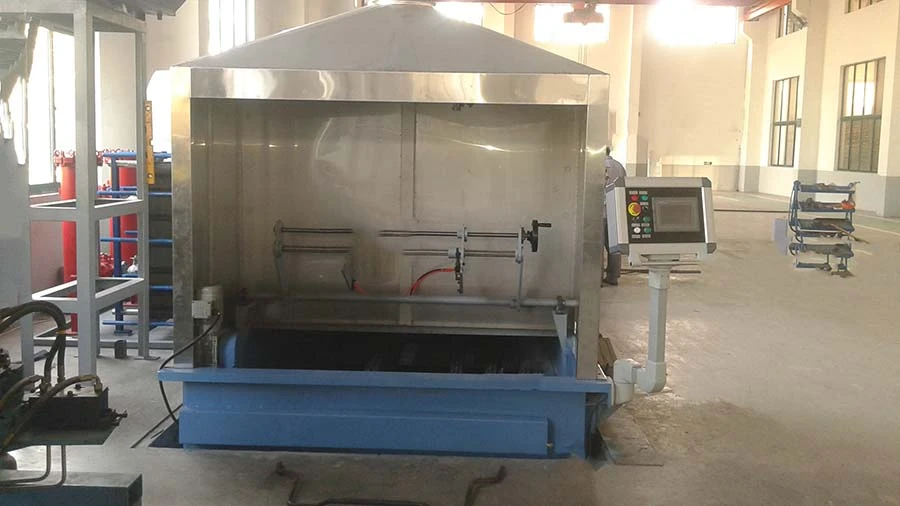
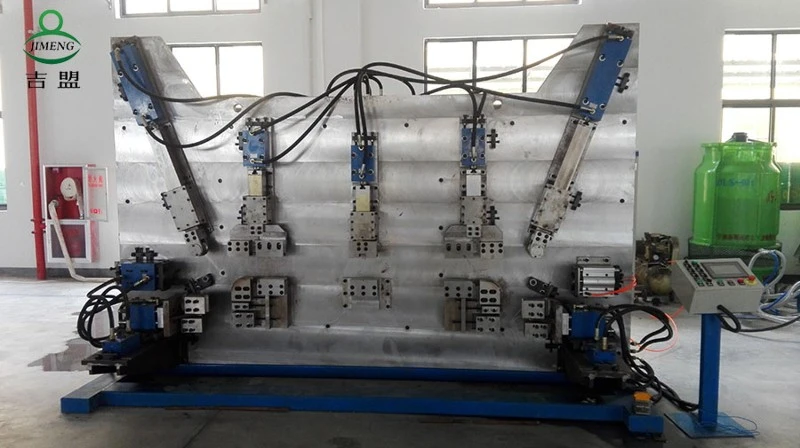
2. What Is Batch Heat Treatment?
Batch heat treatment processes a group of workpieces within a defined production cycle rather than moving individual workpieces continuously through the entire system.
Depending on the furnace design and process requirements, products are loaded, processed under specified conditions, and unloaded before the next batch begins.
This method may be suitable for manufacturers producing different stabilizer bar models or operating with smaller production batches.
Potential advantages include:
Greater flexibility in production scheduling.
Convenient handling of different product batches.
Suitable for certain low-volume or variable-product manufacturing operations.
Production cycles can be arranged according to specific product requirements.
However, batch processing requires appropriate loading and unloading arrangements. Production interruptions between cycles and workpiece handling time should also be considered when calculating actual output.
3. Continuous vs. Batch Heat Treatment: Key Differences
Although both methods can be used in industrial heat treatment applications, they differ in production organization and equipment operation.
| Comparison Factor | Continuous Processing | Batch Processing |
|---|---|---|
| Production flow | Continuous material movement | Separate processing cycles |
| Production volume | Generally suitable for stable, higher-volume demand | Suitable for smaller or variable batches |
| Product variety | Works well with planned, repetitive production | Offers flexibility between batches |
| Material handling | Can be integrated with automatic conveying | Requires batch loading and unloading |
| Production scheduling | Designed for continuous operation | Organized around individual cycles |
| Equipment configuration | Requires coordinated production flow | Requires suitable batch capacity |
It is important to understand that neither method is automatically better in every situation. The appropriate choice depends on the manufacturer's production conditions and technical requirements.
4. Which Method Is More Suitable for Your Production?
Before selecting equipment, manufacturers should consider the following production factors.
Production Volume and Operating Schedule
If your factory produces large quantities of similar stabilizer bars every day, a continuous production arrangement may offer advantages in production organization and material handling.
For factories with lower output or frequent changes between product models, batch processing may provide more operational flexibility.
The actual output should be calculated based on the complete processing cycle, equipment capacity, loading time, and production schedule.
Product Specifications and Variety
Different stabilizer bar dimensions and material specifications may require different processing conditions.
If a factory manufactures several product models, it should evaluate how easily the equipment can accommodate changes in workpiece dimensions and process parameters.
A suitable equipment configuration should support the required product range without unnecessary production interruptions.
Workshop Layout and Material Handling
Available factory space is another important consideration.
Continuous systems need coordinated material movement between processing stages. Batch systems need sufficient space for loading, unloading, and temporary workpiece storage.
Manufacturers should evaluate the entire production layout instead of considering the furnace alone.
Investment and Operating Costs
Equipment investment should be evaluated together with long-term operating expenses.
Important factors include energy consumption, labor requirements, maintenance, equipment utilization, and production output.
A lower initial purchase price does not necessarily mean a lower total operating cost.
5. Temperature Control and Production Consistency
Regardless of the selected production method, stable processing conditions are essential for industrial heat treatment.
Manufacturers should pay attention to:
Heating temperature and temperature uniformity.
Heating time and workpiece positioning.
Temperature monitoring and control systems.
Transfer time between processing stages.
Quenching conditions and cooling consistency.
Tempering temperature and processing time.
These factors should be determined according to the material grade, product specifications, and required mechanical properties.
Equipment selection should therefore be based on actual technical requirements rather than production speed alone.
6. Can a Customized Heat Treatment Solution Be More Suitable?
For some stabilizer bar manufacturers, a standard continuous or batch configuration may not fully match their production requirements.
A customized equipment arrangement can be developed according to product dimensions, expected output, processing conditions, and workshop layout.
For example, manufacturers may need to consider:
Heating furnace configuration.
Workpiece conveying and transfer arrangements.
Quenching equipment and cooling systems.
Automatic or semi-automatic operation.
Integration with existing production equipment.
The goal is to establish a coordinated production system that meets the manufacturer's actual requirements.
7. How JIMENG Supports Stabilizer Bar Manufacturers
JIMENG specializes in the design and manufacturing of industrial heating and heat treatment equipment.
We provide equipment solutions for automotive spring and stabilizer bar manufacturers, including heating furnaces, quenching equipment, tempering furnaces, and customized production line configurations.
Rather than recommending the same equipment arrangement for every factory, we consider individual project requirements, including product specifications, production capacity, and workshop conditions.
Whether you are planning a new manufacturing facility or upgrading existing heat treatment equipment, our technical team can help evaluate a suitable solution.
Planning to upgrade your stabilizer bar heat treatment process?
Contact JIMENG to discuss your production requirements and equipment configuration. We are ready to help you explore a practical solution for your manufacturing project.