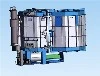
The global automotive and commercial vehicle industry is placing increasing demands on suspension components, especially in terms of durability, consistency, production efficiency, and cost control. Leaf springs remain widely used in trucks, trailers, agricultural machinery, and other heavy-duty vehicles because of their relatively simple structure, high load capacity, and proven reliability.
As manufacturers face rising labor costs and stricter quality requirements, the production process is gradually moving from conventional equipment toward automated and integrated manufacturing systems. For companies planning to expand production capacity or upgrade an existing factory, selecting suitable equipment for leaf spring manufacturing has become an important investment decision.
Rather than focusing only on machine price, manufacturers should evaluate forming accuracy, heating performance, production flexibility, automation level, energy consumption, and after-sales support. The right combination of equipment can directly influence product quality and long-term manufacturing efficiency.
Conventional Production vs. Automated Manufacturing
Traditional leaf spring production typically relies on several independent processes. Steel plates may be cut, heated, formed, punched, heat treated, and finished using separate machines. Although this approach can be suitable for small production volumes, it often requires more manual handling and creates additional challenges in process consistency.
A modern leaf spring production line can connect multiple operations into a coordinated workflow. Depending on the product specification, an integrated system may include material feeding, heating, forming, punching, bending, heat treatment, cooling, and inspection equipment.
Automation does not simply mean replacing workers with machines. Its main value lies in controlling repeatable production parameters. Consistent heating temperatures, forming positions, pressing forces, cycle times, and material transfer can reduce variation between individual components.
For manufacturers supplying commercial vehicle or heavy-duty suspension markets, this consistency is particularly important because spring performance is closely related to material properties and forming accuracy.
Key Equipment Used in Leaf Spring Production
A complete manufacturing process can involve several types of specialized equipment. The exact configuration depends on the spring design, steel grade, dimensions, production volume, and required performance.
1. Steel Plate Cutting and Preparation Equipment
The production process begins with properly prepared spring steel. Cutting equipment must provide stable dimensional accuracy while minimizing unnecessary material waste.
For manufacturers working with different spring lengths and widths, flexible cutting systems can reduce setup time and improve material utilization. Automated feeding can also reduce manual handling and make the production process easier to organize.
Material preparation may appear to be a basic operation, but inaccurate dimensions at the beginning of the process can affect subsequent forming and punching operations.
2. Heating Systems for Spring Steel
Heating is one of the most important stages in the forming process. Spring steel must reach an appropriate temperature before hot forming can be performed effectively.
An industrial heating system should provide stable and uniform heating across the workpiece. Uneven heating may result in inconsistent forming behavior and can influence the final mechanical properties of the component.
Modern production facilities increasingly consider energy efficiency when selecting heating equipment. Optimized heating zones, automatic temperature control, and better insulation can help reduce energy consumption while maintaining process stability.
For manufacturers producing different sizes of leaf springs, temperature control should also be adaptable to different material thicknesses and production requirements.
3. Leaf Spring Forming Machines
Forming equipment determines the basic geometry of the finished spring. Depending on the design, the process may involve bending, camber forming, tapering, or other shaping operations.
A reliable leaf spring forming machine should provide sufficient forming force while maintaining repeatable positioning. CNC or programmable control systems can be particularly useful when a factory produces multiple spring specifications.
Production flexibility is becoming increasingly important because many manufacturers no longer produce only one standard spring. Customers may require different lengths, thicknesses, camber values, or hole configurations.
Instead of using a separate machine for every specification, programmable forming equipment can allow manufacturers to switch between products more efficiently.
How Automation Improves Production Consistency
Automation can provide advantages beyond production speed.
One major benefit is process repeatability. When key parameters are controlled automatically, operators do not need to manually adjust every production cycle. This reduces the possibility of human error and creates more consistent operating conditions.
Automated material handling is another important factor. Moving hot steel components manually between machines can increase labor requirements and introduce safety risks. Mechanical transfer systems, conveyors, manipulators, or robotic handling solutions can help establish a more organized production flow.
Data collection is also becoming increasingly relevant. Advanced manufacturing equipment can record information such as production quantity, cycle time, temperature, equipment status, and maintenance conditions. These data can support factory management and help identify production bottlenecks.
For high-volume manufacturers, the combination of automatic handling and process monitoring can significantly improve overall equipment utilization.
Heat Treatment and Performance Control
Forming alone does not determine the final performance of a leaf spring. Heat treatment is essential for achieving the required mechanical properties.
After hot forming, spring components may undergo quenching, tempering, and other controlled thermal processes. The specific parameters depend on the steel grade and product design.
An effective spring heat treatment system should provide stable temperature control and reliable cooling conditions. Inconsistent heat treatment may lead to variations in hardness, strength, and fatigue performance.
Manufacturers should therefore evaluate forming equipment and heat treatment equipment as part of the same production strategy rather than treating them as completely independent investments.
A well-designed production line should allow the material to move efficiently from forming to heat treatment while minimizing unnecessary handling and waiting time.
What Should Manufacturers Compare Before Purchasing Equipment?
Price is an important factor, but it should not be the only purchasing criterion.
A lower initial investment may appear attractive, but equipment with limited automation, poor temperature control, or difficult maintenance can create higher operating costs over the long term.
Manufacturers should compare several factors before selecting a supplier:
Production capacity:
Does the equipment meet the expected daily or monthly output?
Product flexibility:
Can the system produce different leaf spring dimensions and designs without excessive setup time?
Forming accuracy:
Can the machine maintain consistent camber, bending geometry, hole positioning, and other critical dimensions?
Heating performance:
Does the heating system provide uniform temperatures and stable control?
Automation level:
Can material feeding, transfer, forming, and other repetitive operations be automated?
Energy consumption:
How efficiently does the equipment use electricity, gas, or other energy sources?
Maintenance requirements:
Are critical components easy to inspect, replace, and maintain?
Technical support:
Can the equipment supplier provide installation guidance, commissioning, operator training, spare parts, and technical assistance?
These factors provide a more realistic basis for comparing suppliers than equipment price alone.
Customization Is Becoming More Important
There is no single production configuration suitable for every spring manufacturer.
A factory producing small batches for aftermarket customers may require a flexible system with relatively fast changeover capabilities. A high-volume OEM supplier may prioritize continuous production, automated material handling, and integrated quality control.
The steel material, spring dimensions, forming method, heating requirements, and target output should therefore be evaluated before equipment selection.
For this reason, professional equipment manufacturers often need to understand the customer's production process before recommending a configuration. Technical discussions should include material specifications, product drawings, expected output, available factory space, heating method, automation requirements, and future expansion plans.
A customized equipment solution can help manufacturers avoid purchasing machines with unnecessary functions while ensuring that important production requirements are not overlooked.
Building a More Efficient Spring Manufacturing Process
The future of spring manufacturing is moving toward higher levels of integration.
Instead of treating cutting, heating, forming, heat treatment, and inspection as isolated operations, manufacturers are increasingly looking at the entire production flow. This approach can help reduce unnecessary material movement, shorten production cycles, improve workplace safety, and create more consistent quality.
Digital monitoring may also become more common as manufacturers seek better production visibility. Equipment status, process parameters, production quantities, and maintenance information can be integrated into factory management systems.
For companies planning a new factory or upgrading an existing facility, this means that equipment selection should consider not only today's production requirements but also future automation and capacity expansion.
A Practical Investment Strategy for Manufacturers
When evaluating a new leaf spring production system, manufacturers can begin with three basic questions: What products will be produced, how much will be produced, and what level of automation is required?
The answers can help determine the appropriate combination of forming machines, heating systems, material handling equipment, heat treatment systems, and inspection solutions.
It is also useful to calculate the total cost of ownership rather than focusing only on the purchase price. Energy consumption, labor requirements, maintenance, spare parts, production efficiency, and expected service life can all influence the actual cost of an equipment investment.
A reliable machine with stable performance may provide better long-term value even if its initial purchase price is higher.
Choosing Equipment Based on Long-Term Production Goals
As the demand for reliable heavy-duty suspension components continues to grow, manufacturers are paying greater attention to production efficiency and process control.
Modern equipment for leaf spring manufacturing can help factories improve forming consistency, reduce manual operations, optimize heating processes, and build a more standardized production workflow.
However, the best solution depends on the specific product and manufacturing conditions. Before purchasing equipment, manufacturers should work with an experienced supplier to evaluate product drawings, material specifications, output requirements, factory layout, automation expectations, and future capacity plans.
A well-planned production system is not simply a collection of individual machines. It is an integrated manufacturing solution designed around the actual requirements of the factory.
Discuss Your Leaf Spring Production Requirements With Our Technical Team
Selecting the right manufacturing equipment is an important step toward improving production capacity, product consistency, and long-term operating efficiency.
If your company is planning to establish a new production line, replace conventional machinery, or upgrade an existing manufacturing process, our technical team can help evaluate your requirements and recommend a suitable equipment configuration.
Send us your leaf spring drawings, material specifications, target production capacity, and automation requirements to discuss a customized solution for your factory.