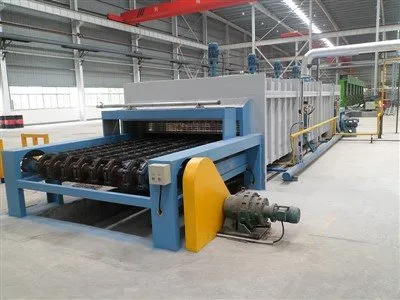
Calculating the energy consumption of a forging furnace is a crucial aspect for both forging companies and furnace suppliers like us. Understanding energy consumption not only helps in cost - control but also in optimizing the forging process and reducing the environmental impact. In this blog, I'll share some key methods and factors to consider when calculating the energy consumption of a forging furnace.
Basic Principles of Energy Consumption in Forging Furnaces
Before delving into the calculations, it's essential to understand the basic energy - consuming processes in a forging furnace. The primary energy consumption in a forging furnace occurs during three main stages: heating the furnace itself, heating the workpiece, and compensating for heat losses.
The energy required to heat the furnace is mainly used to raise the temperature of the furnace structure, including the refractory lining, heating elements, and other components. This initial heating is a one - time cost for each heating cycle, but it can be significant, especially for large - scale forging furnaces.
Heating the workpiece is the core function of the forging furnace. The amount of energy needed depends on the mass, specific heat capacity, and the temperature difference between the initial and final states of the workpiece. For example, heating a large steel billet to a high forging temperature will consume more energy than heating a smaller one.
Heat losses are inevitable in any furnace operation. These losses occur through various channels, such as radiation from the furnace walls, conduction through the furnace structure, and exhaust gas emissions. Minimizing heat losses is an important way to reduce energy consumption.
Factors Affecting Energy Consumption
1. Furnace Type
Different types of forging furnaces have different energy consumption characteristics. For instance, a Trolley Heating Furnace is designed for handling large and heavy workpieces. It usually has a larger volume and more complex insulation structure. The energy consumption of a trolley heating furnace may be relatively high during the initial heating stage due to its large mass, but it can be more energy - efficient in continuous operation if well - designed.
On the other hand, a Spitfire Furnace is often used for rapid heating of small - to - medium - sized workpieces. It can heat up quickly and may consume less energy for short - term heating tasks. Our Forging Furnace series also includes various models with different energy - consumption profiles, depending on their design and intended use.
2. Workpiece Properties
The properties of the workpiece, such as its material, mass, and shape, have a significant impact on energy consumption. Different materials have different specific heat capacities. For example, steel has a different specific heat capacity compared to aluminum. A larger mass of the workpiece will naturally require more energy to heat. Also, irregularly shaped workpieces may have uneven heat distribution, which can lead to longer heating times and increased energy consumption.
3. Operating Conditions
The operating conditions of the furnace, including the heating rate, temperature control accuracy, and the frequency of furnace openings, can affect energy consumption. A high heating rate may require more power input, but it can also reduce the overall heating time. Precise temperature control can prevent over - heating, which wastes energy. Frequent opening of the furnace door allows heat to escape, increasing heat losses and energy consumption.
Calculation Methods
1. Theoretical Calculation
The theoretical energy consumption for heating the workpiece can be calculated using the formula:
[Q = m\times c\times\Delta T]
where (Q) is the energy required (in joules), (m) is the mass of the workpiece (in kilograms), (c) is the specific heat capacity of the material (in joules per kilogram per degree Celsius), and (\Delta T) is the temperature difference between the initial and final states of the workpiece (in degrees Celsius).
For example, if we want to heat a 100 - kg steel billet from 20°C to 1200°C, and the specific heat capacity of steel (c = 460\space J/(kg\cdot^{\circ}C)), then:
(\Delta T=1200 - 20 = 1180^{\circ}C)
[Q = 100\times460\times1180=5.428\times10^{7}\space J]
However, this is only the energy required for heating the workpiece. We also need to consider the energy for heating the furnace and compensating for heat losses.
The energy for heating the furnace can be estimated based on the mass and specific heat capacity of the furnace components. Heat losses can be calculated through heat transfer equations, taking into account factors such as the surface area of the furnace, the temperature difference between the inside and outside of the furnace, and the insulation properties.


2. Empirical Calculation
In practice, empirical methods are often used to calculate energy consumption. These methods are based on historical data and practical experience. For example, we can measure the energy consumption of the furnace over a certain period of time and divide it by the number of workpieces processed or the total mass of the workpieces.
Let's say that in a month, a forging furnace consumes 100,000 kWh of electricity and processes 500 tons of workpieces. Then the average energy consumption per ton of workpieces is (\frac{100000}{500}=200\space kWh/ton).
This empirical method is relatively simple and practical, but it may not be very accurate in some cases, especially when the operating conditions change significantly.
Strategies to Reduce Energy Consumption
1. Optimize Furnace Design
Using high - quality insulation materials can significantly reduce heat losses. For example, advanced ceramic fiber insulation can provide better thermal insulation than traditional refractory bricks, reducing the energy required to maintain the furnace temperature.
Designing an efficient heating system is also crucial. For instance, using advanced heating elements with high energy conversion efficiency can reduce the amount of energy input.
2. Improve Operating Practices
Proper pre - heating and scheduling of workpieces can improve energy efficiency. For example, pre - heating the workpieces in a separate pre - heating chamber can reduce the energy consumption of the main forging furnace. Also, minimizing the time when the furnace door is open can reduce heat losses.
Regular maintenance of the furnace is essential. Checking and replacing damaged heating elements, sealing any air leaks, and cleaning the exhaust system can ensure the normal operation of the furnace and reduce energy consumption.
Conclusion
Calculating the energy consumption of a forging furnace is a complex task that requires considering multiple factors. By understanding the basic principles, factors affecting energy consumption, and using appropriate calculation methods, we can accurately estimate the energy consumption of the furnace. As a Forging Furnace supplier, we are committed to providing our customers with energy - efficient forging furnaces and helping them optimize their forging processes to reduce energy costs.
If you are interested in our forging furnaces or need more information on energy - saving forging solutions, please feel free to contact us for procurement discussions. We look forward to collaborating with you to achieve better forging results and energy efficiency.
References
- Incropera, F. P., & DeWitt, D. P. (2002). Fundamentals of Heat and Mass Transfer. John Wiley & Sons.
- Cengel, Y. A., & Boles, M. A. (2015). Thermodynamics: An Engineering Approach. McGraw - Hill Education.